
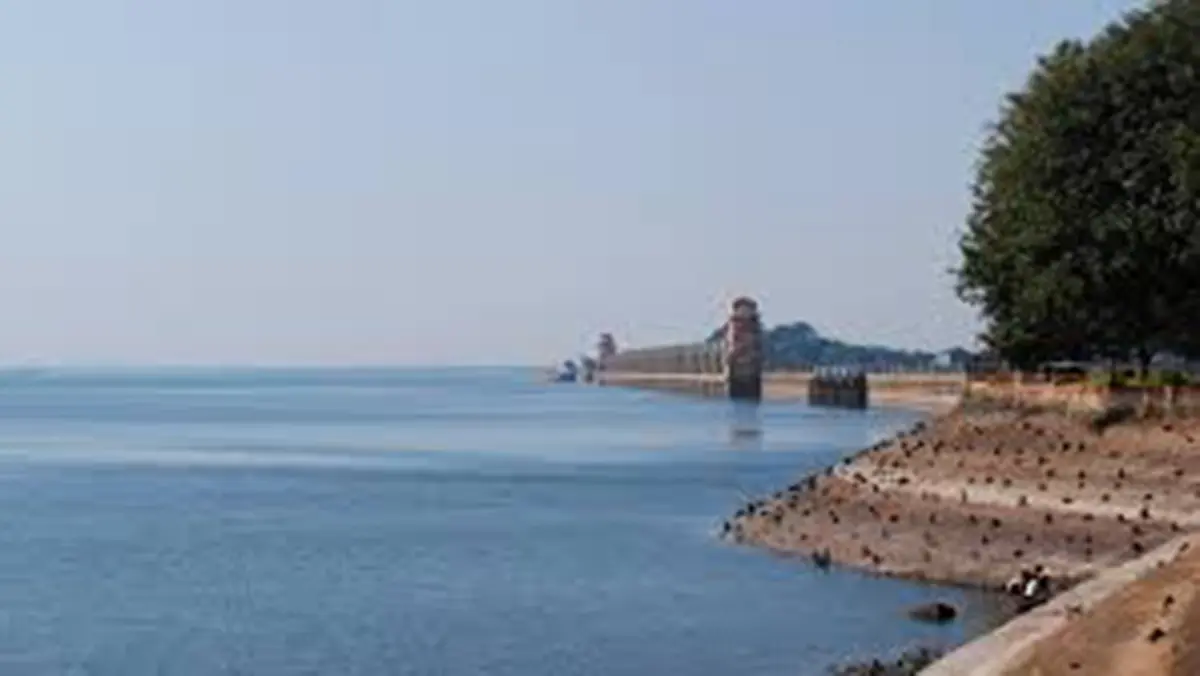
Why in news?
Debates about water-sharing and dam safety brought the Tungabhadra project into the spotlight this week. Built on the Tungabhadra River near Hospet in Karnataka, the dam is essential for irrigation, hydroelectric power and drinking water in Karnataka and Andhra Pradesh.
Background
The Tungabhadra River is formed by the confluence of the Tunga and Bhadra streams, which rise in the Western Ghats of Karnataka. After joining near Shimoga, the river flows eastward for about 531 km before meeting the Krishna River. Its basin supports agriculture in the semiarid Deccan region.
Famine in the Rayalaseema region of the Madras Presidency during the 19th century led to calls for a major irrigation project. After prolonged negotiations between the Madras and Hyderabad governments, construction of the Tungabhadra Dam began in 1949. The foundation stone was laid on 28 February 1945, but technical differences delayed work until 1947.
Construction and features
- Excavation of the riverbed started in 1947 and masonry work began in April 1949. The dam was substantially completed by October 1953, allowing water storage at 1613 feet elevation; spillway and crest gates were finished by 1958.
- The dam is about 49 metres high and 823 metres long. Its reservoir has a capacity of roughly 5.6 billion cubic metres and covers an area of 378 sq km when full.
- Canals branching from the dam irrigate parts of Karnataka and the Rayalaseema region of Andhra Pradesh. The project also supports a hydroelectric plant with an installed capacity of about 127 MW.
- Construction cost Rs 16.96 crore and displaced more than 54,000 people from ninety villages. Compensation and resettlement were major challenges.
Benefits and concerns
- The dam has turned the surrounding region into a green belt, enabling cultivation of paddy, sugarcane, cotton and groundnut. It also supplies drinking water to towns like Hosapete and facilitates industrial development.
- Periodic disputes arise between Karnataka and Andhra Pradesh over water sharing, especially during drought years. Maintenance issues such as siltation, seepage and ageing infrastructure require regular attention.
- Environmentalists highlight the loss of fertile land and forests and call for sustainable management of the reservoir. Ecotourism around the dam has emerged as an economic opportunity.
Conclusion
The Tungabhadra Dam remains a lifeline for farmers and industries across two states. Its history exemplifies how cooperative river‑basin management can transform a famine‑prone region. Ongoing upkeep, equitable water-sharing and ecological sensitivity will be vital for its continued success.

