

Why in news?
Ujani reservoir in Maharashtra is the focus of an ongoing effort to control invasive fish and support native fisheries. The Bombay Natural History Society, or BNHS, has been working with fishers and the state Fisheries Department on removal, monitoring and restocking. Earlier reporting and the society's February 2026 records document this work before the present October discussion. The reservoir lies on the Bhima River and supports both water supply and fishing livelihoods. Invasive fish can alter its ecology while making ordinary fishing more difficult and less rewarding. This is a continuing restoration programme, not a newly launched October project or proof that the invasive populations have been eradicated.
Placing the reservoir within the river system
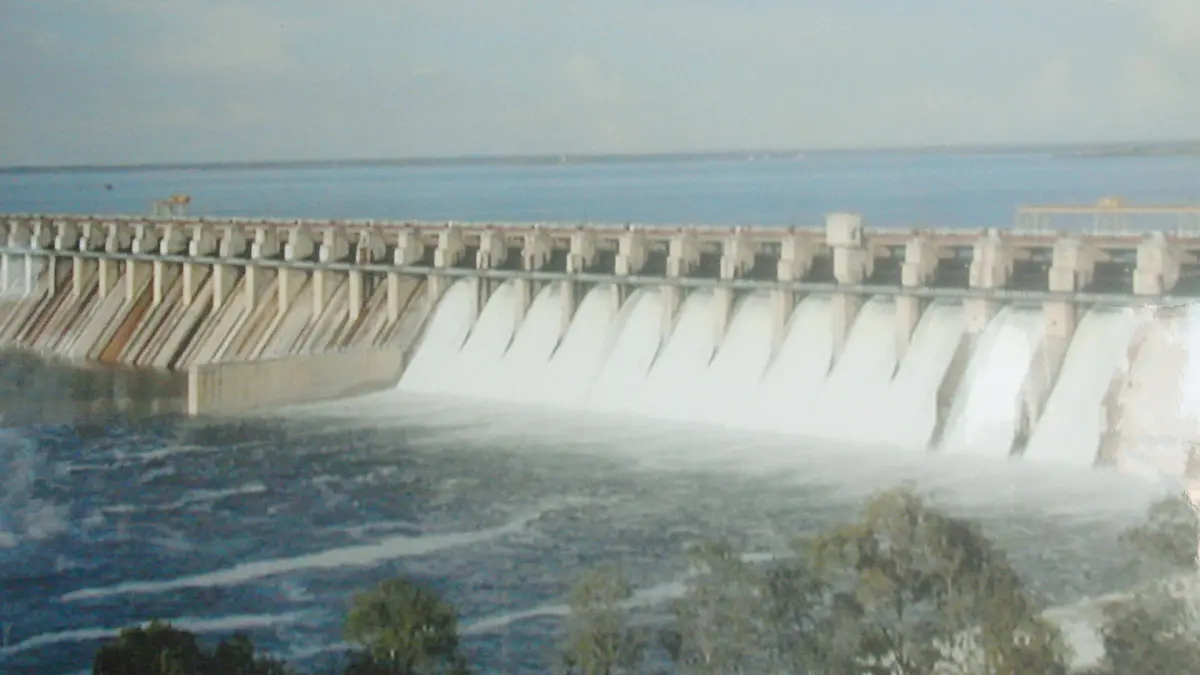
Ujani Dam is in Maharashtra's Solapur district, while its backwaters extend into the Pune district landscape around Bhigwan and Indapur. It impounds the Bhima, a tributary of the Krishna River. The reservoir is therefore connected with a larger drainage system rather than being a closed pond. Water and material arriving from upstream influence conditions where fishers work.
The Solapur Municipal Corporation identifies Ujani as a source in the city's water-supply system. Fishing adds another direct dependence on the reservoir. These uses can be affected by different aspects of its condition: available water, pollution, habitat and the composition of fish stocks. A reservoir holding sufficient water is not necessarily supporting a healthy fishery, just as a large catch does not automatically indicate ecological recovery.
When an introduced species becomes invasive
An alien species occurs outside its natural range because it has been introduced. The term invasive refers to introduced organisms that spread and cause harmful effects. At Ujani, the reported concerns include suckermouth catfish, tilapia and African catfish. These are not a single species with identical behaviour. Their effects need to be understood individually rather than treating every unfamiliar fish as the same ecological problem.
Suckermouth armoured catfish belong to the genus Pterygoplichthys. The aquarium trade provides a pathway through which such fish can reach new environments. United States Geological Survey records describe their bank-burrowing behaviour and possible competition with native species in introduced ranges. This supports concern about their ecological effects, but does not establish that Ujani's dam has suffered a particular structural failure. Local impacts require local measurements.
Why involving fishers changes the removal problem
The Indian Express's August reporting describes fishers struggling with unwanted fish caught in their nets. Removing them takes time and can damage equipment, while a low-value catch reduces returns from the same effort. If an unwanted fish is simply released again, catching it has not removed the pressure. A collection arrangement changes that practical decision by giving fishers a reason to bring the fish ashore.
The reporting describes BNHS-supported incentives and an organised route for collected fish to be processed. The society's own February newsletter also records collection, measurement and removal at Bhigwan. These records show an existing programme rather than a single ceremonial event. The quantity removed is useful operational information, but it must be interpreted alongside the size and replenishment of the invasive population.
Restocking is an intervention, not an outcome
BNHS records the release of 1.22 crore fish fingerlings by Maharashtra's Fisheries Department at Ujani on 14 February 2026. That equals 12.2 million young fish. The release involved Indian major carps, including rohu, mrigal and catla, with scientific support from the society. Fingerlings are young fish being stocked to support future populations and fisheries; the number released is not a count of adults that survived.
Survival depends on the receiving habitat and the pressures affecting the fish after release. The society's programme also includes water-quality observations and measurements of fish catches. Those activities help connect stocking with the condition of the ecosystem. Without evidence about survival, reproduction and invasive pressure, more releases would leave the central question unanswered. Is a more resilient fishery actually developing?
How progress should be judged
A useful assessment would track catch composition, native-fish survival, invasive-fish recruitment and the effort required to obtain a catch. These measures answer different questions. A larger removal total could reflect stronger collection effort rather than a growing invasion; a smaller total could reflect reduced effort rather than success. Preventing further releases from aquariums and other sources is also important, because repeated introductions can undermine removal work.
Conclusion
Ujani's restoration effort connects biodiversity protection with the daily economics of fishing. Collection incentives and carefully monitored stocking can address different parts of the problem, but neither proves recovery on its own. Lasting improvement depends on preventing further introductions and showing that native fish and local livelihoods benefit over time.