

Why in news?
The Union government reviewed the Ujh Multipurpose Project on 2 August 2026. Officials discussed a phased implementation roadmap. Water and Power Consultancy Services, now WAPCOS Limited, received the implementation role. The plan combines power, irrigation and water-supply objectives.
Background
The Ujh River rises in the Jammu region and joins the Ravi River. It belongs to the eastern river system of the Indus basin. The proposed project lies in Kathua district of Jammu and Kashmir.
Project investigations extend back decades; the Union government included Ujh among national projects during 2008. This status can provide enhanced central assistance for eligible irrigation components.
An earlier detailed project report received technical examination during the following years. Official records from 2016 described a 212-megawatt design. They also listed 0.82 million acre-feet of storage and 32,000 hectares of irrigation potential.
Clearances, costs, land needs and design questions repeatedly delayed implementation. During 2026, the government revived review through a phased roadmap. WAPCOS Limited then received the implementation role.
Proposed components and benefits
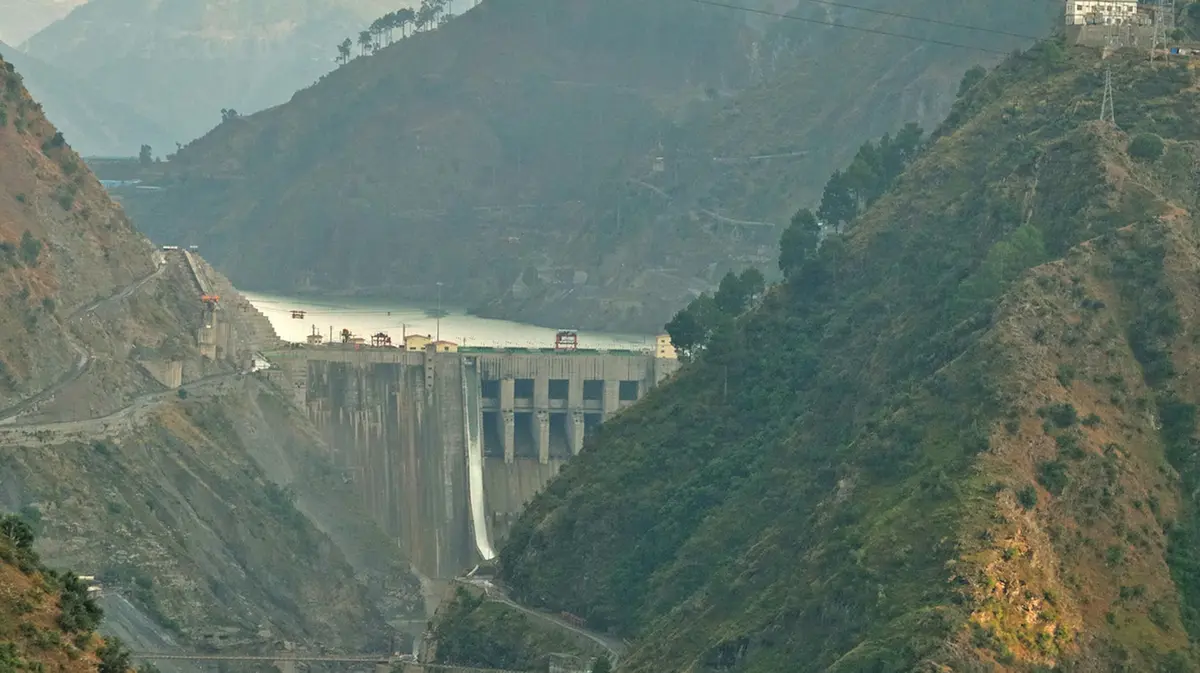
The main design uses a large storage dam and associated power facilities. Recent official statements describe capacity between 186 and 212 megawatts. These figures reflect different ways of presenting the powerhouse components.
The principal powerhouse is commonly listed at 186 megawatts. Smaller dam-toe units can add 26 megawatts, producing 212 megawatts overall. Any final capacity will depend upon the approved updated design.
Stored water could support irrigation in Kathua and Samba. Recent statements also mention benefits for Pathankot and Gurdaspur in Punjab. Drinking and industrial water supplies form additional proposed uses.
Regulated storage could improve water availability; hydropower can provide flexible electricity when conditions permit. Reservoir operations must nevertheless balance power generation with downstream irrigation and ecological flows.
Environmental and social questions
Earlier appraisals indicated substantial land and forest diversion. One proposal involved roughly 4,350 hectares, including around 680 forest hectares. It also identified more than 214,000 trees for removal.
Large reservoirs can fragment habitats and alter sediment movement; they can also displace settlements and farmland. Updated surveys must reflect current populations, forests and river conditions.
Catchment treatment and compensatory afforestation cannot fully reproduce mature natural forests. Downstream flow rules should protect aquatic life and local water use. Dam safety planning must cover earthquakes, extreme floods and emergency communication.
Treaty and data cautions
The Ravi is an eastern river under the 1960 Indus Waters Treaty. The treaty historically allocated these eastern rivers for India's unrestricted use, subject to its provisions. Ujh has therefore been presented as improving India's use of Ravi-system waters.
A ministerial review does not mean construction is complete or immediately beginning. Costs and capacities also changed across successive designs. The final project requires valid clearances, updated appraisal and transparent rehabilitation arrangements.
Why phased implementation needs scrutiny
Phasing can spread financing, but later funding failures may create stranded works. Each phase needs an independent purpose and safeguards, while authorities should disclose links among all components.
Older costs cannot guide a 2026 decision because inflation, design changes and rehabilitation expenses alter viability. Power revenue needs realistic generation assumptions, while irrigation benefits require distribution networks beyond the dam.
Benefit sharing should recognise upstream and downstream communities, providing lawful compensation and livelihood restoration. Farmers need predictable releases and grievance procedures, while hearings require current documents in local languages.
Climate change complicates design through uncertain rainfall and extreme floods, requiring updated hydrology across several future scenarios. Sedimentation estimates and independent safety reviews must continue throughout construction and operation.
Conclusion
Ujh could support water and energy needs across the Ravi basin. Its revival must rest on current designs, credible benefits and rigorous environmental safeguards.