

Why in news?
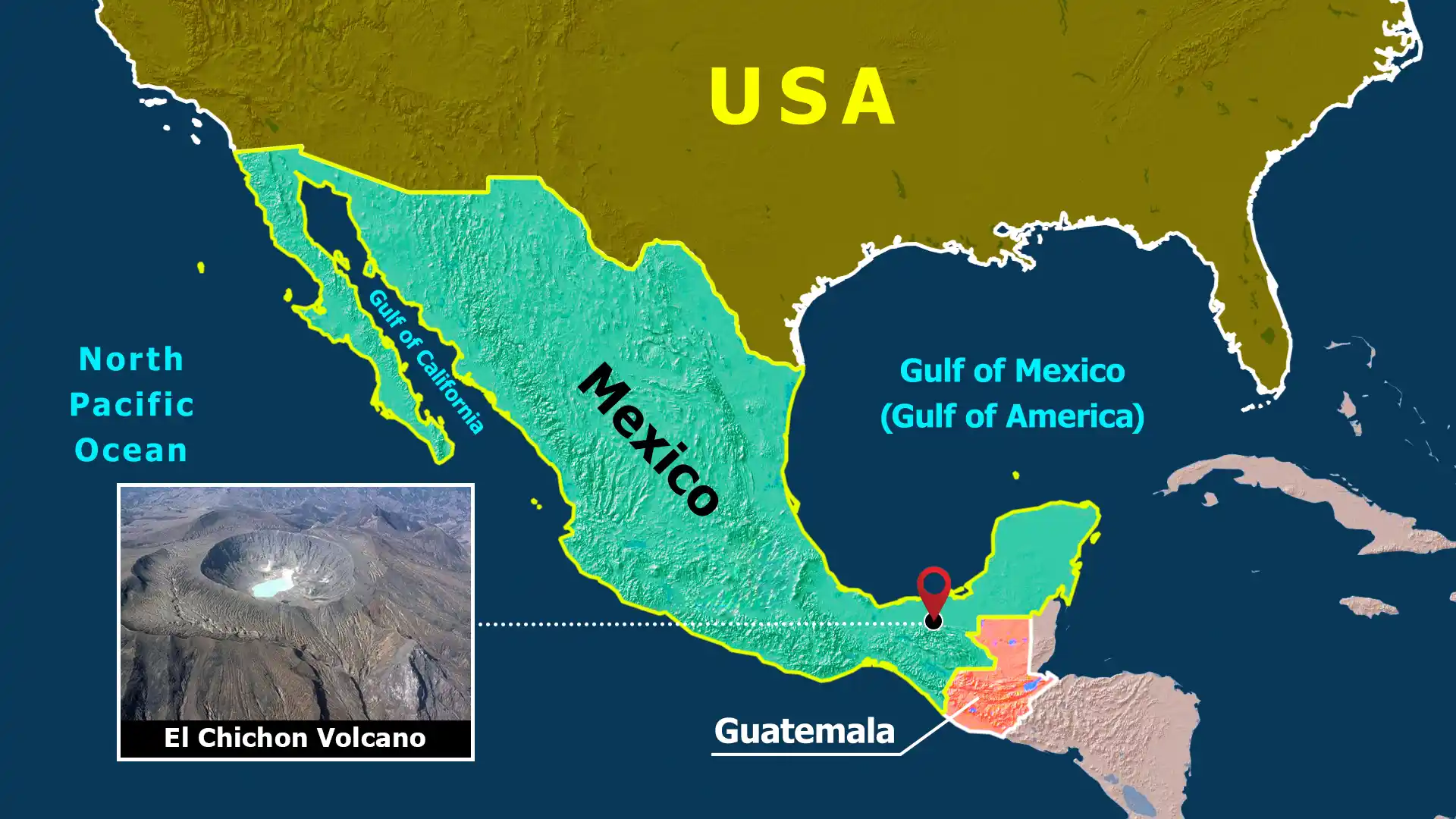
Scientists monitoring El Chichón, a stratovolcano in Chiapas, Mexico, recently observed dramatic changes in its crater lake. Water temperatures have exceeded 100 °C, gas bubbling and strong sulphur‑rich odours have increased, and unusual hollow sulphur spheres are floating on the surface. These signs suggest heightened hydrothermal activity and have prompted a yellow alert for communities nearby.
Background
El Chichón is one of Mexico’s most active volcanoes. It forms a small stratovolcano rising about 1,260 metres above sea level in northern Chiapas. Before 1982, it was little known; however in March–April 1982 a series of eruptions destroyed the volcano’s summit, carved a crater 1 km wide and formed a crater lake. The eruption released huge amounts of ash and sulphur dioxide, killing over 2,000 people and injecting sulphate aerosols into the stratosphere, which cooled global temperatures slightly for several months.
Recent observations
- Superheated lake water: Geologists recorded surface temperatures in the crater lake reaching around 118 °C, far above normal boiling point at sea level. The lake’s colour changed from turquoise to grey due to increased dissolved sulphate and silica.
- Gas emissions: There has been vigorous bubbling and degassing, with hydrogen sulphide and carbon dioxide concentrations higher than usual. Floating hollow sulphur spheres, produced by rapid precipitation of molten sulphur, have been seen on the lake surface.
- Monitoring gaps: Much of the crater rim is difficult to access, and monitoring equipment has sometimes been vandalised. Scientists warn that without continuous observation, an escalation of activity could go unnoticed. The current yellow alert advises people to stay away from the crater.
While no immediate eruption is expected, El Chichón’s history shows that rapid escalations can occur. Continued monitoring and emergency preparedness are essential to protect nearby villages and understand the volcano’s behaviour.
Source: IDR