

Why in news?
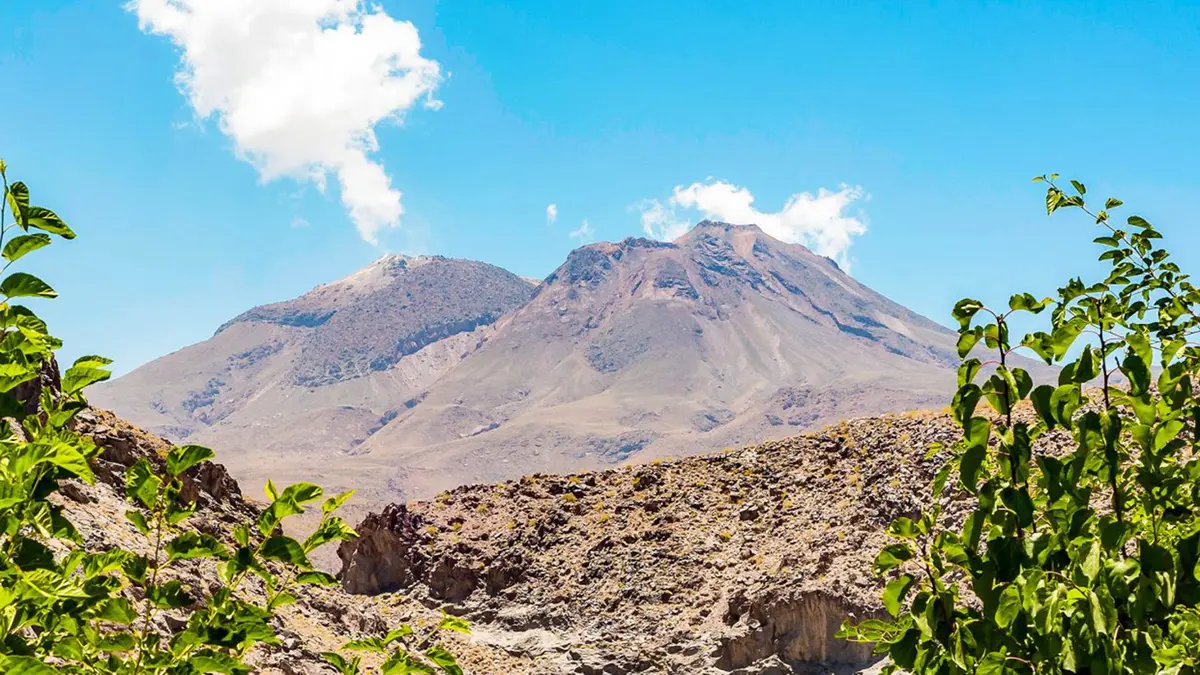
Satellite observations released in February 2026 showed that the Taftan volcano in south‑eastern Iran has experienced up to 9 centimetres of ground uplift since 2020. The uplift is believed to be caused by pressurised gas and fluids within the volcano’s magma chamber. Although there is no immediate threat of a large eruption, scientists recommend increased monitoring to manage potential risks.
Background
Taftan is a stratovolcano located in the Makran volcanic arc near Iran’s border with Pakistan. It rises about 4,000 metres above sea level and is composed primarily of andesitic lava. The volcano last erupted in 1993 and is considered potentially active. Due to its remote location and arid surroundings, it has received less scientific attention than other volcanoes, but it is monitored by Iran’s Geological Survey.
Understanding the uplift
- Satellite data: Geodesists used radar satellites to measure changes in the elevation of the volcano’s flanks. Between 2020 and 2024 a subtle but steady uplift was detected, indicating a build‑up of pressure beneath the surface.
- Possible causes: Researchers believe that volatiles (water vapour, carbon dioxide and sulphur gases) escaping from magma may be accumulating in fractures, causing the ground to swell. Unlike basaltic volcanoes, Taftan’s andesitic magma is more viscous, which can trap gases.
- Risks: The uplift does not necessarily mean an eruption is imminent. However, pressure build‑up can lead to small phreatic (steam‑driven) explosions or gas emissions. These can endanger climbers and wildlife and impact aviation if ash is produced.
- Monitoring recommendations: Scientists advocate installing more ground sensors to measure seismicity, gas emissions and temperature changes. Continuous satellite monitoring will help detect further deformation.
Significance
- Early warning: Ground deformation is one of the few observable signs of unrest at volcanoes. Timely detection allows authorities to issue warnings and prepare evacuation plans if necessary.
- Scientific insight: Studying Taftan’s behaviour enhances understanding of volcanic processes in the Makran region, where several volcanoes and geothermal systems are present.
- Risk mitigation: Even small explosions can disrupt local communities, infrastructure and air traffic. Monitoring ensures that potential hazards are managed proactively.
Conclusion
The observed uplift at Taftan volcano is a reminder that dormant volcanoes remain dynamic beneath the surface. Enhanced monitoring will improve our ability to forecast future activity and protect communities and travellers in this sparsely populated region.
Source: Earth.com