

Why in News?
Recent studies published in 2025–26 revealed that uplift and seismic unrest at Bolivia’s Uturuncu volcano are caused by the movement of hot fluids and gases rather than the upward push of magma. The findings reduce immediate concerns about an eruption but highlight the volcano’s complex hydrothermal system.
Geographic and Geological Features
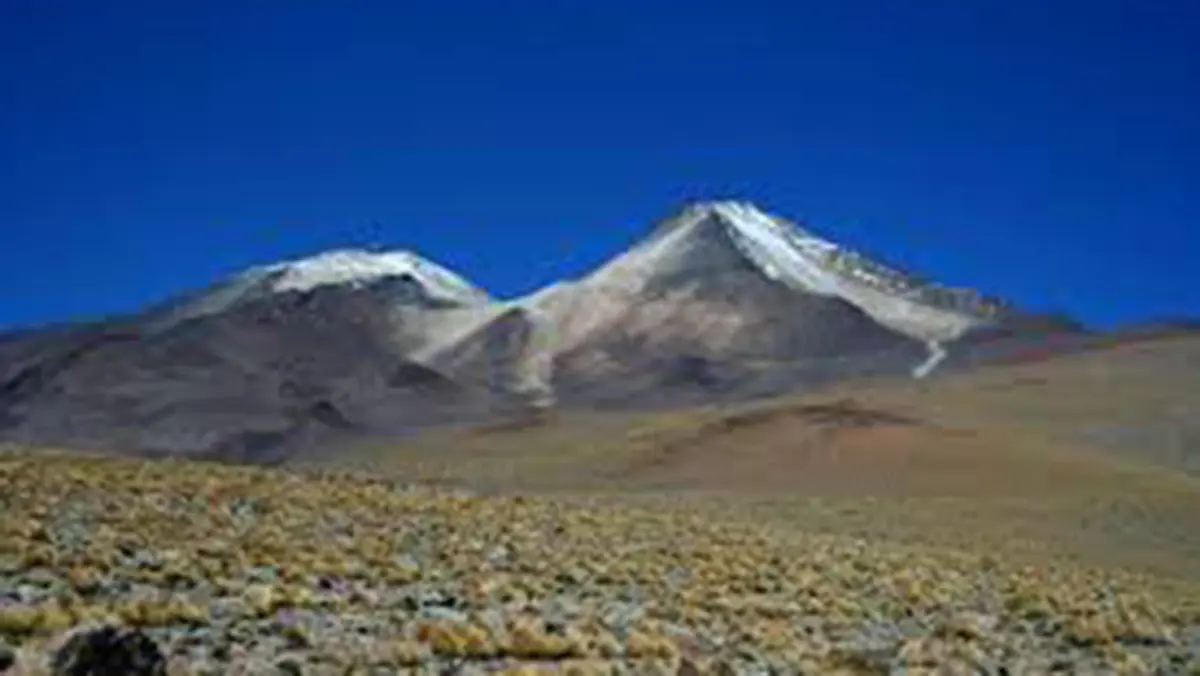
Uturuncu is a stratovolcano rising about 6,008 metres above sea level in southwestern Bolivia’s Potosí department. It forms part of the Central Andean volcanic chain and sits atop the vast Altiplano‑Puna magma body—the world’s largest known continental magma chamber. The volcano last erupted roughly 250,000 years ago and is characterised by two fumarolic fields that emit steam and volcanic gases.
- Geology – Uturuncu is composed mainly of hypersthene andesite and dacite lavas. The surrounding “sombrero”‑shaped deformation pattern results from the rise of underlying molten material.
- Ground deformation – Satellite radar data from 1996–2000 revealed uplift rates of 1–2 cm per year across a broad area. Low‑level seismic activity and persistent fumarolic emissions signalled ongoing subsurface processes.
- Hydrothermal system – Studies using seismology, rock analysis and computer models indicate that circulating water and gas at depths of 5–15 km drive the uplift. These fluids accumulate, heat up and migrate laterally, creating pressure that warps the surface.
Implications of New Research
- No imminent eruption – The absence of magma ascent means the risk of a large explosive eruption in the near term is low. However, the active hydrothermal system suggests that smaller phreatic eruptions or gas emissions remain possible.
- Monitoring importance – The study demonstrates how advanced seismic imaging and geophysical modelling can differentiate between magmatic and hydrothermal processes. Continuous monitoring is essential to detect changes that may signal renewed magma movement.
- Hazard forecasting – Understanding the interplay between fluids, gases and rocks improves our ability to forecast hazards at dormant or “zombie” volcanoes, which show signs of unrest long after their last eruption.
Conclusion
Uturuncu’s uplift highlights the dynamic nature of seemingly dormant volcanoes. While the new research reduces fears of a catastrophic eruption, it underscores the need for ongoing surveillance of hydrothermal systems. Lessons from Uturuncu can inform monitoring strategies at other volcanoes worldwide where surface deformation may result from non‑magmatic processes. Balanced communication of risk is crucial to reassure local communities while maintaining preparedness.