

Why in news?
The Ministry of Tribal Affairs reported new national figures for the Pradhan Mantri Janjatiya Vikas Mission. It has sanctioned 4,172 Van Dhan Vikas Kendras across 28 states and Union Territories. These centres cover about 12.48 lakh tribal beneficiaries. The update places tribal livelihood support within skill development, processing and market access.
The sanctioned amount under the mission is ₹619.17 crore. Another 540 centres serve Particularly Vulnerable Tribal Groups under the Pradhan Mantri Janjati Adivasi Nyaya Maha Abhiyan. Sanctioned centres, however, do not automatically mean equal income gains everywhere. The figures therefore raise a practical question about how many centres operate sustainably.
Purpose and institutional structure
The mission is a Central Sector Scheme of the Ministry of Tribal Affairs. Its published 2023 guidelines covered the period through 2025–26. Government sanction records show that allocations continued during 2026–27. The Tribal Co-operative Marketing Development Federation of India implements key components. This national body is commonly known as TRIFED.
State nodal departments and state implementing agencies handle field delivery. They connect national funding with local groups, training partners and markets. This layered structure can adapt programmes to regional products. It also demands clear reporting between village organisations, state agencies and the Union government.
The mission brings livelihood initiatives around forest, farm and non-farm products into one framework. Its goal is not only higher sales. It also seeks stronger community organisations, better processing and tribal entrepreneurship. Financial support can cover training, equipment, packaging and marketing. The guidelines place group-based work and local resource use at the centre.
What minor forest produce means
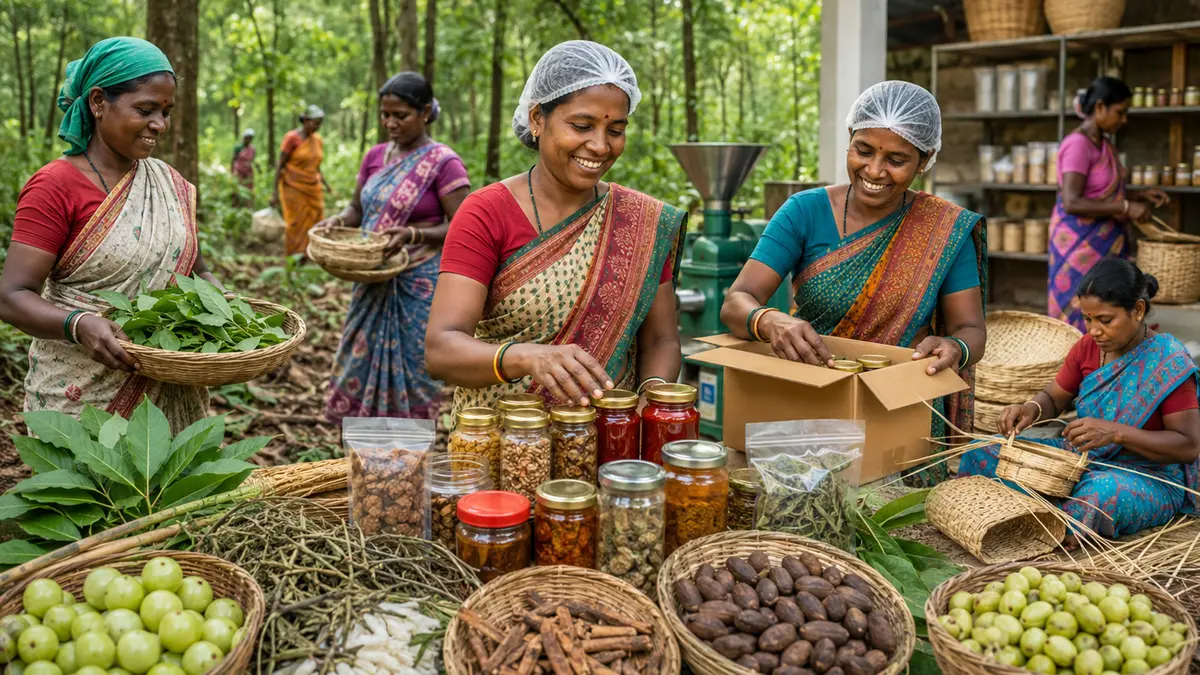
Minor forest produce includes useful plant material other than timber. Common examples are tendu leaves, mahua flowers, tamarind, honey, gums, medicinal plants and bamboo products. The exact local basket differs by forest type. Collection often provides seasonal cash to tribal households. Women perform a large share of gathering, cleaning and primary processing.
Raw produce can attract low prices when collectors must sell immediately. Storage limits, weak transport and poor market information increase this disadvantage. Perishable material may lose value quickly. Traders can also hold greater bargaining power. Value addition changes the product before sale. Drying, grading, processing, packaging and branding can increase shelf life and price.
How a Van Dhan Vikas Kendra works
A Van Dhan Vikas Kendra links groups of tribal members into a larger enterprise cluster. Members organise collection, processing and sale around local products. Infrastructure may use government, Gram Panchayat or beneficiary premises. The centre can receive tools and training. Its business plan should reflect reliable supplies, local skills and realistic market demand.
Group ownership can spread costs and improve bargaining. It can also help small producers meet larger orders. Yet collective enterprise needs transparent accounts and agreed responsibilities. Members must know how prices, wages and profits are calculated. Regular meetings and accessible records reduce the risk of elite control. Women members need a meaningful voice in decisions.
What the latest figures show
The ministry reported 4,172 sanctioned centres and 12.48 lakh beneficiaries under the mission. Coverage spans 28 states and Union Territories. During the last three financial years, 617 centres were sanctioned under this programme. The separate tribal justice mission sanctioned 540 centres for Particularly Vulnerable Tribal Groups. Those centres cover about 46,000 people.
These figures describe administrative reach, not final performance. A sanctioned centre may still await training, equipment or market activity. Sales can vary widely between products and regions. The best evaluation should track functioning centres, member earnings and repeated orders. It should also compare benefits among women, remote villages and smaller tribal groups.
Geography shapes every enterprise
Forest-based livelihoods are concentrated across central, eastern and north-eastern India. Important belts include Odisha, Chhattisgarh, Jharkhand, Madhya Pradesh, Maharashtra and several north-eastern states. Each area has different species, collection seasons and transport costs. A uniform product list would ignore this ecology. Local plans must begin with sustainable resource mapping.
Remote hills and forests often face expensive transport and weak digital access. Rain can cut roads during the main collection season. Cold storage may be unavailable. Border and hill markets can still create opportunities for distinctive foods and crafts. Cluster planning should therefore connect roads, storage, communications and buyers. Training alone cannot overcome missing infrastructure.
Sustainability and forest rights
Higher demand can help collectors, but it can also encourage overharvesting. Sustainable rules should protect seed stock, regeneration and wildlife food. Harvest calendars require local ecological knowledge. Processing waste should not pollute streams or village land. Enterprises must measure resource condition, not only annual sales. Long-term income depends on a healthy forest.
The Scheduled Tribes and Other Traditional Forest Dwellers Act, 2006 recognises community rights over minor forest produce. Business support should work with these legal rights. It should not shift control away from Gram Sabhas. Clear ownership and consent matter when private firms enter supply contracts. Collectors need understandable terms, timely payment and dispute routes.
Market access and value
Packaging and branding can connect village products with urban consumers. TRIFED’s retail systems can support that connection. E-commerce creates another route, but quality and delivery must remain consistent. Food products also need hygiene, labelling and regulatory compliance. Shared testing facilities can help small groups meet standards without unaffordable individual costs.
Government procurement and exhibitions can create initial demand. A durable enterprise still needs returning customers. Managers should examine margins after transport, packaging and unsold stock. Credit should match seasonal cash flows. Training must cover accounting and negotiation, not merely production. Market information should reach collectors before purchase decisions are made.
Sanction is a starting point
The national numbers show wide reach and substantial public support. They do not measure whether every centre is active. The stronger test is regular income under tribal control. Public reporting should separate sanctioned, functional and profitable centres.
Conclusion
The mission addresses a genuine structural problem in tribal economies. Collectors often create value but receive a small share of the final price. Community processing and organised marketing can improve that balance. Success requires more than equipment distribution. Institutions, accounts, resource rights and buyers must work together over several seasons.
Future reporting should focus on outcomes as carefully as scale. Active membership, net income and forest health should guide evaluation. State agencies must adapt support to local geography and produce. When communities retain control, value addition can strengthen both livelihoods and stewardship. That is the mission’s most meaningful standard.