

Why in news?
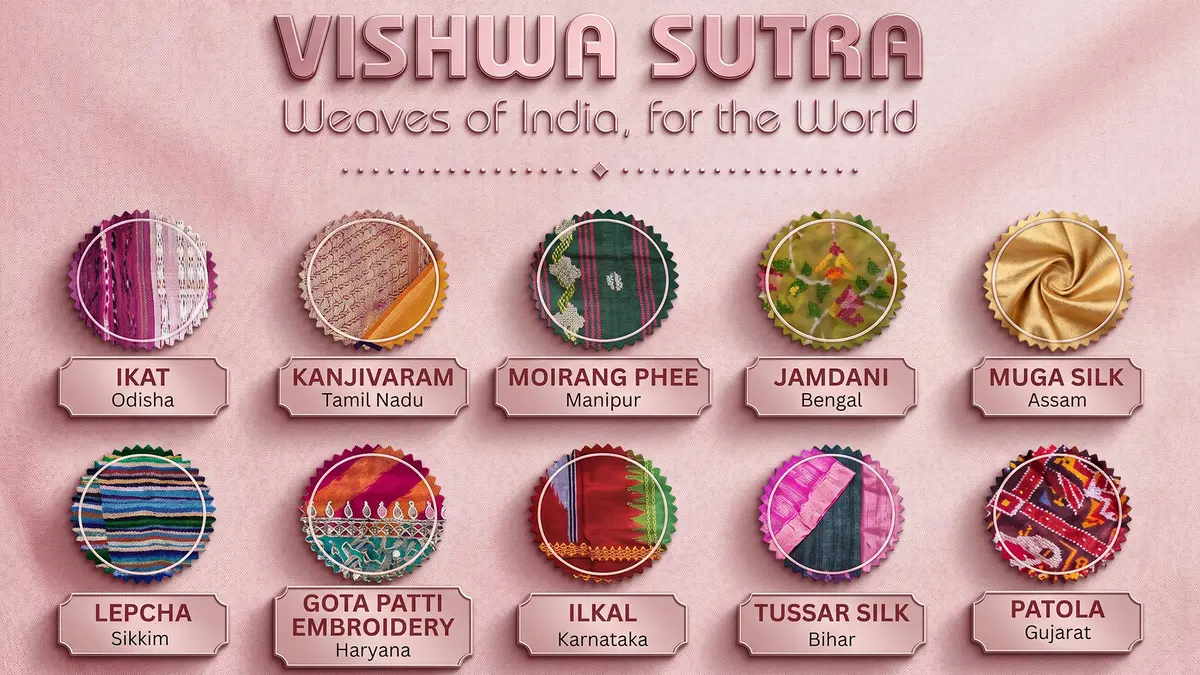
At the 61st Femina Miss India pageant held in Bhubaneswar, the Union Ministry of Textiles unveiled the Vishwa Sutra initiative. The programme, whose name roughly means “Threads of the World,” was developed by the Office of the Development Commissioner (Handlooms) and the National Institute of Fashion Technology (NIFT). It aims to present Indian handloom textiles in contemporary designs inspired by global cultures.
Background
India’s handloom sector is one of the world’s largest, employing more than 3 million weavers and allied workers. Hand‑woven fabrics such as Banarasi silk, Pochampally ikat, Kanchipuram silk and Tangail cotton represent centuries‑old traditions. However, artisans often struggle to reach international markets due to changing fashion trends and limited marketing. The government’s 5F formula – Farm → Fibre → Factory → Fashion → Foreign – seeks to connect farmers, spinners, weavers and designers so that rural crafts can find global buyers.
What is Vishwa Sutra?
- 30 state weaves, 30 world inspirations: The initiative showcases 30 different handloom weaving traditions from across India. Each one is creatively paired with design elements from a different country. For example, a Paithani sari might include motifs influenced by Japanese origami, while a Nagaland shawl could incorporate Norwegian patterns.
- Contemporary reinterpretation: Designers from NIFT and partnering fashion houses have re‑imagined traditional weaves in modern silhouettes suitable for global runways and high‑street stores.
- Platform for artisans: The programme highlights the work of master weavers and encourages collaborations with designers. By telling the story of each weave and its international inspiration, it aims to create aspirational value and better incomes for artisans.
Why does it matter?
- ‘Vocal for Local’ goes global: Vishwa Sutra embodies the slogan “Vocal for Local to Global,” encouraging consumers at home and abroad to value Indian crafts. Export‑ready designs can help the handloom sector compete internationally.
- Cultural diplomacy: By blending Indian textiles with motifs from other countries, the initiative fosters cross‑cultural appreciation and soft power.
- Economic empowerment: Higher demand for handloom products can provide steady work and fair prices for weavers, many of whom are women and members of marginalised communities.
Sources: News On Air