

Why in news?
Authorities in Jammu and Kashmir have intensified restoration of Wular Lake, one of Asia’s largest freshwater lakes. By April 2026, they had removed about 1.31 lakh (131,000) willow trees and dredged more than 78 lakh cubic metres of silt, reclaiming approximately 5 sq km of open water. The project also includes strengthening embankments and developing walkways and eco‑parks to promote tourism.
Background
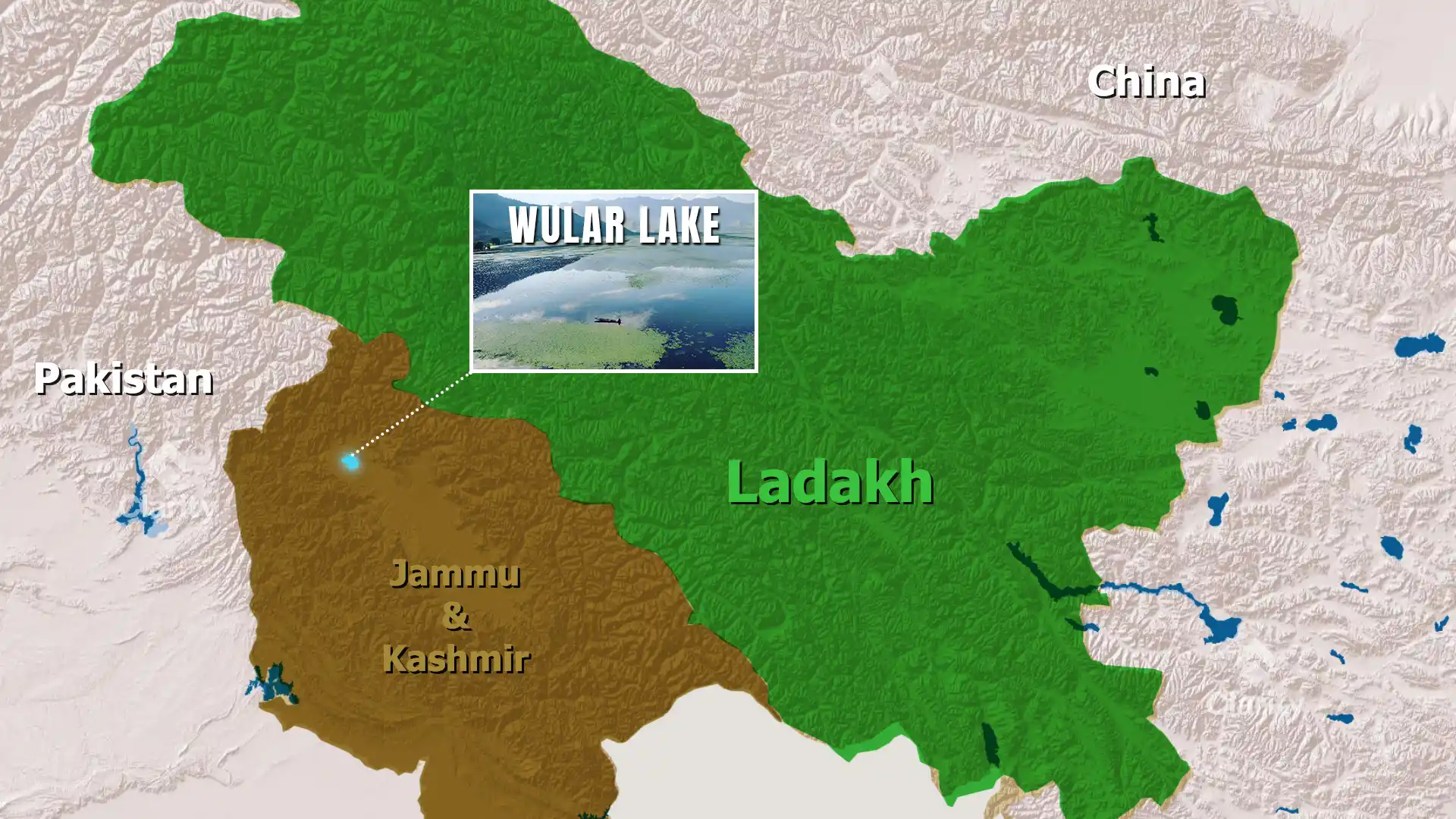
Wular Lake, located in Bandipora and Baramulla districts of Kashmir, spans roughly 130 sq km at peak levels and reaches depths of up to 5.8 m. Fed by the Jhelum River and several mountain streams, it is a designated Ramsar Wetland of International Importance. Historically part of the ancient Satisar Lake, Wular acts as a natural flood reservoir and supplies over 60 % of the fish consumed in the Kashmir Valley.
Restoration measures
- Willow removal: Large plantations of willow trees planted during the 1980s reduced the lake’s area and altered its hydrology. Removing these trees opens up water spread, improves circulation and restores habitat for aquatic life.
- Desiltation: Dredging 78 lakh cubic metres of silt has deepened channels and increased storage capacity. Desiltation also improves water quality and supports navigation.
- Infrastructure development: Authorities are strengthening protective bunds along the lake’s edge and building a 2.5 km walkway with cycling tracks. Plans include parks, watch towers and eco‑tourism facilities to attract visitors.
Ecological importance
- Biodiversity haven: Wular supports diverse fish species, migratory waterfowl and aquatic plants. Restoring the lake helps sustain fisheries and birdlife.
- Flood control: The lake absorbs excess water during spring snowmelt and heavy monsoon rains, reducing flood risk downstream in Srinagar.
- Livelihoods: Thousands of fishermen and reed harvesters depend on Wular. Reviving the lake improves their incomes while providing recreation opportunities for visitors.
Conclusion
Wular Lake’s restoration showcases how concerted efforts can revive degraded ecosystems. Removing invasive trees, desilting and promoting eco‑tourism not only restore ecological functions but also support local livelihoods. Continued maintenance and sustainable tourism practices will be essential to preserve this vital freshwater jewel.
Source: Devdiscourse