

Why in news?
Indian researchers described five new Allographa species from the Western Ghats. Their study combined physical features, chemistry and genetic evidence. It is the region’s first comprehensive molecular study of this genus.
Background
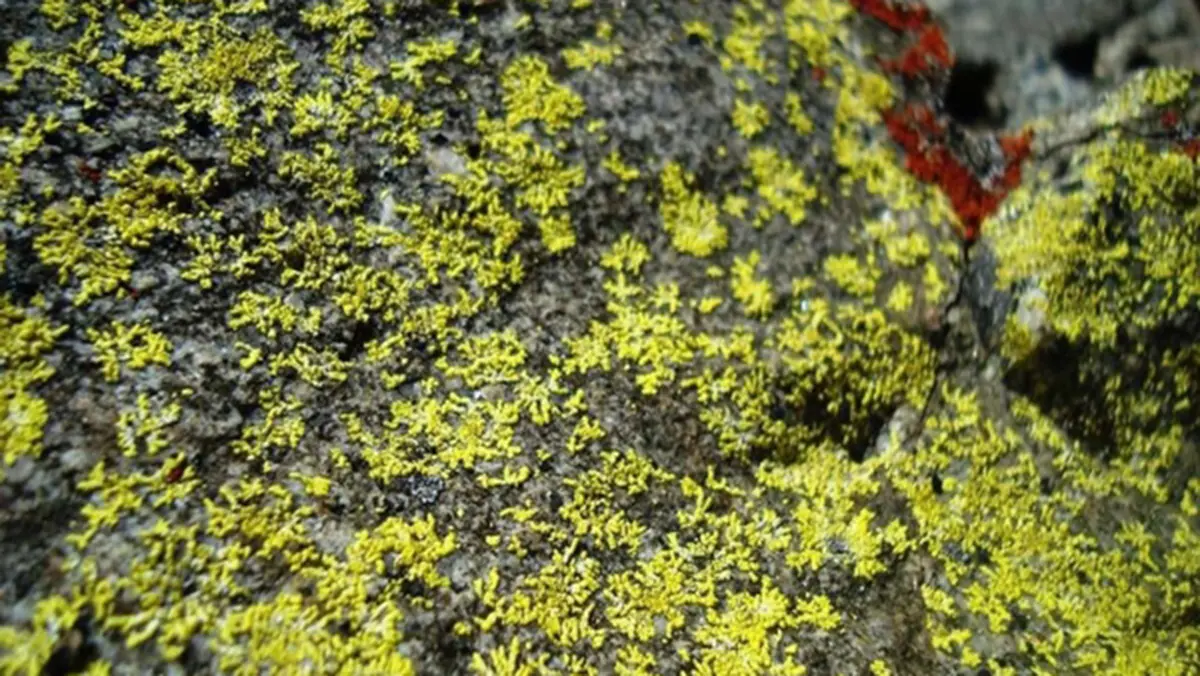
A lichen is a stable partnership where a fungus provides structure, shelter and access to minerals.
A photosynthetic partner, usually a green alga or cyanobacterium, makes food using sunlight.
Some lichens also contain additional microorganisms within this organised association.
Therefore, a lichen is a partnership rather than one ordinary plant.
What is Allographa?
Allographa is a Graphidaceae fungal genus containing more than two hundred recognised species worldwide.
They are called script lichens because their spore-releasing fruiting bodies resemble elongated written marks.
Who conducted the study?
Researchers worked at Pune’s Agharkar Research Institute, under the Maharashtra Association for the Cultivation of Science.
The institution is commonly called the MACS–Agharkar Research Institute and is autonomous under the Department of Science and Technology.
Rajeshkumar K. C., Ansil P. A. and Bharati Sharma led the work.
The study appeared in the journal Mycological Progress on 8 May 2026.
How did researchers identify the species?
External appearance can misidentify similar lichens, so the team combined three complementary kinds of evidence.
- Morphological study examined physical features, while chemical testing compared substances produced by each lichen.
- Deoxyribonucleic acid sequencing, commonly called DNA sequencing, compared three genetic markers.
A molecular phylogeny reconstructs likely evolutionary relationships using genetic information.
The results showed that similar-looking species were not always close relatives.
Which five species were discovered?
| New species | Name or identification note |
|---|---|
| Allographa keralensis | Its name refers to Kerala. |
| Allographa nayakae | It honours Indian lichenologist Sanjeeva Nayaka. |
| Allographa paraconsanguinea | Combined physical and genetic evidence confirmed its separate identity. |
| Allographa persistinspersa | Microscopic and chemical characters helped distinguish this species. |
| Allographa semicarbonisata | Its reproductive structures differ from related known taxa. |
Completeness check: The official release names five species. Any four-name list has omitted Allographa nayakae.
Why are lichens useful bioindicators?
Many lichens absorb atmospheric water and nutrients directly, making them responsive to pollutants and changing moisture.
A bioindicator provides information about environmental quality through its presence or condition.
Lichen diversity can help scientists compare forest health across places and years.
One missing species never proves pollution because climate, bark, altitude and habitat history also matter.
Other ecological roles
- Lichens weather exposed rock, begin soil formation and shelter many small organisms.
- Some add usable nitrogen, while their slow growth can preserve long-term environmental signals.
Why does the Western Ghats finding matter?
The Western Ghats is a global biodiversity hotspot with many restricted-range species.
Indian Allographa records previously relied heavily upon visible features.
The new DNA references make future identification and comparison more reliable.
The researchers prepared an updated regional checklist that can improve later biodiversity surveys and conservation planning.
Conclusion
The five species reveal hidden forest diversity, while combined classical and DNA evidence improves identification.