

Science & Technology

ANCHOR: IIT Madras 3D Human Brainstem Atlas & Applications

ANCHOR: IIT Madras 3D Human Brainstem Atlas & Applications

Why in news?

The Sudha Gopalakrishnan Brain Centre at IIT Madras released a digital atlas called ANCHOR. The atlas maps the human brainstem in three dimensions using high‑resolution imaging. It was unveiled at the BRICS Neuroscience Symposium in early June 2026 and is available online for researchers. The project aims to help doctors understand brain disorders and design targeted therapies.

Background

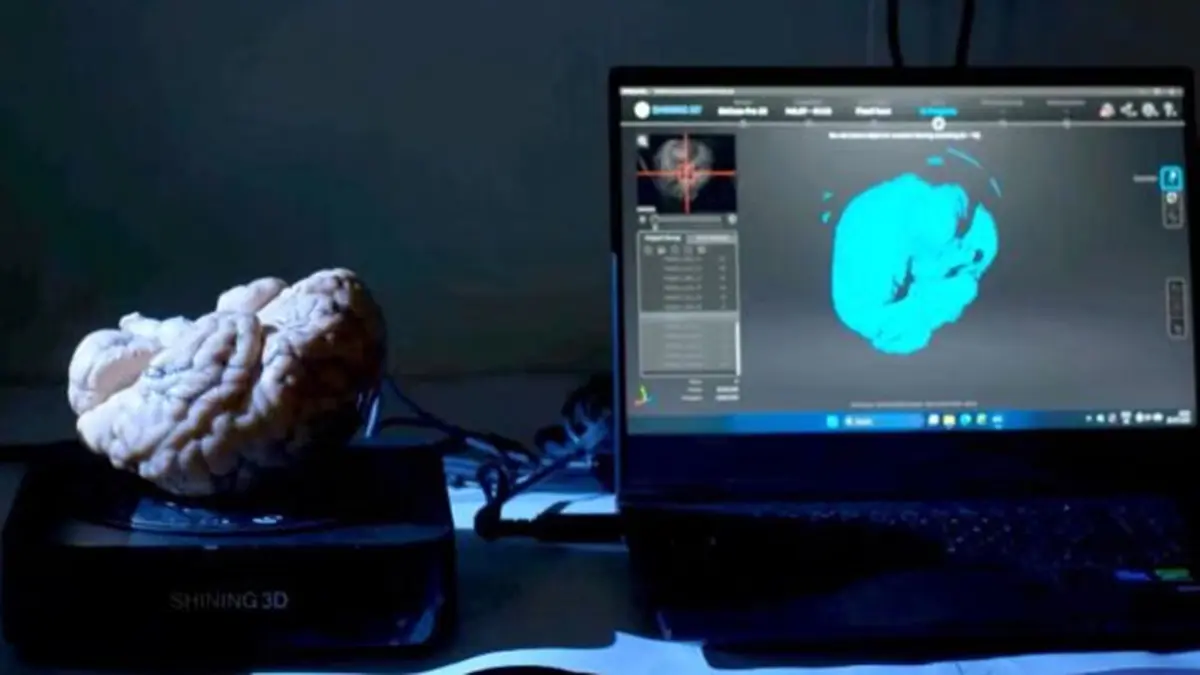
The brainstem sits at the base of the brain. It controls vital functions such as breathing, heartbeat and sleep. Existing imaging methods like MRI offer limited detail. To build the atlas, the IIT team collected thousands of thin brainstem sections and stained them with up to eight chemical markers. A computer assembled the images into a 3D model at cellular resolution. The atlas includes more than 200 nuclei and fibre tracts.

Key details

  • The atlas zooms nearly 1 000 times beyond a standard MRI.
  • Researchers plan to map more than 100 healthy and diseased brains.
  • Artificial intelligence helps organise the vast image dataset, which can reach several terabytes per hour.
  • The project brings together over 200 scientists from disciplines like neuroscience, computer science and medicine.

Conclusion

ANCHOR is the most detailed 3D atlas of the brainstem yet produced. It could help clinicians navigate brain anatomy and identify diseases earlier. The open platform also sets a benchmark for future brain mapping efforts in India and abroad.

Source: PIB

Prelims MCQ Practice

Evaluate Your Retention

Assess your readiness with 4 high-yield multiple-choice questions on this article.

Mark your answers, submit, and see the key with explanations. Answers count only toward anonymous totals — nothing is linked to you, and it resets when you close this tab.

Practice questions 0 of 4 answered

Your result

0 / 4

Only anonymous totals are kept — nothing is linked to you. This resets when the tab closes.

1.

The ANCHOR atlas of the human brainstem, released in 2026, has been developed by a brain research centre at which one of the following institutions?

2.

The brainstem, which the ANCHOR atlas maps in three dimensions, is made up of which one of the following sets of structures?

3.

Injury to the brainstem is immediately life-threatening because this part of the brain regulates:

4.

With reference to the ANCHOR brain atlas, consider the following statements:

1.It has been placed online for use by researchers.
2.It was built from magnetic resonance imaging scans of living volunteers.
3.Artificial intelligence is used to organise its imaging data.

Select the answer using the code given below:

Answer all 4 questions, then submit.
Sign in Today’s news
Current affairs Daily news Daily quiz News Blitz Shorts Economic Survey 2025-26 Subjects
Polity Economy Geography Environment History Science & Tech Intl. Relations Internal Security Art & Culture Social Issues
All subjects Exam info UPSC Syllabus Prelims syllabus Mains syllabus Exam pattern Eligibility & attempts OBC & EWS checker Resources Free downloads Booklist 2026 Previous year papers Video notes YouTube channel