

Why in news?
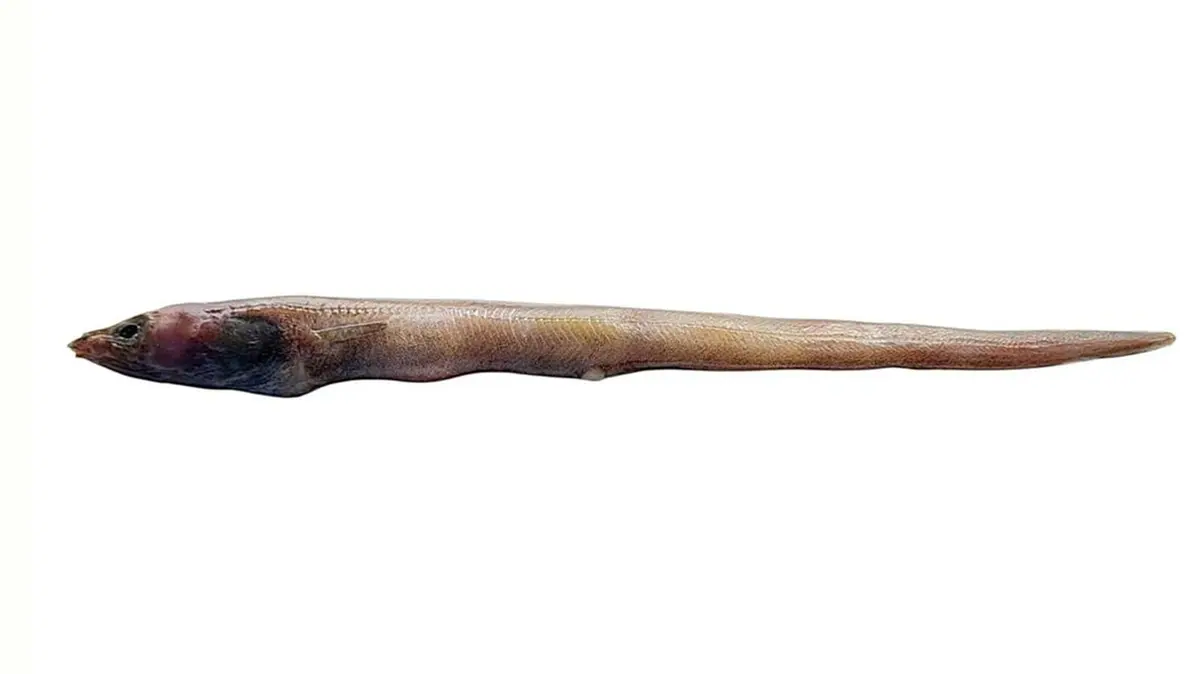
Scientists have described a new conger eel species, Ariosoma cmfriense, from waters off Kollam on Kerala’s Arabian Sea coast. The study appeared in the taxonomic journal Zootaxa on 15 September. The Indian Council of Agricultural Research’s Central Marine Fisheries Research Institute says the specimen was collected in January at about 300 metres depth. Researchers used both body features and genetic evidence to distinguish it from related eels. The discovery adds a documented species to India’s marine biodiversity and provides a reference for identifying future specimens. However, the description rests on one collected individual. It does not establish the species’ abundance or its distribution beyond the collection area.
What “new species” means here
A species can exist in nature long before scientists recognise and formally describe it. In this case, “new” means newly distinguished and named in the scientific record. It does not mean the eel evolved during 2026 or arrived in Indian waters that year. The research connects a physical specimen, a collection location and diagnostic evidence with a published scientific name.
The eel belongs to the family Congridae, within the order Anguilliformes. Eels are fish, despite their long, snake-like bodies. The genus Ariosoma contains several closely related species, so overall appearance alone is insufficient for identification. Researchers need a combination of features that separates the specimen from species already described in the region.
Kollam, also historically called Quilon, lies on Kerala’s southwestern coast. Its offshore waters are in the Arabian Sea, not the Bay of Bengal. The reported depth describes where this specimen was obtained; it is not a proven minimum or maximum depth for the entire species. Further collections would be needed to establish that range.
How researchers distinguished the specimen
The published description records a specimen measuring 255 millimetres, or 25.5 centimetres, in total length. It has 135 vertebrae and a distinctive combination of pores, fin positions and colour markings. These measurements are useful because similar-looking eels can differ in internal counts and small anatomical features. No single visible mark has to carry the entire identification.
Among the reported features are a plain pectoral fin, a dark patch over the gill-cover region and fine black speckling below the lateral line. The lateral line is a sensory system along a fish’s body that detects water movement. Descriptions of its pores help researchers compare specimens systematically. The study distinguishes this combination from the related species examined, rather than declaring that black speckles alone define a species.
The researchers also compared a segment of the cytochrome c oxidase subunit I gene, commonly abbreviated as COI. This is a genetic marker used in species identification. Their analysis placed the specimen close to Ariosoma indicum but in a separate lineage, with roughly seven per cent difference in that marker. This is not a claim of seven per cent difference across the entire genome.
Why physical and genetic evidence belong together
A genetic comparison can reveal differences that are difficult to see, while anatomical examination shows how specimens can be recognised physically. Using both approaches makes the description more informative than relying on colour or one measurement. The genetic percentage is evidence within this particular comparison, not a universal threshold that automatically separates every animal species.
The reference specimen, called the holotype, has been deposited in the institute’s Marine Biodiversity Museum. A holotype anchors a scientific name to a particular preserved individual. Future researchers can return to it when comparing specimens or reviewing an identification. It is a name-bearing reference, not an average calculated from the whole population.
The species name honours the institute, which announced the discovery during its eightieth-anniversary year. The institution is based in Kochi, whereas the collection came from waters off Kollam. Keeping these locations distinct helps avoid turning the researcher’s workplace into the species’ collection site.
What this adds to ocean research
The institute links the work to the biodiversity component of the Ministry of Earth Sciences’ Deep Ocean Mission. That programme includes exploration and conservation of deep-sea life alongside other ocean technologies. Taxonomy supplies a foundation for this research. Scientists must identify a species consistently before they can reliably track its distribution or changes in its occurrence.
Much remains to be investigated, including the eel’s abundance, wider habitat and reproductive biology. Finding a species does not by itself justify commercial harvesting or prove that it is threatened. A single specimen may be enough to establish a documented taxonomic distinction, while still leaving important ecological questions unanswered. These are different stages of understanding.
Conclusion
Ariosoma cmfriense is a concrete addition to knowledge of Arabian Sea biodiversity, supported by a preserved specimen and comparative evidence. Its value is not a speculative claim about commercial use. It gives future surveys a recognisable species to search for, compare and study. Repeated observations can now build the ecological picture that the first description cannot provide alone.