

Why in news?
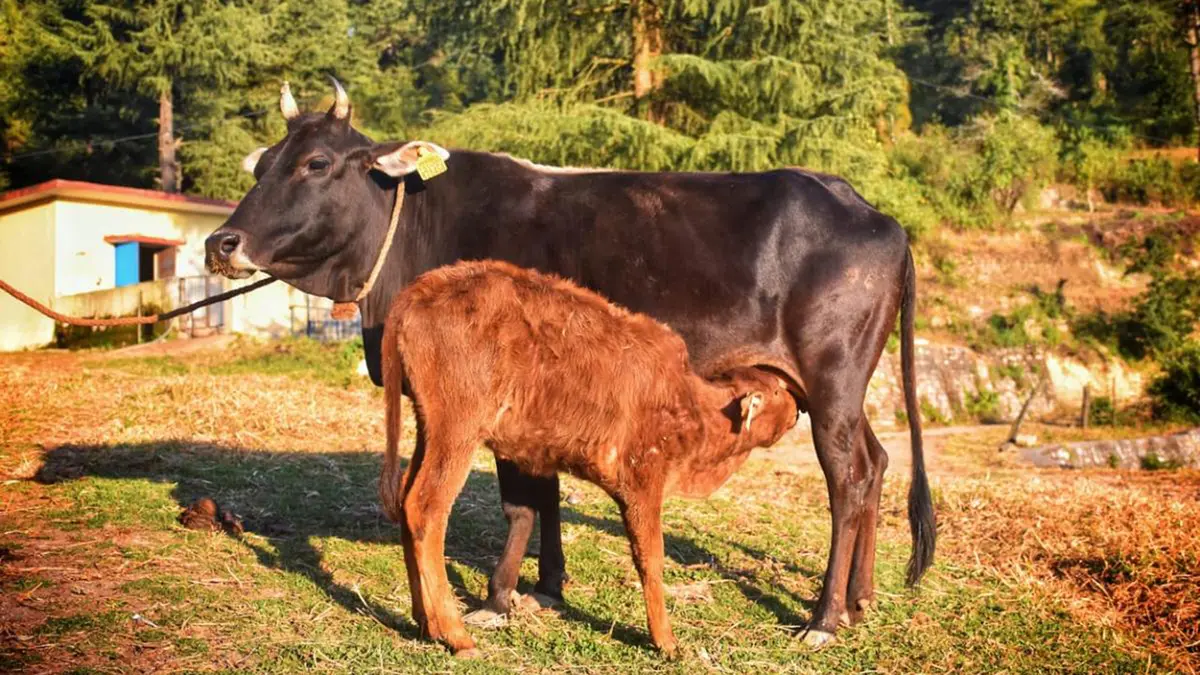
A healthy female Badri calf was born at Pantnagar on 11 September 2026 through in vitro fertilisation, or IVF. The Agriculture Ministry announced the birth the next day. Badri is an indigenous cattle breed adapted to Uttarakhand’s hills. In this procedure, scientists fertilise an egg outside the animal and transfer the resulting embryo into a recipient cow. Researchers from the National Dairy Research Institute and Pantnagar’s agricultural university worked together on the programme. A Sahiwal cow carried this Badri embryo to birth; she was its recipient, not its genetic mother. The result demonstrates a way to produce offspring from selected Badri parents without requiring the donor cow to carry every pregnancy. It is a breeding milestone, not evidence that the breed’s conservation challenges have already been solved.
A breed shaped by its mountain setting
Badri cattle are also known as Pahadi cattle. Their home tract extends across Uttarakhand’s hill districts, including Almora, Chamoli, Pithoragarh and Uttarkashi. The national cattle-breed register recognises Badri as a distinct breed. That recognition identifies a livestock population with characteristic traits and a geographical association, rather than a separate wild species.
The National Dairy Development Board’s breed profile describes small, active animals with a sure-footed gait. They provide milk, manure and draught power. These roles help explain their value beyond commercial milk output alone. A hill household may need an animal suited to local paths, fodder availability and management conditions.
The profile reports an average milk yield of 632 kilograms per lactation. A lactation is the milk-producing period after calving, not a single day or calendar year. The figure describes the animals covered by that profile. It neither predicts the new calf’s future yield nor establishes a guaranteed result from IVF.
How an embryo reaches a recipient cow
The Pantnagar programme began in 2023 with support from the Uttarakhand Biotechnology Council. The collaborating institutions are the Indian Council of Agricultural Research’s National Dairy Research Institute, Karnal, and G. B. Pant University of Agriculture and Technology. Their work combines laboratory reproduction with the management needed to establish a pregnancy.
The first step is to collect immature eggs, called oocytes, from selected donor cows. Ultrasound helps guide this collection. The eggs are then matured under controlled laboratory conditions and exposed to semen from a selected bull. Fertilised eggs develop into embryos before suitable embryos are chosen for transfer.
The recipient must be at a compatible stage of her reproductive cycle. Otherwise, her uterus may not provide the conditions the embryo needs. Synchronising the recipient and timing the transfer are therefore essential parts of the procedure. The process continues well beyond the laboratory, through pregnancy care and monitoring of the newborn.
The egg donor, bull and recipient have different roles. The egg and sperm supply the calf’s inherited genetic material. The recipient supplies the environment in which it develops before birth. A Badri embryo carried by a Sahiwal cow does not become a Badri–Sahiwal cross merely because of that pregnancy.
IVF is different from insemination and cloning
Artificial insemination places semen in the female’s reproductive tract, with fertilisation occurring inside her body. IVF instead moves fertilisation and early embryo development into the laboratory. Embryo transfer is the subsequent placement of an embryo into a recipient. These terms describe related stages or techniques, not interchangeable procedures.
Cloning follows another biological route and does not involve the same combination of egg and sperm. The ministry mentioned separate work on cloned Badri embryos, but that does not make this calf a clone. The reported birth resulted from IVF. Keeping the two research strands separate is essential to understanding what was achieved.
What this can contribute to conservation
Ordinary reproduction limits how many calves a valuable female can carry over time. Embryo technologies can use other suitable females as recipients, increasing reproductive opportunities for selected donors. The National Dairy Development Board nevertheless stresses healthy animals, specialist skills and sound management. Embryo transfer is not a general cure for infertility.
Breeding more animals is also different from preserving a breed’s genetic diversity. Repeatedly using a very small set of parents can narrow that diversity. The Food and Agriculture Organization’s conservation guidance therefore considers breeding structure, local adaptation and farmers’ needs together. Selection for one trait should not unintentionally remove other useful characteristics.
For Badri cattle, a practical programme would need to connect laboratory success with affordable access and reliable records. Donor identity, parentage, pregnancy outcomes and calf health would help judge its performance. Nutrition and veterinary care remain necessary. A sophisticated reproductive technique cannot compensate for poor conditions throughout an animal’s life.
Conclusion
The Pantnagar birth shows that assisted reproduction can support the continued breeding of Badri cattle. Its broader value will depend on repeatable outcomes, diverse breeding lines and usefulness to hill farmers. Conservation succeeds when a breed remains healthy and viable in its home setting, not merely when one advanced procedure produces a calf.