

Why in news?
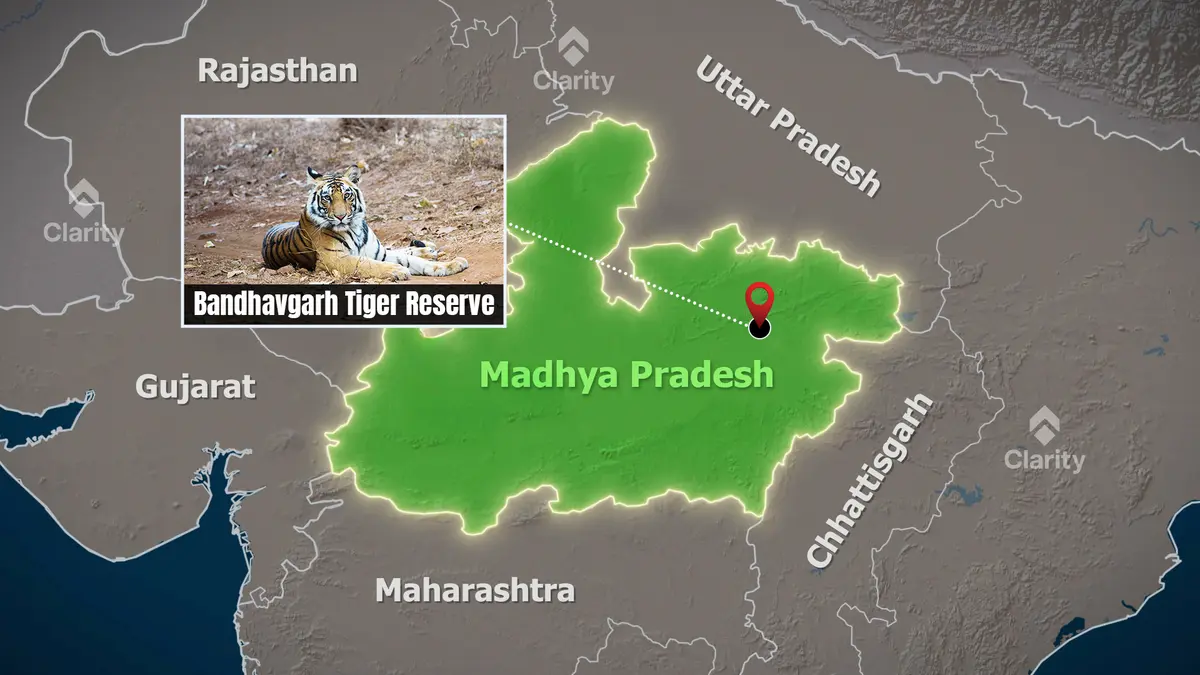
A five-day elephant rejuvenation camp at Bandhavgarh Tiger Reserve brought attention to the care of its working elephants. News On AIR reported on 27 September 2026 that the programme ran from 24–28 September near Parasi Gate. The site lies in the Dhamokhar buffer zone in Madhya Pradesh's Umaria district. Nine of the reserve's fifteen camp elephants were included for rest, health checks and nutritious food. These numbers concern managed elephants, not an estimate of wild elephants in the landscape. The programme also aimed to explain wildlife care to nearby communities. Its scheduled period had ended by this edition's date, but the animals' care remains a continuing responsibility for reserve staff.
Animal care within a larger conservation operation
A tiger reserve depends on people, equipment, habitat management and sustained fieldwork as well as its protected status. The National Tiger Conservation Authority includes elephant handlers among the people engaged through conservation programmes. Handlers, often called mahouts, have responsibilities distinct from those of guides or administrative staff. Their presence is one reminder that managing a reserve involves continuing practical work rather than protection through a boundary notification alone.
The camp focused on managed animals whose food, rest and health depend on human care. A scheduled veterinary check can identify needs that require continuing attention after an event ends. The announcement does not provide a long-term welfare assessment of every elephant. Its stated activities are therefore best understood as part of an ongoing responsibility, not proof that all care requirements have been permanently met.
Where Bandhavgarh lies
Bandhavgarh occupies a forested landscape in northeastern Madhya Pradesh. The national management assessment places it between the Vindhyan Range and the northeastern flanks of the Satpura mountain system. Sal and mixed woodland occur alongside grasslands and bamboo. This habitat mosaic matters because different vegetation types provide food, cover and space for prey and predators rather than serving one species alone.
The same assessment records a reserve area of approximately 1,537 square kilometres, including about 717 square kilometres of core habitat. The buffer accounts for roughly 820 square kilometres. Rounded figures make the relationship clear without implying that the entire reserve is one legally identical zone. The core and buffer perform connected conservation functions, but their management contexts differ.
From a former hunting landscape to a tiger reserve
The Umaria district administration records the area's earlier association with the Rewa rulers and its designation as a national park in 1968. It became a tiger reserve under Project Tiger in 1993. These are different milestones. The national park's establishment, entry into the tiger-conservation programme and later statutory notifications should not be compressed into one supposed founding date.
Bandhavgarh also contains a fort landscape, caves and archaeological remains. The district's account describes sandstone that absorbs rainfall and releases water through springs, feeding streams and low-lying wet areas. This physical setting connects its hills with its forest habitats. Water availability, vegetation and terrain together help explain why the landscape supports wildlife; the reserve is more than a collection of tiger sightings.
Why the buffer matters
The buffer is part of the conservation landscape, not unused land outside it. National guidance describes the core as the principal protected habitat and the buffer as a surrounding area supporting ecological continuity. The buffer can include forest and non-forest land, livelihoods and human activity. Management must therefore consider both wildlife movement and the needs and rights of people living in the wider landscape.
Habitat connections also matter beyond a single reserve. Young or dispersing animals may move between suitable areas, while isolated patches can lose those connections. The national assessment places Bandhavgarh within a broader central Indian forest landscape linked towards Sanjay-Dubri and neighbouring forests. Maintaining usable habitat between protected areas is consequently different from protecting only the centre of one park.
The elephant event's buffer-zone location is relevant in this context. Public awareness can explain why animal care and habitat protection require everyday cooperation. However, visitor activity itself must remain compatible with the reserve's conservation purpose. An event's attendance or publicity is not a measure of habitat condition, animal health or the effectiveness of long-term protection.
Conclusion
Bandhavgarh's camp brings a less visible part of conservation into view: the continuing care of animals managed by reserve staff. That responsibility sits within a larger task of protecting habitats, water systems and ecological connections. The lasting value of the programme depends on follow-through in animal care and informed local participation, beyond its five scheduled days.