

Why in news?
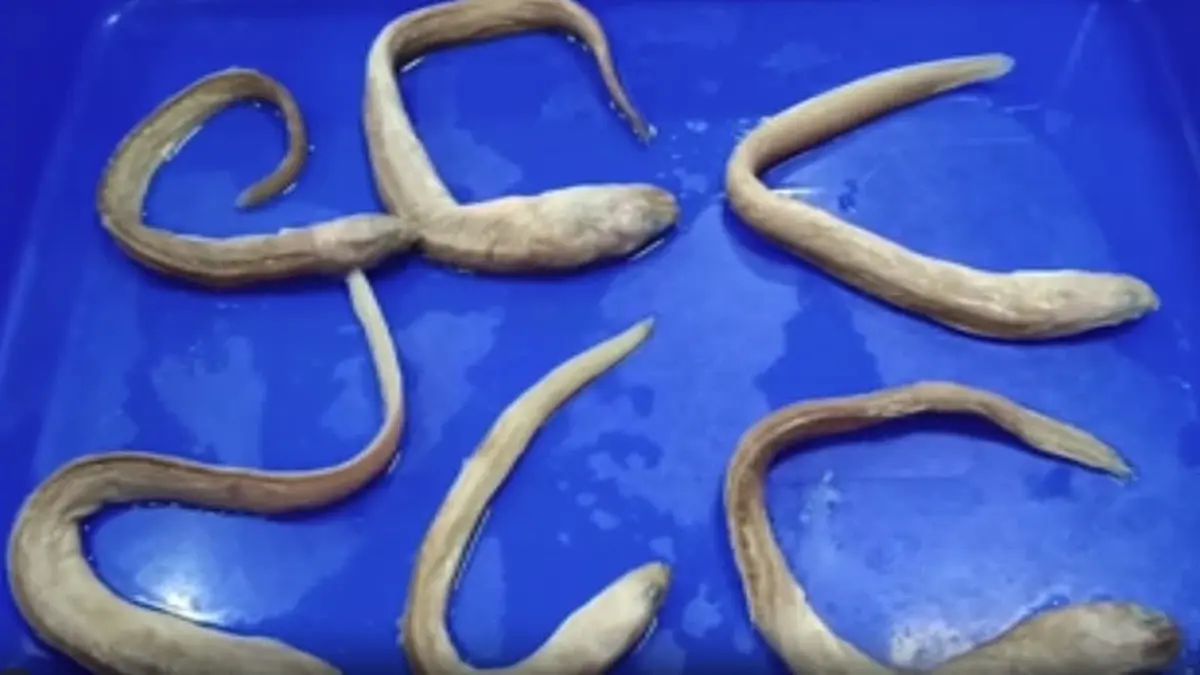
Scientists at the Zoological Survey of India's Gopalpur centre have reported a new fish species named Bathymyrus perplexus. ETV Bharat interviewed the researchers on 30 September 2026 about specimens from the Bay of Bengal. The work began with material collected off Paradip in 2021 and involved comparisons of body features and genetic evidence. The fish has an elongated body and a distinctive combination of markings and head features, according to the researchers. The development matters because similar-looking marine animals can remain unidentified until specimens are examined closely. This is a reported new scientific identification after years of research, not an animal that first appeared in the sea this year.
From a coastal catch to a research collection
Paradip is on Odisha's Bay of Bengal coast, while Gopalpur is the location of the research centre in southern Odisha. The place where researchers examine a specimen is not necessarily where it was collected. The reporting also identifies specimens from West Bengal, the Godavari region and Kakinada in Andhra Pradesh. These locations place the work along India's eastern coast rather than within a single isolated fishing site.
OrissaPOST reports that researchers recorded 32 specimens between 2021 and 2025. It describes renewed examination after another specimen was obtained from Paradip in 2025. The number refers to the research material collected, not the total population remaining in the sea. Multiple specimens allow scientists to compare variation between individuals instead of defining a species from one unusual appearance alone.
What the researchers describe
The genus Bathymyrus belongs to Congridae, a family within the eel order Anguilliformes. The World Register of Marine Species records that classification. It places the reported animal among marine eels rather than treating its long body as an isolated curiosity. Family and genus identify its wider relationships; the species name distinguishes the particular group the researchers describe.
In ETV Bharat's interview, scientist Anil Mohapatra described a long, cylindrical fish associated with waters around 50–100 metres deep. He identified a pinkish body, dark pigmentation on the head and thin dark margins along the dorsal and anal fins. The dorsal fin lies along the back; the anal fin runs along the underside behind the vent. These are reported descriptive features, not a claim that colour alone proves a distinct species.
The central scientific task is comparison with already named relatives. Researchers examine whether a combination of features consistently distinguishes the specimens, rather than merely reflecting age or individual variation. The current account says both morphology and genetic testing were used. Morphology means physical form and structure; it supplies evidence that can be checked against measurements, descriptions and preserved material.
What genetic comparison adds
Deoxyribonucleic acid, or DNA, carries genetic information. DNA barcoding compares selected short genetic regions rather than sequencing every part of an organism's genome. The International Barcode of Life Consortium explains how such reference sequences help identify organisms and reveal diversity that deserves closer taxonomic investigation. A reference library becomes more useful when sequences are linked to reliably identified specimens.
This does not make a genetic test an automatic naming machine. Scientists must interpret genetic differences alongside the organisms and their documented features. A database sequence without a dependable specimen identity can create further confusion. Combining physical and genetic evidence therefore helps researchers test an identification from more than one direction, while preserving material that others can re-examine.
Why names, specimens and publication all matter
International zoological naming rules connect a species name with name-bearing type material. A holotype is the single specimen designated to anchor a new species name in its original description. This provides a reference when later researchers need to decide how that name applies. It is not an assertion that every member of the species looks identical to that one specimen.
The chronology also has several stages. Collection, preliminary identification and formal scientific publication are not the same event. The Zoological Survey's 2023–24 annual report already lists the proposed name in its genetic-reference work. OrissaPOST attributes publication in the Bulletin of Marine Science to 24 September 2026. The earlier institutional record shows that research was underway before the current news coverage, rather than contradicting the report of a later publication.
A recognised identity gives later surveys a clearer unit to record. Researchers can ask where the fish occurs, which habitats it uses and how often it appears in samples. Those questions are not answered by naming alone. The available reports do not establish a complete distribution map, a global population total or a measured rate of decline.
Conclusion
The reported identification of Bathymyrus perplexus illustrates the value of preserved specimens and sustained comparison. Material collected years earlier can become informative when additional specimens and analytical methods are brought together. Its next contribution will be to make marine surveys more precise, while further research establishes the species' ecology and distribution.