

Why in news?
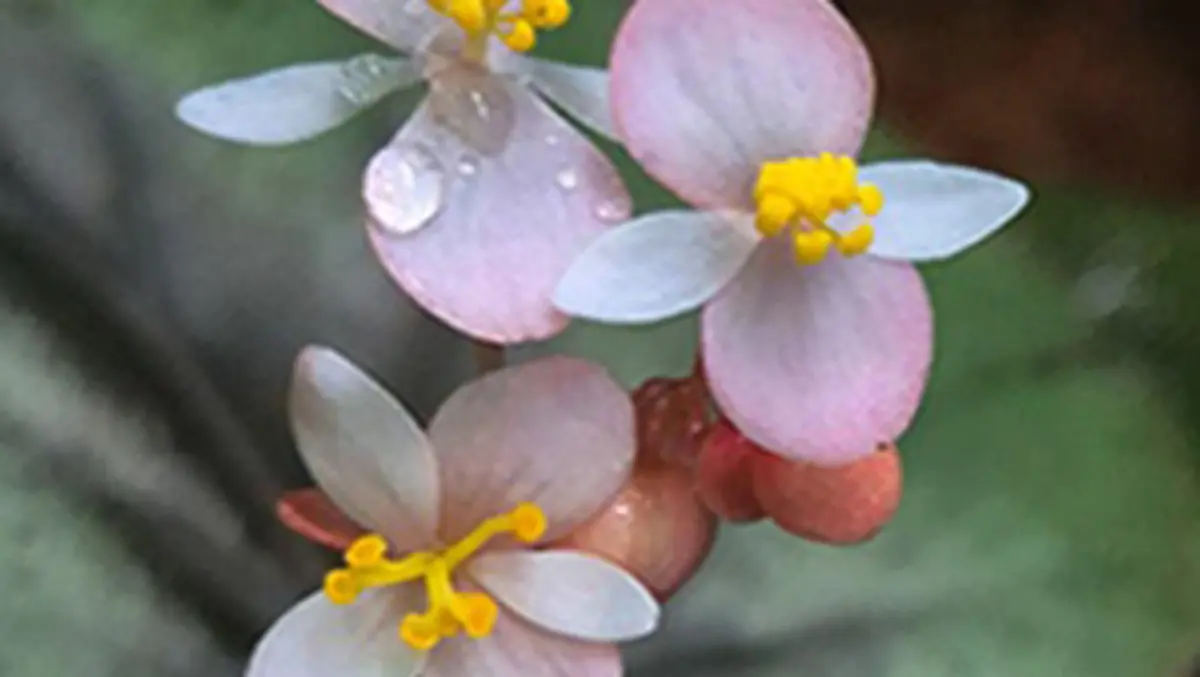
Researchers at the Jawaharlal Nehru Tropical Botanic Garden and Research Institute have described Begonia rajvikramanii, a flowering plant from Kerala. The species account appeared in Phytotaxa on 22 September, followed by reporting in The Hindu. The plant was found at Rosemala in Kollam district, within the Western Ghats landscape. Its recognition rests on comparisons of plant form with related species and established reference material. The finding adds a distinct identity to a plant from a highly localised wet habitat. Its full distribution remains incompletely known. The researchers' Data Deficient assessment reflects that information gap, rather than showing that the species faces little risk.
Place and habitat are part of the finding
The reported plants grow on wet rocky surfaces, including cliffs and road-cut walls, around 200–350 metres above sea level. This is more specific than simply saying that a plant occurs in the Western Ghats. Moisture, shade and the character of the growing surface can differ sharply over short distances. A small suitable patch can therefore matter within a much larger forest landscape.
The Western Ghats run along the western side of peninsular India and influence the region's monsoon environment. The United Nations Educational, Scientific and Cultural Organization highlights their biological richness and high level of endemism. Endemism means restriction to a particular geographical area. However, a species currently recorded at one locality should not automatically be assumed absent from every similar habitat that has not been adequately surveyed.
How a plant becomes a recognised species
The original paper places the new plant in Begoniaceae, the family containing the genus Begonia. Within that large genus, it assigns the species to a group called section Reichenheimia. A section is a subdivision used to organise related species. It is not a protected-area category or a separate conservation status.
The authors based their description on distinguishing morphological characters, meaning features of the plant's physical form. The paper includes a comparison with related species. A useful diagnosis must explain how the proposed species differs from those already named. Merely finding a plant at a new place would not, by itself, establish a new species.
Why reference specimens matter
A herbarium preserves labelled specimens that can be examined long after collection. Kew explains that these records can connect appearance with location, habitat and the timing of flowering or fruiting. Type specimens have a particularly important role as references for the application of scientific names. They help researchers compare a new collection with the material underlying an established name.
The Royal Botanic Garden Edinburgh's Begonia Resource Centre brings together names, type material and original descriptions. Such resources make comparisons possible across institutions and countries. A newly published name becomes useful when future observations can be reliably attached to it. Otherwise, similar-looking plants may be confused and information about their distribution combined incorrectly.
A name recognising conservation work
The new species honours R. Raj Vikraman, formerly responsible for garden management at the institute. The recognition refers to his contribution to its garden and plant-conservation programmes. Maintaining living collections outside natural habitats is called ex situ conservation. It complements, rather than replaces, protection of the places where plants grow naturally.
What the population observations can and cannot show
The research account reports roughly 200 observed mature plants within an area smaller than five square kilometres. Those are observations from the surveyed locality, not proof of a complete worldwide census. The distinction matters because a narrow known distribution may reflect genuine restriction, incomplete exploration or both. Further fieldwork is needed to separate those possibilities.
Data Deficient means insufficient information for a sound extinction-risk assessment. Under the International Union for Conservation of Nature framework, it is not a low-risk category. A species may be identifiable and biologically interesting while its population trend remains poorly known. The researchers' provisional use of the category should also not be confused with a separately published global Red List entry.
The habitat description suggests practical questions for follow-up surveys. Do comparable wet rock faces support further populations? How persistent is moisture through the year, and are known sites changing? Those are research priorities inferred from the finding, not documented impacts already measured by this study. They help turn a name into a better understanding of the organism's needs.
Conclusion
Begonia rajvikramanii adds a documented species to Kerala's botanical record while leaving its wider conservation picture open. Its significance lies in linking a distinct plant with a precise habitat and a testable description. Protecting known sites and extending careful surveys can improve that picture. A small known population deserves attention without converting incomplete evidence into either reassurance or an unsupported extinction claim.