

Why in news?
Flocks of black-headed ibis are feeding in the Pallar paddy fields at Tirunavaya in Kerala’s Malappuram district. The Hindu’s 17 September report connects their arrival with ploughing before the next paddy season. The birds probe wet ground for food, making cultivated wetlands useful feeding areas. Local observers, however, also report the loss of nesting sites used in earlier years. The news therefore raises two connected questions: why these fields attract the birds, and whether suitable breeding habitat remains nearby. A visible feeding flock is encouraging, but it does not by itself establish that a nesting colony has recovered.
Recognising the bird
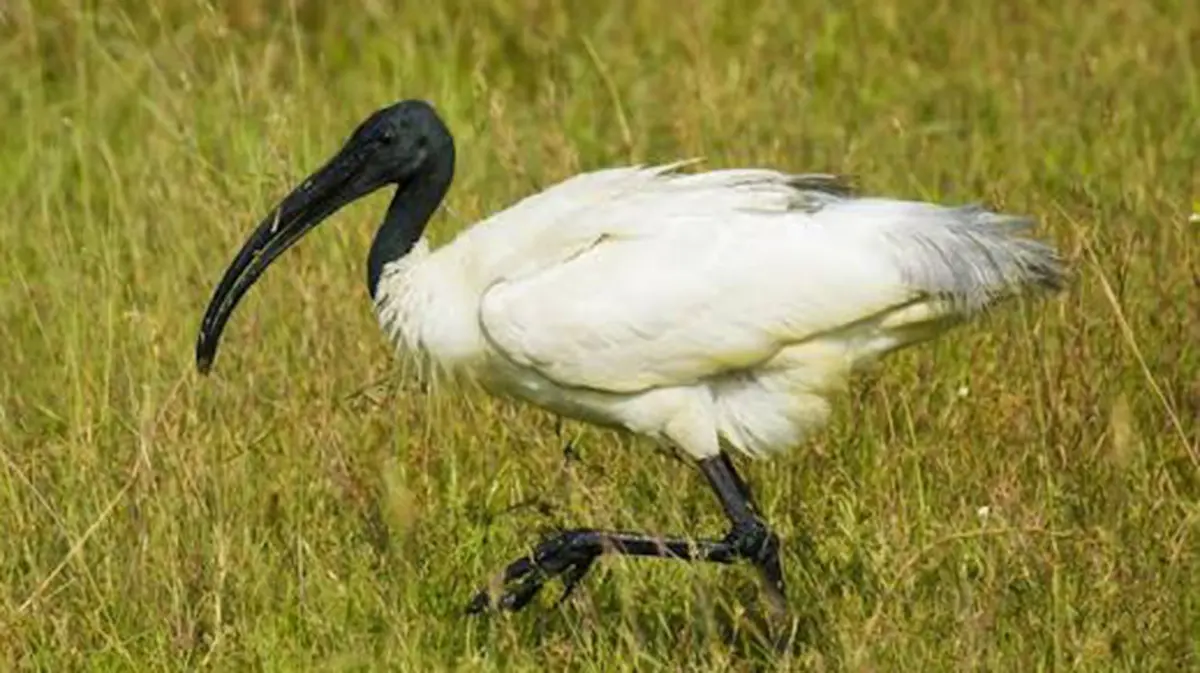
The black-headed ibis has the scientific name Threskiornis melanocephalus. An adult combines a largely white body with a bare black head and neck. Its long black bill curves downwards and is used to probe mud and shallow water. These features distinguish it from other conspicuous white waterbirds sharing the same landscape.
Its shape also helps explain its feeding method. The long legs allow it to wade, while the curved bill reaches into wet ground. Cornell’s eBird account records its use of marshes, lake margins and agricultural fields, among other habitats. The bird is therefore not confined to a large, permanently flooded lake; suitable feeding conditions can also occur in a working agricultural landscape.
Why ploughed paddy fields attract a flock
Pallar’s immediate attraction is feeding opportunity during field preparation, according to the local report. Wet soil and disturbed ground make food accessible to probing birds. This links the sighting to a particular activity and season rather than to a permanent increase in habitat everywhere. The same field can offer different conditions before ploughing, during cultivation and after harvest.
Agricultural wetlands can consequently complement natural marshes, but they are not automatically equivalent habitats. Water depth, disturbance and the timing of cultivation all affect their use. For a bird, the useful landscape may include several different places for feeding, resting and nesting. Protecting only the spot where a large flock was photographed would not necessarily protect that wider set of needs.
Arrival does not automatically mean migration from abroad
The State of India’s Birds species profile classifies the black-headed ibis as resident in India. “Resident” does not mean that every individual remains in one field throughout the year. Birds can move locally or regionally as water and food availability change. A newly visible flock therefore does not establish that the birds have arrived from another country.
Similarly, an increase in sightings can have several explanations. More birds may be using a place, observers may be visiting more often, or conditions may make the birds easier to see. Repeated, comparable observations are needed to distinguish these possibilities. A striking single visit is valuable evidence of presence, but it is not a complete population trend.
The difference between global status and local conditions
The updated State of India’s Birds factsheet lists the species’ global conservation category as Least Concern. It also reports a long-term increase and a stable current trend in India. Older descriptions that label the species Near Threatened should not be repeated without checking their date. BirdLife’s 2024 assessment discussion documented the recommendation to move it to Least Concern.
A global category evaluates extinction risk across the species’ range. It does not certify that every breeding site is secure or that no conservation work is needed. Likewise, an encouraging national trend cannot rule out habitat loss in one locality. These assessments answer different questions and can both be true: a species may be doing relatively well overall while a particular colony is lost.
What local observers say about nesting
The Hindu reports that nesting was first recorded at Tirunavaya in 2022 and exceeded 50 nests in 2024. Local birdwatcher Salman Karimpanackal said nesting sites were destroyed in 2025 and that no nests had been seen since. These are attributed local observations, not a completed region-wide breeding survey. They identify a concern that deserves closer examination alongside the new feeding sightings.
A useful follow-up would record where birds feed, where they rest and whether nesting resumes during the appropriate season. Observations should include the date and search effort, not just the largest flock count. Conversations with farmers and local conservation groups could also clarify how field management and habitat changes interact. These are proposed ways to understand the situation, not measures already reported as completed.
Conclusion
The Pallar sightings show the value of wet agricultural land within a broader bird habitat. Their meaning becomes clearer when feeding, movement and breeding are examined separately. The black-headed ibis’s improved global status is compatible with concern about local nesting losses. Sustained observation and protection of the places needed across its life cycle are more informative than a single reassuring photograph.