

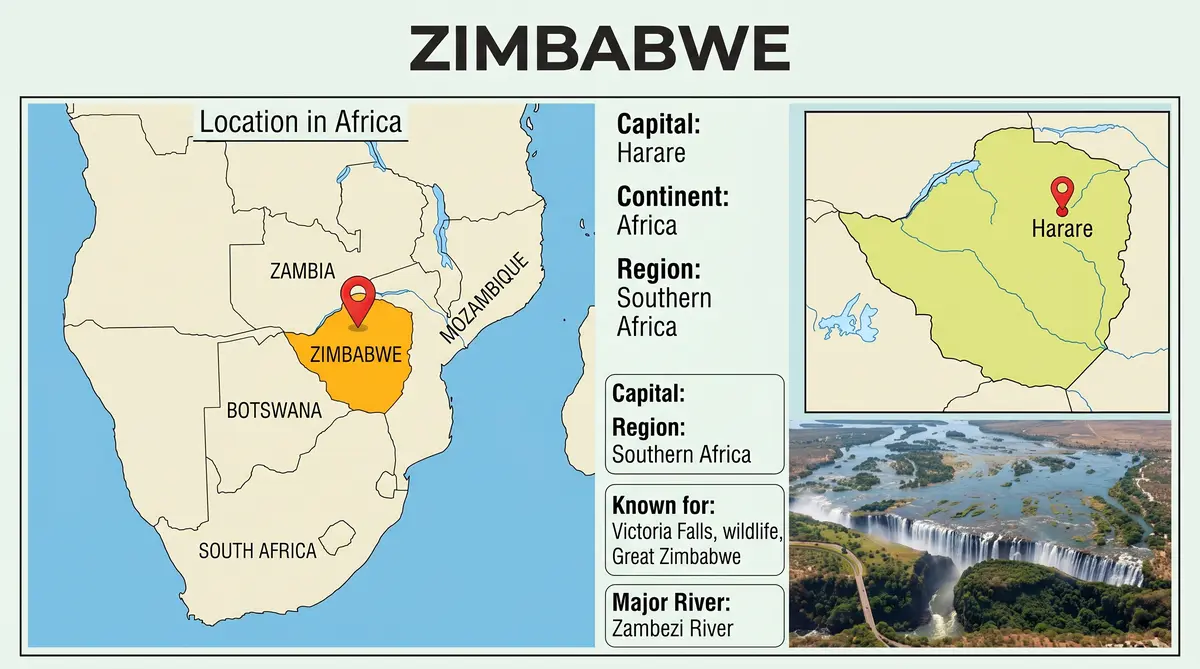
Why in News? Zimbabwe’s Finance Minister Mthuli Ncube announced that the BRICS New Development Bank (NDB) has formally initiated the process of admitting Zimbabwe as a member. This paves the way for the southern African nation to access long‑term development finance and diversify its economic partnerships.
Background
The New Development Bank was created by Brazil, Russia, India, China and South Africa in 2015 to fund infrastructure and sustainable development projects in BRICS countries and other emerging economies. It aims to provide an alternative source of financing that complements rather than competes with institutions such as the World Bank and the International Monetary Fund. Over time the bank has expanded its membership to countries including Bangladesh, the United Arab Emirates and Egypt.
Zimbabwe applied for membership in 2023. Decades of economic challenges and Western sanctions have limited its access to concessional finance. The government’s Vision 2030 seeks to transform Zimbabwe into an upper‑middle‑income country by investing in roads, energy, digital connectivity and industrialisation.
Membership Negotiations
- Official communication: According to Zimbabwe’s finance minister, NDB president Dilma Rousseff informed Harare that the bank’s board had approved the start of accession negotiations.
- Economic objectives: Zimbabwe hopes that NDB membership will enable it to mobilise long‑term loans for infrastructure, renewable energy, mining, agriculture and digital transformation. With external debt estimated at about US$17 billion, the country needs affordable funding to restructure its economy.
- Strategic implications: Joining the NDB aligns Zimbabwe with the BRICS group’s financial architecture. It allows diversification away from Western lenders and could help the government meet Sustainable Development Goals. Negotiations will involve agreeing on the bank’s articles, capital contribution and governance requirements.
Conclusion
Zimbabwe’s potential accession to the New Development Bank reflects the shifting landscape of global development finance. Membership would provide access to capital for transformative projects and strengthen the country’s ties with emerging economies. The process also signals that the BRICS institution is open to expanding beyond its founding members, offering an alternative avenue for countries seeking infrastructure funding.
Sources: News On Air report