

Why in news?
A national audit found Escherichia coli in water-cooler samples at eight railway stations across four zones.
What the audit found
The Comptroller and Auditor General reviewed station amenities from 2019–20 through 2023–24. The report was tabled in Parliament on 12 August.
It examined 512 non-suburban stations, representing about 8.66 per cent of that station group. Only 54 had every prescribed minimum amenity.
Positive water-cooler samples came from Coimbatore, Palakkad Junction and Hyderabad. They also came from five stations in Maharashtra and Jharkhand.
Those stations were Chhatrapati Shivaji Maharaj Terminus, Bhiwandi Road, Kalyan, Lonavala and Madhupur.
Chemical testing was not conducted at 179 stations across 11 zones. Maintenance failures also affected coolers, toilets, drains and pest control.
The audit found delays in 59 per cent of passenger-amenity works. It also recorded underuse of budget grants during the five-year period.
One organism, two different questions
E. coli indicates faecal contamination. A positive test does not identify the exact disease-causing strain without further laboratory work.
What is Escherichia coli?
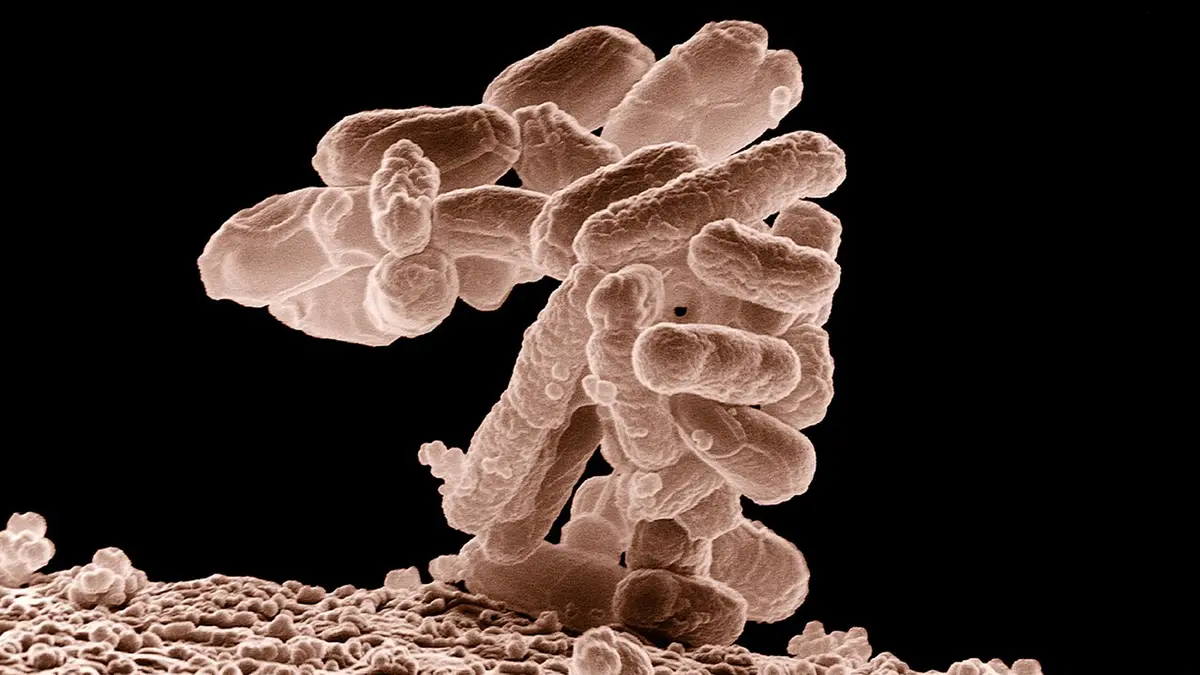
Escherichia coli, commonly called E. coli, is a rod-shaped bacterium. It normally lives in the intestines of people and warm-blooded animals.
Most strains are harmless and form part of normal gut life. Some strains carry traits that cause intestinal or other infections.
Shiga toxin-producing E. coli can cause severe stomach cramps and bloody diarrhoea. A small group of patients develops haemolytic uraemic syndrome.
This complication can damage kidneys and destroy red blood cells. Children, older people and immunocompromised patients face greater danger from severe illness.
E. coli also serves as a practical indicator organism. Its presence suggests recent faecal contamination or a failure within water treatment and distribution.
Why the finding is serious
The World Health Organization says E. coli should not be detectable in any 100-millilitre drinking-water sample. Detection requires immediate investigation and corrective action.
Contamination can enter at the source, storage tank, pipeline, cooler or tap. Dirty hands, damaged connections and poor cleaning can add further risk.
A one-time negative retest is not enough. Investigators must identify the route of contamination and verify the entire chain from tank to tap.
The Railway Ministry has proposed filtration at about 20,000 locations. It also plans scheduled tank cleaning and board-level water-quality monitoring.
A stronger safety response
Stations should stop using an affected outlet immediately. Staff must disinfect the system and provide safe alternative water during corrective work.
Repeat samples should come from the source, tank, cooler and point of use. Results should include microbiological and chemical parameters.
Sanitary inspections must check sewage leaks, cross-connections and stagnant areas. Cleaning logs need verification instead of signatures alone.
Publishing station-level results would improve accountability. Passengers also need a simple method for reporting taste, smell or maintenance concerns.
Water safety is inseparable from toilets, drainage and waste management. The wider amenity failures therefore need one coordinated improvement plan.
Safe water depends on a managed system
Filters can help, but they cannot replace source protection, clean storage, regular testing and accountable maintenance.
Conclusion
The positive samples reveal an avoidable public-health risk. They also show why basic amenities require continuous maintenance after installation.
Indian Railways should publish corrective results and close each identified failure. Passengers deserve safe water at every point of their journey.