

Why in news?
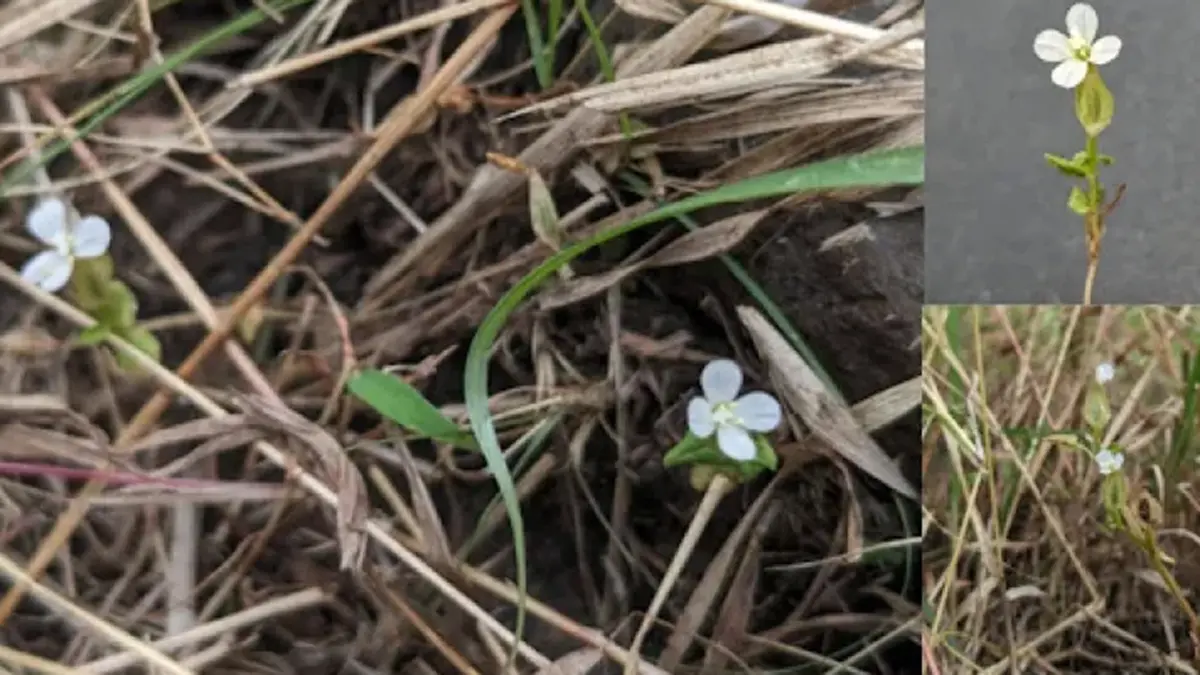
Botanists from the Indian Institute of Science Education and Research (IISER) Pune and the Savanna Science Foundation have discovered a new plant species called Canscora agni in the grasslands of Sus Hill near Pune. The species was named “agni” (meaning fire) to highlight the role of natural fires in maintaining savanna ecosystems. The plant has been assessed as critically endangered because it is known from a single location.
Background
Savannas are open landscapes where grasses dominate and occasional trees dot the horizon. Periodic fires are a natural part of these ecosystems. They prevent woody plants from taking over and stimulate the growth of herbs and grasses. The genus Canscora belongs to the gentian family and includes small herbs found in India’s plains and hills. The newly described species Canscora agni grows only a few centimetres tall and appears during the post‑monsoon months when the vegetation regrows after fires.
Distinguishing features
- Size and habit: The plant reaches a height of about 10 centimetres. It forms small clumps on rocky hillocks.
- Winged stems: Its green stems have thin, wing‑like extensions that help the plant photosynthesise.
- Leaves and flowers: The species has very few leaves. Tiny white flowers bloom at the tips of the branches. Unlike its relative Canscora alata, the veins on the wings of the calyx (the winged base of the flower) form a reticulate pattern.
- Fire adaptation: Because the plant is short lived and reproduces after the rains, it can survive fires that sweep through the savannas each year.
Conservation concerns
- Restricted range: Canscora agni is known only from the Sus Hill site. Any disturbance to this area could wipe out the entire population.
- Fire management: Regular low‑intensity fires maintain savannas. Suppressing all fires can allow shrubs and trees to overgrow, reducing habitat for specialist herbs.
- Critical status: Researchers have classified the species as critically endangered under IUCN criteria and have urged local authorities to protect its habitat.
Conclusion
The discovery of Canscora agni shows that India’s fire‑prone savannas still hide unknown species. Protecting these ecosystems through controlled burns and habitat conservation will help preserve their unique flora.