

Why in news?
Wildlife enthusiasts and conservationists have recently highlighted the Caracal as part of efforts to raise awareness about less known carnivores. Occasional sightings in northwestern India and long‑term declines in their African range have spurred interest in this elusive cat.
Background
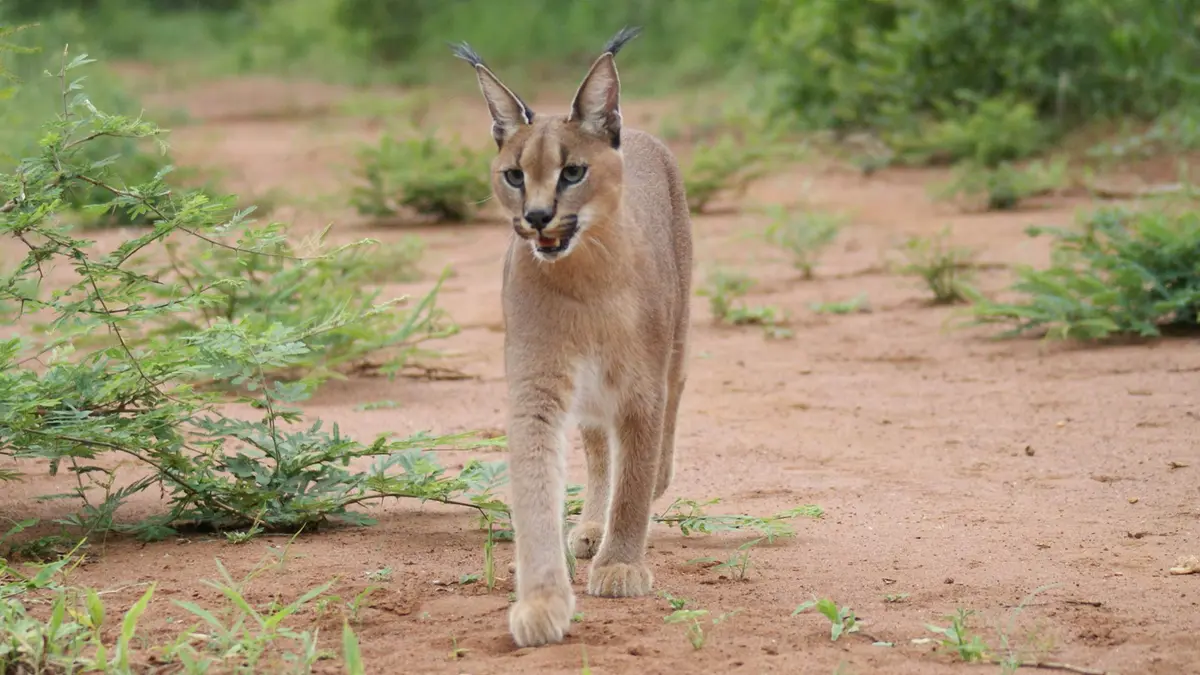
The caracal (Caracal caracal) is a medium‑sized wild cat native to Africa, the Middle East and parts of India. It has short reddish‑brown fur, a compact body and distinctive black ear tufts that can reach 5 centimetres long. Historically known as the “desert lynx,” the species has long legs and powerful hindquarters that allow it to leap several metres in the air to catch birds.
Habitat and behaviour
- Distribution: Caracals are found across sub‑Saharan Africa, the Arabian Peninsula, Iran and northwestern India. They prefer dry forests, savannah, shrublands and semi‑desert areas but avoid true sandy deserts.
- Diet: Primarily carnivorous, they hunt small mammals such as hares, rodents and antelopes. Their strong jaws and agile bodies also enable them to snatch birds in flight. In agricultural areas they occasionally prey on poultry, leading to conflicts with farmers.
- Social structure: Caracals are mainly solitary and mark territories with scent. They are nocturnal or crepuscular, travelling several kilometres during a night to find food.
- Reproduction: Breeding can occur year‑round. After a gestation of about 70 days females give birth to one to six kittens in secluded dens among rocks or dense vegetation. Kittens stay with their mother for up to a year.
- Lifespan and status: In the wild caracals live roughly 12 years, but can survive up to 17 years in captivity. The species is not globally threatened, yet populations are declining due to habitat loss, persecution and the exotic pet trade.
Why conservation is important
Though not as famous as lions or tigers, caracals play an important role in controlling rodent and small mammal populations. Protecting their habitats also benefits many other species in dryland ecosystems. Public outreach and community‑based programmes can reduce conflicts with livestock owners and discourage illegal trade. Sightings in India’s Kutch and the Aravalli hills indicate that small, scattered caracal populations survive on the subcontinent and require monitoring.