

Why in news?
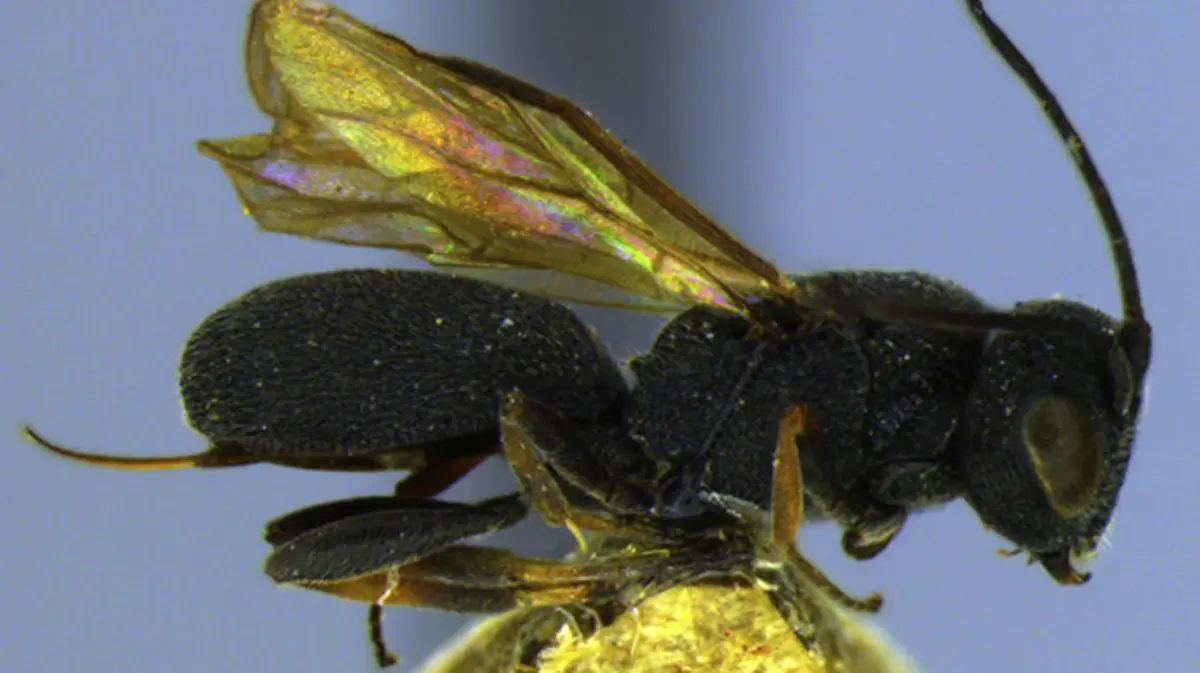
Researchers from the Zoological Survey of India, the University of Guelph (Canada) and the Kalinga Foundation announced in March 2026 the discovery of a new parasitic wasp species, Chelonus (Carinichelonus) mahadeb, in a tea estate in Upper Assam. The species was named in honour of Lord Mahadeb (Shiva) and underscores the rich biodiversity of India’s tea plantations.
Background
Chelonus is a genus of tiny parasitic wasps belonging to the family Braconidae. Species in this genus are egg–larval parasitoids: females insert their eggs into the eggs of moths and butterflies. The developing wasp larva hatches inside its host, consuming it and thus naturally controlling pest populations. The subgenus Carinichelonus is extremely rare, with only a handful of species described worldwide.
Features of the new species
- Size and appearance: Female C. mahadeb measures about 4.6 mm in length. It has 16 antenna segments, a finely sculptured (reticulate‑rugose) thorax and transparent wings with a distinctive pattern of veins. The head and abdomen are primarily black with yellow patches.
- Collection site: The wasp was collected from the Nahortoli Tea Estate in November 2024. A related species, C. siangensis, was found in a nearby estate, extending its known range.
- Biology: Although specific hosts are unknown, members of this genus parasitise eggs of lepidopteran pests such as cutworms and leafrollers. Thus, they contribute to environmentally friendly pest management.
Why it matters
- Biodiversity hotspot: The discovery highlights the rich insect diversity hidden within tea plantations, which can act as refuges for beneficial species when pesticides are used judiciously.
- Natural pest control: Parasitic wasps reduce reliance on chemical pesticides by suppressing pest populations, supporting sustainable agriculture.
- Scientific value: Documenting new species helps taxonomists understand evolutionary relationships and guides conservation priorities.