

Why in news?
Research involving the Indian Institute of Science in Bengaluru has identified a brain pathway linked to cold-related pain. The findings concern cold allodynia associated with chemotherapy-induced nerve damage. Experiments in mice examined both physical responses and avoidance behaviour. The work offers a research direction for treatment, rather than an already available therapy for patients.
Understanding allodynia and nerve damage
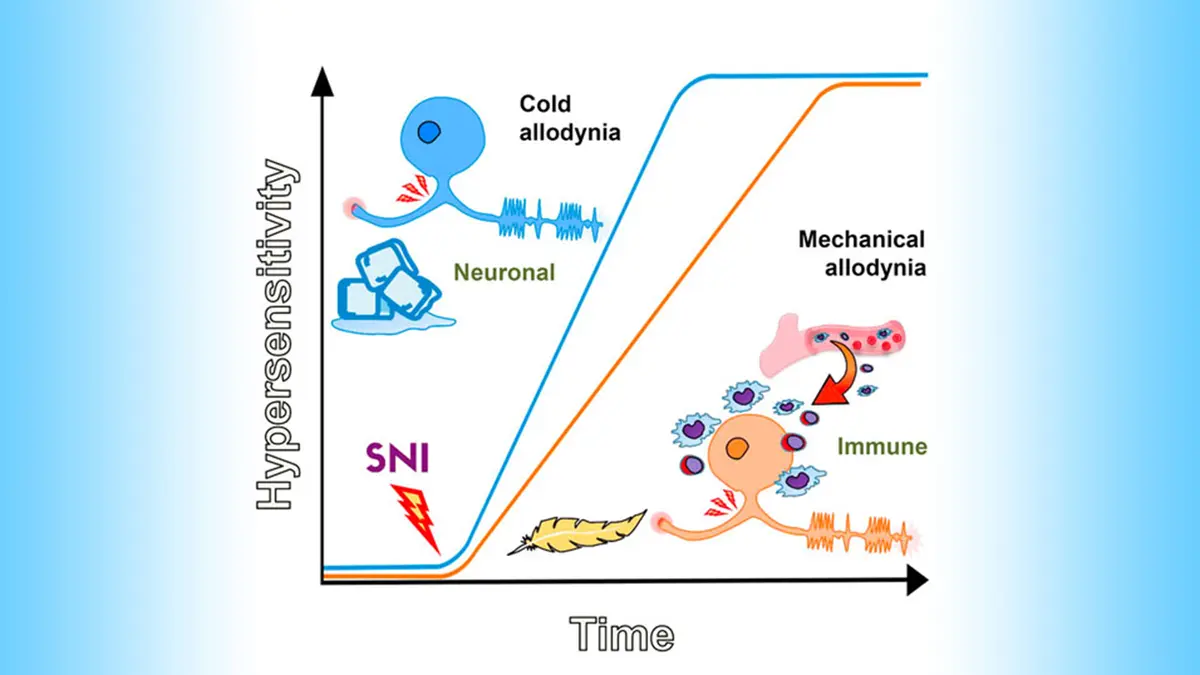
Allodynia means pain caused by something that does not normally provoke pain. In cold allodynia, an ordinarily harmless cool stimulus becomes painful. It is different from discomfort caused by dangerously low temperatures. The problem lies in an altered pain response, not simply exposure to severe cold.
Allodynia also differs from hyperalgesia. Hyperalgesia means an increased response to a stimulus that is already normally painful. These terms describe what a person experiences. They do not, by themselves, identify the complete biological mechanism responsible for that experience.
Some cancer treatments can damage peripheral nerves outside the brain and spinal cord. This condition is called chemotherapy-induced peripheral neuropathy. Symptoms can include tingling, numbness, weakness or pain. Sensory changes may interfere with ordinary tasks even when the treatment is addressing the cancer successfully.
What the researchers investigated
The study was published in Cell Reports in 2026. It examined how brain circuits shape cold hypersensitivity associated with peripheral neuropathy. The researchers used mice to investigate nerve-cell activity and behaviour. This allowed them to study a mechanism that cannot be established through symptom descriptions alone.
The important connection runs from the lateral parabrachial nucleus to the parafascicular region of the thalamus. These are groups of nerve cells in the brainstem and deeper brain. The pathway became more responsive in the neuropathy model. Its activity was associated with both sensory responses and avoidance of unpleasant cold.
The researchers also examined the nearby centromedian thalamic region. Its contribution was more closely associated with the emotional or motivational aspect of pain. This comparison showed that neighbouring regions did not perform identical roles. The study therefore describes a specific circuit organisation rather than one universal “pain centre”.
Why the methods strengthen the finding
Brain activity observed during pain can show a connection without proving causation. The team therefore combined measurements with experiments that changed selected nerve-cell activity. Activating the relevant pathway increased pain-related and avoidance responses. Suppressing it reduced cold sensitivity in the mouse model.
The techniques included calcium imaging, which tracks signals associated with nerve-cell activity. Electrical recordings provided another way to examine how cells responded. Light-based and chemical tools helped manipulate selected cells in the experiments. Together, these methods linked circuit activity with changes in the animals’ behaviour.
The distinction between sensation and avoidance is important. Pain includes the unpleasant experience and the motivation to escape it. Behavioural experiments can examine these components through different responses. In mice, these are scientific measures of pain-related behaviour, not direct verbal reports of human feelings.
What the findings mean for patients
The research identifies a possible target for future treatment development. It does not establish a safe way to manipulate that circuit in people. Human studies would need to address effectiveness and unwanted effects. A useful treatment must reduce harmful hypersensitivity without damaging other important brain functions.
Patients experiencing new nerve symptoms should discuss them with their cancer-care team. Early reporting helps clinicians assess severity and effects on daily life. Decisions about treatment changes require an individual clinical assessment. The research does not justify stopping chemotherapy or trying experimental approaches without medical supervision.
The wider contribution is a more detailed explanation of treatment-related pain. Peripheral nerve damage and brain processing can both shape the final experience. Studying their connection may help researchers develop more selective approaches. However, progress from a laboratory mechanism to patient benefit requires further testing.
Conclusion
Cold allodynia shows how ordinary sensations can become painful after nerve injury. The new circuit research explains part of this process in mice. It also distinguishes sensory responses from the motivation to avoid discomfort. That knowledge can guide future therapeutic research. For now, clinical care and prompt reporting of symptoms remain essential for affected patients.