

Why in news?
New 2026 assessments show mixed conditions after the fourth global coral bleaching event. Global heat stress probably fell below event thresholds during 2025. Yet regional bleaching continued in parts of Australia, Florida and other warm seas. The contrast shows why global declarations cannot replace local reef monitoring.
What coral bleaching means
Reef-building corals are animals living with microscopic algae inside their tissues. The algae supply much of the coral’s energy through photosynthesis. They also give many corals their colour. This partnership works within a limited environmental range.
Heat or another stress can disrupt the relationship. Corals then lose algae or their photosynthetic pigments. Their pale skeleton becomes visible through transparent tissue. This appearance is called bleaching.
A bleached coral is stressed but not necessarily dead. It can regain algae if suitable conditions return quickly. Prolonged or intense stress reduces growth and reproduction. It can finally cause disease and mortality.
The fourth global event
Global monitoring agencies confirmed the fourth worldwide bleaching event in April 2024. Heat exposure began across several ocean basins during early 2023. By the event’s end, bleaching-level stress had affected about 84 per cent of reef area. This was the largest global extent recorded by satellite monitoring.
The United States National Oceanic and Atmospheric Administration reviewed conditions through 2025. It concluded in June 2026 that the global event had likely ended. The statement did not say every reef had recovered. It meant heat stress was no longer globally extensive enough.
Regional marine heatwaves can continue after a global event ends. Local bleaching can also start later. Satellite temperatures therefore need field observations. Divers can distinguish pale, recovering and dead colonies.
Great Barrier Reef conditions
The Great Barrier Reef lies off Queensland in the Coral Sea. It extends for more than 2,000 kilometres along Australia’s north-eastern coast. The system contains thousands of reefs and islands. Conditions can differ sharply between its northern, central and southern regions.
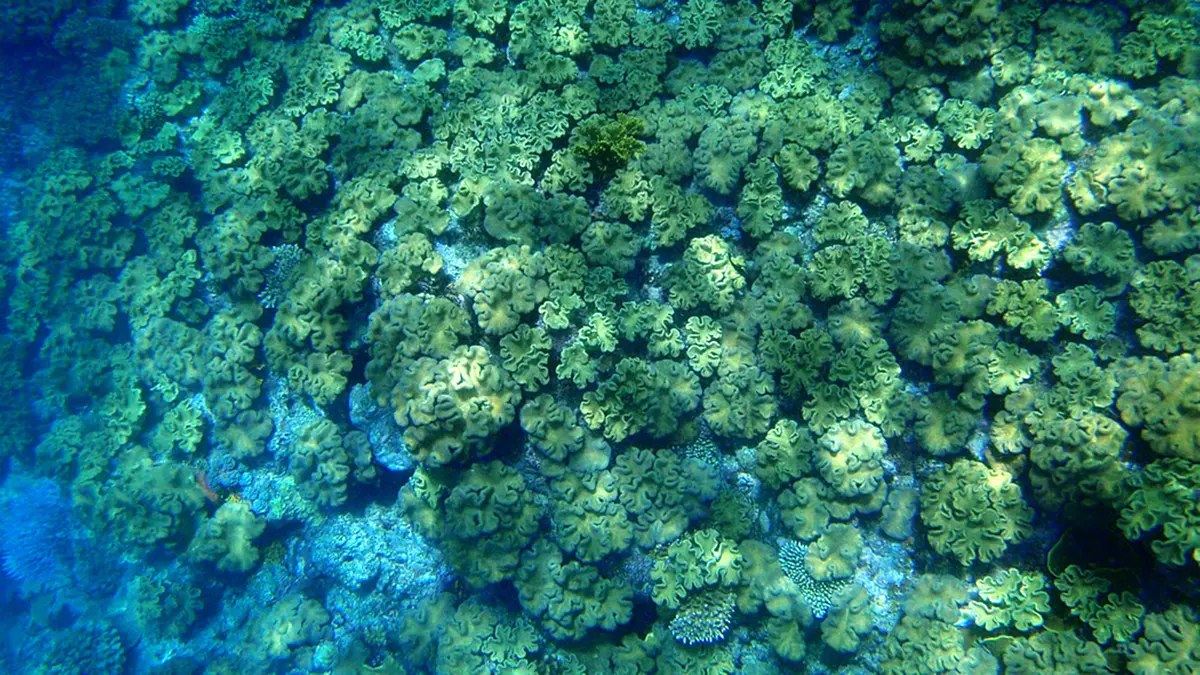
Australian surveys during 2025–26 covered 121 reefs. Average hard-coral cover rose in northern and central regions. Southern cover changed little overall. Scientists still described the recovery as early and vulnerable.
Summer water temperatures remained above long-term averages. Cloud, rain and monsoon conditions reduced some heat exposure. Low-level bleaching still occurred across parts of the reef. Recovery could reverse during another severe summer.
Why warm water is the main driver
Corals are adapted to the normal temperature range of their location. Sustained heat just above the seasonal maximum can become damaging. Strong sunlight can intensify stress in shallow water. Calm conditions may keep hot surface water in place.
Scientists combine temperature and exposure time through degree heating weeks. A short temperature spike differs from weeks of accumulated heat. Higher values increase the chance of widespread bleaching. Species and prior exposure still affect the actual response.
Pollution, sediment, disease and salinity change can also weaken corals. Ocean acidification makes skeleton building harder over time. It is not usually the immediate trigger of mass thermal bleaching. Multiple pressures can nevertheless interact.
Ecological and social consequences
Coral reefs provide complex shelter for fish and invertebrates. Mortality removes living cover and structural complexity. Algae may dominate after repeated disturbance. Recovery then becomes slower and less certain.
Reefs also reduce wave energy along some coastlines. Fisheries and tourism support many coastal livelihoods. Damage can therefore affect food, income and storm protection. Small island communities may have few economic alternatives.
Not every reef responds equally. Depth, currents and local temperature history create refuges. Some coral species tolerate heat better than others. Protecting diversity gives ecosystems more paths to recovery.
What can be done locally
Local action cannot stop global ocean warming by itself. It can reduce avoidable stress while emissions fall. Better wastewater treatment limits nutrients and disease. Erosion control reduces damaging sediment after heavy rain.
Fishing rules can protect herbivorous fish that control algae. Anchoring restrictions prevent direct breakage. Temporary closures may reduce pressure during severe bleaching. Enforcement should involve communities and provide livelihood support.
Coral nurseries and assisted recovery can help selected sites. They cannot restore every reef at continental scale. Projects need genetic diversity and long-term monitoring. Planting heat-sensitive clones without planning may create another loss.
The global climate requirement
Repeated mass bleaching is driven primarily by greenhouse-gas warming. Local management buys time but does not remove that cause. Rapid emissions reduction remains the central long-term response. Adaptation and mitigation must therefore proceed together.
Monitoring systems also need stable funding. Satellites give broad and frequent coverage. Field teams verify ecological damage and recovery. Open data help governments compare risk across borders.
Communication should avoid both complacency and fatalism. Some reefs can recover under improved conditions. Others have already suffered major mortality. Honest regional evidence supports better decisions than a single global label.
Bleaching and coral death are not identical
Bleaching describes severe stress and loss of symbiotic algae. Death becomes more likely when high heat or other pressures continue.
Conclusion
The fourth global event exposed most monitored reef area to bleaching-level heat. Its likely end does not mean the crisis has passed. Regional stress and fragile recovery continue across major reef systems. Local protection can improve resilience and recovery prospects. Durable survival ultimately requires rapid limits on global warming.