

Why in news?
An adult male tiger known as Bhola died during treatment at the Dhela Rescue Centre. Visitors knew him from the Phato tourism zone in Uttarakhand. Forest staff had rescued him after guides reported serious injuries. Samples were sent for examination before a final cause could be established.
What is known about Bhola’s death
Bhola was frequently seen in the Phato zone of the Terai West Forest Division. Local guides reported that he was limping in June. A forest team rescued him on 26 June. He then received treatment at the Dhela Rescue Centre for nearly two months.
Corbett Tiger Reserve Director Saket Badola confirmed that the tiger died during treatment. Reports placed his age at about nine years. A veterinary post-mortem was conducted under official supervision. Biological samples went to specialist institutes in Dehradun and Bareilly.
Early reports linked his injuries with a territorial fight. That explanation should not be treated as the final medical finding. Laboratory work was intended to clarify the cause. The evidence may distinguish trauma, infection and other contributing conditions.
Phato and the Corbett landscape
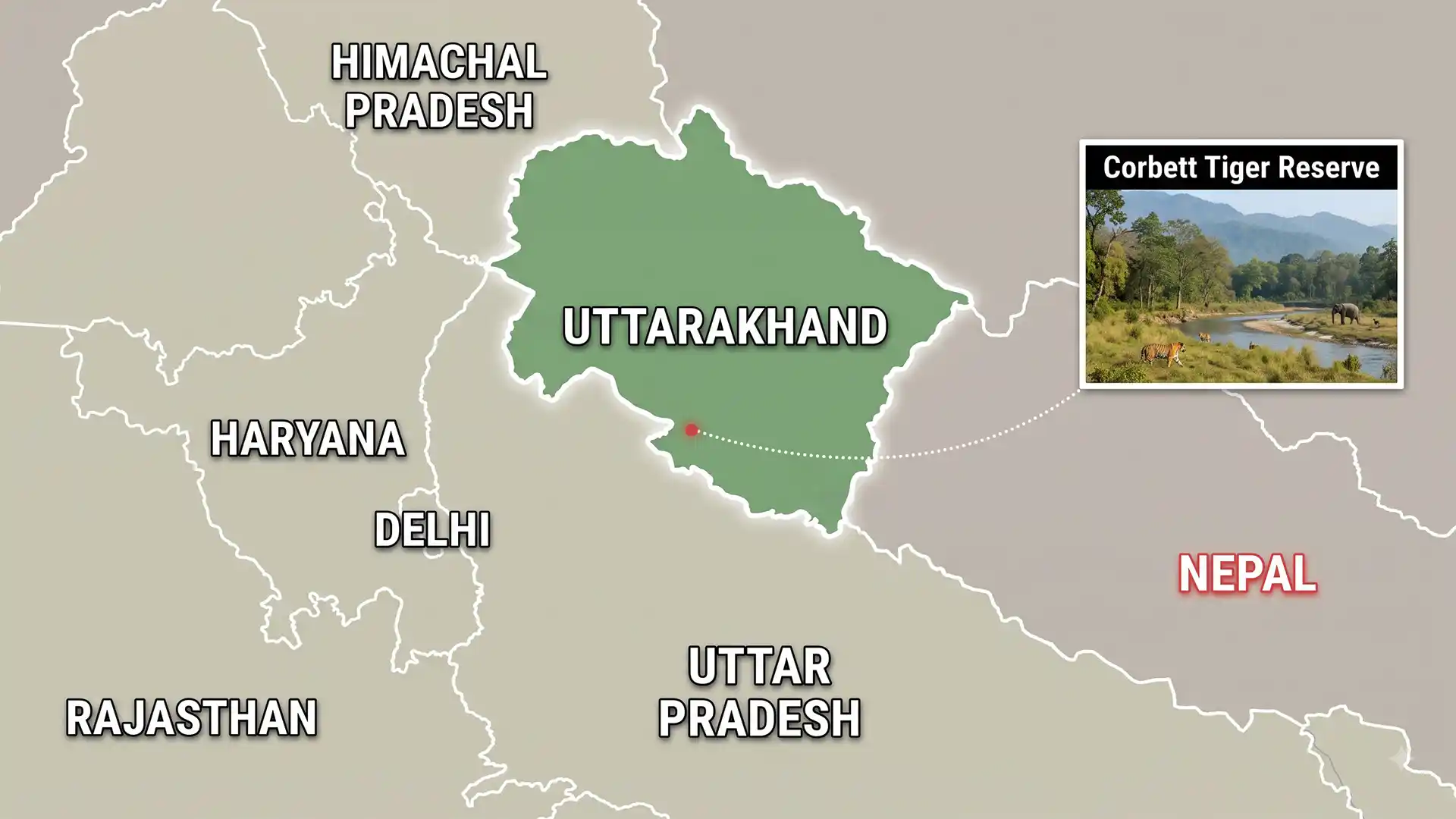
Phato is a tourism zone in the Terai West Forest Division near Ramnagar. It belongs to the wider Corbett forest landscape. The zone should not be casually equated with every legally notified part of Corbett Tiger Reserve. Wildlife moves across these administrative boundaries.
The notified reserve extends across the Himalayan foothills of Uttarakhand. National Tiger Conservation Authority material places it across Nainital, Pauri and Almora districts. The core and buffer together cover 1,288.31 square kilometres. An adjoining Amanagarh buffer lies in Uttar Pradesh.
This landscape occupies the lower Shivalik and Bhabar zones. The Bhabar contains porous deposits of boulders and sand. Water often sinks into this coarse material. Valleys and river channels create wetter habitats within the same region.
Rivers, forests and wildlife
The Ramganga, Sonanadi and Pallaen rivers pass through the reserve’s valleys. Sal forest dominates large areas. Mixed woodland, grassland and riverine vegetation add habitat diversity. Local grasslands are commonly called chaurs.
Corbett supports tigers, Asian elephants and leopards. It also holds several deer species and rich birdlife. The Ramganga system supports otters, gharials and mugger crocodiles. Different habitats allow prey and predators to use the landscape through the year.
Corbett also functions as a major tiger source within the Shivalik–Gangetic landscape. Forest links towards Rajaji and neighbouring divisions support dispersal. These corridors reduce isolation between breeding areas. Roads and settlements can weaken that movement when poorly planned.
Historical importance
The protected area began as Hailey National Park in 1936. It was later called Ramganga National Park. The name Corbett National Park followed in the 1950s. It is recognised as India’s first national park.
Corbett was among the nine reserves included when Project Tiger began in 1973. The tiger reserve now includes the national park and other protected or buffer forests. These legal categories have different management purposes. The core prioritises conservation, while the buffer permits compatible uses.
What one tiger’s death can teach
Named tigers attract attention because visitors recognise them. That connection can support conservation awareness. It can also create pressure for intervention in every natural conflict. Veterinary decisions must consider welfare, ecological function and legal protocols.
Territorial fights are part of tiger ecology. Human-made injuries or disease require a different response. Reliable post-mortem and laboratory records help managers understand the difference. They can also reveal patterns that require changes in tourism or habitat management.
Monitoring should extend beyond heavily visited tracks. Camera traps, patrol data and verified incident records can cover the wider landscape. Tourism income should support habitat and frontline capacity. Individual popularity should not replace population-level conservation.
Cause of death remained under examination
Bhola’s injuries and treatment were publicly reported. The final laboratory findings were not available in the first accounts. A specific medical cause should therefore await those results.
Conclusion
Bhola’s death drew attention to a tiger valued by visitors and local guides. It also shows why wildlife reporting needs medical restraint. Corbett’s strength depends on habitat, prey and connected forests. Tourism should support those foundations. Transparent investigation can turn an individual loss into better management knowledge.