

Why in news?
Exceptionally low Danube water exposed possible mammoth remains near Ryahovo in northern Bulgaria. A resident noticed bones on the uncovered riverbed during July 2026. Museum specialists identified a lower jaw, two tusks and a possible rib. Their precise age and origin still awaited removal and scientific examination.
Background
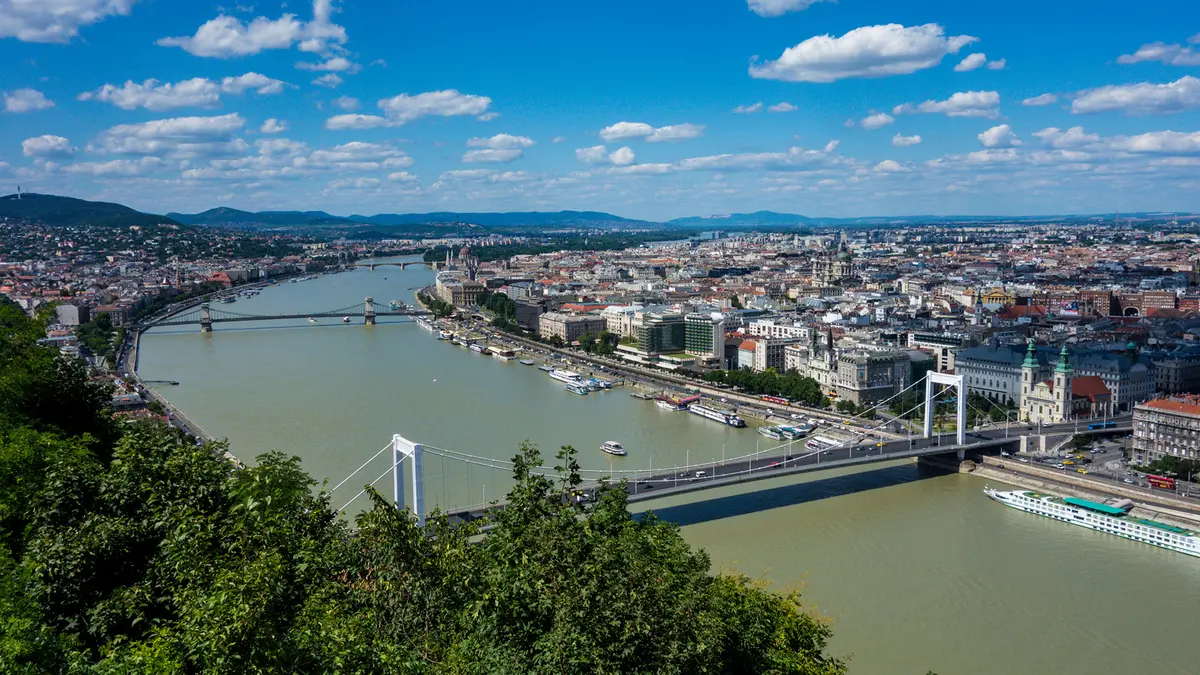
The Danube is Europe’s second-longest river after the Volga.
It travels about 2,857 kilometres from Germany’s Black Forest towards the Black Sea.
Its drainage basin covers approximately 801,463 square kilometres across Central and Eastern Europe.
Snowmelt, rainfall and numerous tributaries together control its seasonally changing flow.
Countries along the main river
The Danube flows through or forms boundaries for ten countries.
They are Germany, Austria, Slovakia, Hungary, Croatia, Serbia, Bulgaria, Romania, Moldova and Ukraine.
Vienna, Bratislava, Budapest and Belgrade are national capitals located along its course.
The wider basin reaches parts of nineteen countries through tributaries and drainage areas.
Major tributaries and course
The river begins where the Breg and Brigach streams meet in Germany.
Important tributaries include the Inn, Drava, Sava, Tisza, Morava and Prut.
The Iron Gates gorge separates parts of Serbia and Romania.
Farther downstream, the river divides into channels before entering the Black Sea.
The Danube Delta lies mainly in Romania, with a smaller portion inside Ukraine.
Danube Delta
The delta contains reed beds, lakes, marshes, channels and periodically flooded habitats.
The United Nations Educational, Scientific and Cultural Organization listed its Romanian property during 1991.
The World Heritage property covers 312,440 hectares and supports exceptional wetland biodiversity.
More than three hundred bird species and many freshwater fishes use the delta.
Its wetlands also filter water, retain sediments and soften certain flood impacts.
Economic and strategic importance
The Danube supports navigation, agriculture, hydropower, fisheries, tourism and municipal water supplies.
The Rhine–Main–Danube waterway connects inland European routes between the North Sea and Black Sea.
International management requires cooperation over pollution, floods, droughts and ecological restoration.
The International Commission for the Protection of the Danube River coordinates important basin-level work.
Why did the remains appear?
Persistent heat and drought reduced water levels enough to uncover normally submerged sediments.
Low water can reveal fossils, archaeological materials, shipwrecks and older river structures.
Exposure also threatens navigation, aquatic habitats, power production and water quality.
Newly uncovered remains require rapid documentation because erosion and collection can destroy their context.
Conclusion
The Bulgarian discovery links Europe’s ancient natural history with the Danube’s present drought vulnerability.