

Why in news?
Researchers at Kerala's Institute of Advanced Virology have developed an experimental system to anticipate dengue trends, according to NDTV's 28 September report. Dengue is a mosquito-borne viral illness, and outbreaks can put pressure on health services before their full scale becomes clear. The reported system combines earlier disease records with weather information to estimate weekly risk at district level. Its purpose is to give authorities more time to prepare surveillance and prevention measures. The report describes encouraging agreement between predicted and observed trends during testing, but does not provide a numerical accuracy measure. This is a reported forecasting prototype, not proof of a validated statewide warning service or a tool for diagnosing individual patients.
Why dengue does not follow the weather immediately
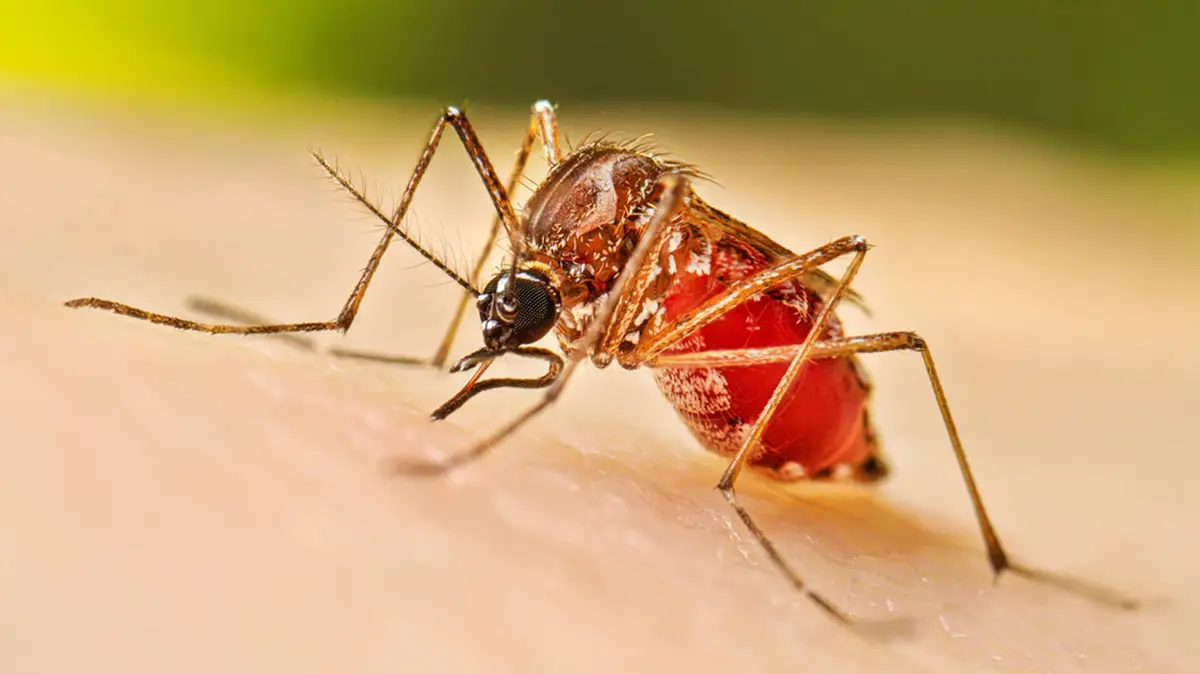
Dengue normally spreads when an infected female mosquito bites a person. Aedes aegypti is the principal vector, while other Aedes mosquitoes can also transmit the virus. A vector is an organism that carries an infection between hosts. Mosquitoes can acquire the virus when feeding on an infected person, including someone who has not developed obvious symptoms.
The virus then needs time to develop within the mosquito before it can be transmitted through another bite. Human illness also does not appear immediately after infection. These delays mean that the relationship between weather and reported cases unfolds over time. A rainy day and a rise in case reports on that same day cannot automatically be treated as a direct causal sequence.
The World Health Organization describes dengue risk as the result of interacting environmental and social conditions. Temperature, rainfall and humidity can matter, but so can water storage, urban growth, population movement and surveillance quality. Weather is therefore useful information, not a complete explanation of every outbreak. A model needs to be judged against that more complicated reality.
When dengue causes illness, fever can occur with headache, body pain, nausea or a rash. Some infections remain without obvious symptoms. Severe dengue can develop even after the fever falls, which makes clinical observation important. Persistent vomiting, severe abdominal pain or bleeding require prompt medical assessment. A forecast about district trends cannot substitute for that assessment.
How the reported model uses earlier information
According to the report, the researchers used records covering March 2020 to February 2026 to train the system. Training means identifying patterns in earlier observations that can inform later estimates. The inputs combined state disease-surveillance information with rainfall, temperature and humidity data. The intended output was a weekly assessment of risk for individual districts.
The reported approach uses artificial intelligence to detect relationships within those inputs. That label does not make the underlying information complete or remove the need for testing. A model can learn patterns in reported cases, but reporting itself depends on who seeks care, who is tested and how records are collected. Those influences need to be considered when interpreting its output.
The researchers' account described testing against observations from March to July 2026. Separating this period from the training records is important because reproducing familiar data is easier than anticipating unseen conditions. However, the reported positive correlation does not tell readers how often an outbreak was missed or an alert proved unnecessary. Those are different measures of usefulness.
What a useful early warning would change
An early warning is valuable when it leads to an appropriate action before the problem becomes harder to manage. For a district, a higher-risk forecast could prompt closer examination of surveillance information and more targeted prevention planning. This is an intended use of the approach, not evidence that those actions have already been implemented successfully through the Kerala prototype.
The World Health Organization's research programme treats dengue as a climate-sensitive disease. That means weather and climate can influence its occurrence or distribution; it does not mean climate is its only cause. Forecasting can help organise existing public-health work, but it cannot replace field observations or the people who decide how to respond.
Testing must consider both missed outbreaks and false alarms
A system that issues alerts almost continuously may catch many outbreaks but offer little help in allocating limited resources. A system that rarely warns may avoid false alarms while missing important events. Evaluation therefore needs to examine both problems. The useful balance depends on the response attached to an alert and the consequences of acting—or failing to act.
It also matters whether the model improves on a simpler comparison, such as recent case trends. Performance should be examined across districts and seasons rather than represented by one favourable example. These are evaluation questions arising from the reported design, not findings that the prototype has already passed. Publishing the testing method and results would make its potential much easier to assess.
Finally, a district forecast is not an individual diagnosis. A lower estimated district risk cannot rule out infection in a particular person. Conversely, a high-risk week does not mean every fever is dengue. Population-level planning and clinical assessment answer different questions, even though both depend on reliable disease information.
Conclusion
The Kerala initiative addresses a real planning need: gaining time before rising dengue transmission overwhelms routine responses. Its reported combination of weather and surveillance data is a research approach, not a demonstrated guarantee. The next meaningful evidence would show how well it predicts unseen outbreaks and supports useful decisions. Until then, its promise should be explained alongside the limits of the available testing account.