

Why in news?
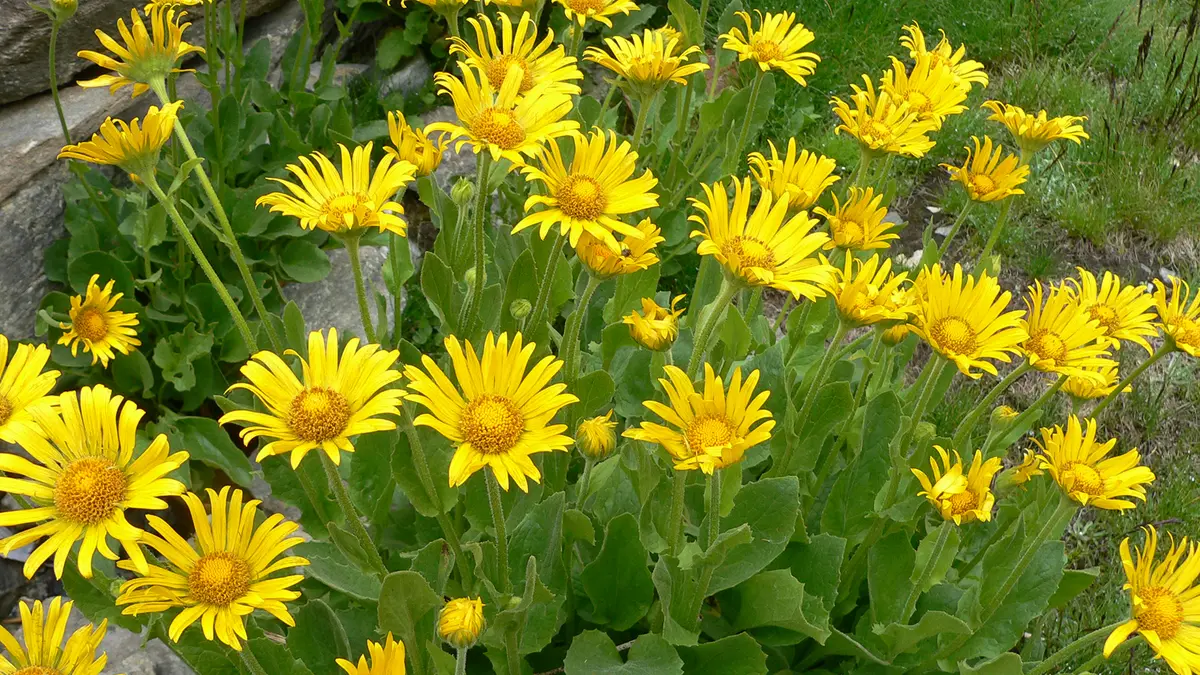
Scientists described Doronicum sanctum as a new plant species from Tawang district in Arunachal Pradesh. The peer-reviewed description appeared in the journal Biologia on 10 August. National reporting brought wider attention to the discovery on 25 August. It is the first documented member of the genus Doronicum from north-eastern India.
Who made the discovery
Rahul Kumar and Vikas Kumar conducted the taxonomic work. They are associated with the Council of Scientific and Industrial Research’s Institute of Himalayan Bioresource Technology in Palampur. The Arunachal Pradesh Forest Department permitted the survey. The researchers compared the specimens with published descriptions and related species.
The scientific name includes the abbreviation “sp. nov.” in formal description. It means a species newly proposed to science. Publication provides diagnostic features, illustrations and an identification key. Other botanists can then examine and test the conclusion.
The plant and its family
Doronicum sanctum belongs to the family Asteraceae. This is the sunflower or daisy family. What appears to be one flower is usually a head of many small florets. Outer ray florets can look like petals around central disc florets.
Members of Doronicum are commonly called leopard’s bane. The common name applies to the genus and should not imply a proven medical use. Related species occur across Eurasian mountain regions. Indian records had previously come mainly from the western Himalaya.
How scientists distinguished it
The new species resembles Doronicum conaense and Doronicum stenoglossum. The researchers found clear differences in its reproductive structures. Its ray cypselae are pubescent, meaning they carry fine hairs. A cypsela is the dry fruit typical of this plant family.
Its ray florets have a caducous pappus. This feathery structure falls off early. The shapes of the phyllaries and ray florets also differ. Phyllaries are the small bracts surrounding the flower head.
The high-altitude type locality
The plant was collected near Chumi Gyatse in Tawang at about 4,086 metres. Public accounts link the name “sanctum” with the sacred waterfalls in this landscape. The site has high spiritual value for local communities. The description therefore connects biological discovery with a culturally important place.
Tawang is Arunachal Pradesh’s westernmost district. Tibet lies to its north, and Bhutan lies to the south-west. The Sela ranges separate it from West Kameng district in the east. Steep valleys and high ridges create many small climatic zones.
At this elevation, plants face cold, strong radiation and a short growing season. Snow cover and slope exposure affect soil moisture. Small changes in height or direction can create a different habitat. Such isolation can support the evolution of locally restricted species.
Why taxonomy matters
Conservation begins with knowing what exists. An unnamed species may be confused with a wider and safer relative. Formal description allows its location and population to be studied. It also makes future legal or conservation assessment possible.
Herbarium specimens preserve a physical record. A type specimen anchors the scientific name to material that others can examine. Identification keys allow later surveys to distinguish the plant. These steps make taxonomy repeatable rather than descriptive guesswork.
What remains unknown
The published paper establishes taxonomic identity, not a full conservation assessment. Public reporting describes the plant as rare, but its total distribution is not yet known. Surveys may find other populations. They may also show that the known habitat is extremely limited.
No global threat category should be assigned without a formal assessment. Researchers need population size, range, trends and threats. Road work, collection and climate change may matter in high mountains. Their actual effect at this site requires evidence.
Research and access in a sensitive region
Tawang’s border setting gives it strategic importance. Scientific work still needs ecological and community sensitivity. Field teams should minimise disturbance and follow permit conditions. Exact location data may require protection if collection becomes a threat.
Local knowledge can help identify flowering times and habitats. Communities should receive recognition when their guidance supports research. Benefit sharing becomes relevant if future commercial use develops. A new species is part of a living landscape, not merely a scientific record.
New to science does not automatically mean endangered
The description proves that the plant is taxonomically distinct. Its conservation status needs separate field evidence. Scarcity at one collection site cannot establish a complete global category.
Conclusion
Doronicum sanctum expands the known botanical range of its genus in India. Its discovery shows how much remains undocumented in the eastern Himalaya. Careful taxonomy now provides a foundation for wider surveys. Conservation decisions must follow population evidence and local consultation. The sacred and strategic landscape deserves research that is both rigorous and restrained.