

Why in news?
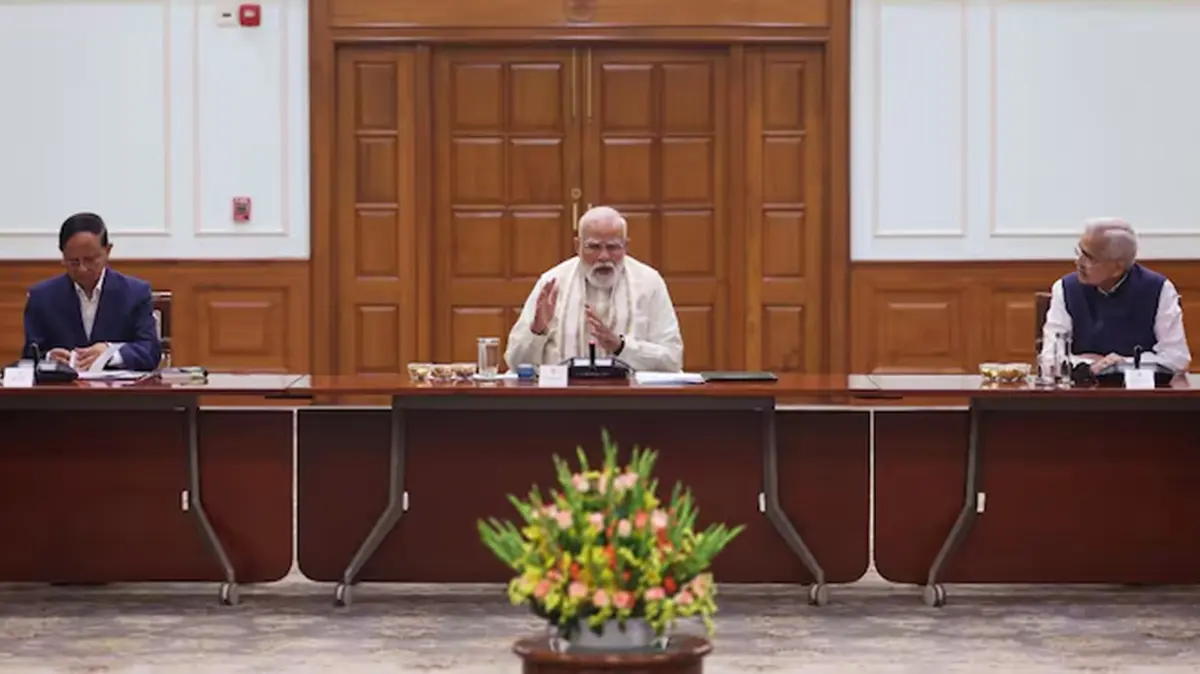
On 6 June 2026 the Prime Minister of India chaired a meeting of the Economic Advisory Council to the Prime Minister (EAC‑PM). The discussions focused on India’s long‑term economic transformation, including reforms to improve ease of living and doing business. The meeting came amid global economic uncertainty and highlighted the government’s emphasis on evidence‑based policymaking.
Background
The EAC‑PM is an independent body that advises the Prime Minister on economic and related issues. India has convened such councils at various times since the early years after independence to provide non‑partisan economic analysis. In recent decades the council was dissolved and reconstituted multiple times. The current version was re‑established on 25 September 2017 and is chaired by noted economist S. Mahendra Dev. The council operates in a consultative manner and its recommendations are not binding on the government.
Composition and functions
- Membership: The council is headed by a chairperson and includes full‑time and part‑time members who are economists and public policy experts. Its administrative support is provided by the NITI Aayog.
- Advisory role: It analyses any economic issue referred to it by the Prime Minister and offers advice on matters of macroeconomic importance, growth, and development. It can also take up topics on its own initiative.
- Research and awareness: Beyond advising the government, the council organises studies and seminars to foster a deeper public understanding of the economy.
- Historical evolution: Previous chairs of the council include economists like C. Rangarajan and Bibek Debroy. The body has been dissolved during periods when the Prime Minister relied directly on the Planning Commission or NITI Aayog, and then revived when an independent perspective was desired.
Importance of the recent meeting
The 6 June meeting provided an opportunity to review economic challenges such as global supply‑chain disruptions, geopolitical tensions and their impact on India’s growth. Council members emphasised structural reforms to boost productivity, create jobs and strengthen social welfare. They also discussed strategies to enhance the ease of doing business and to simplify regulations so that investors and citizens can benefit from India’s demographic dividend.
Conclusion
The EAC‑PM acts as a sounding board for the country’s top leadership. By bringing together experienced economists, it helps the Prime Minister weigh different viewpoints before major policy decisions. Regular meetings, such as the one held in early June, ensure that economic policymaking remains grounded in research and responsive to emerging challenges.