

Why in news?
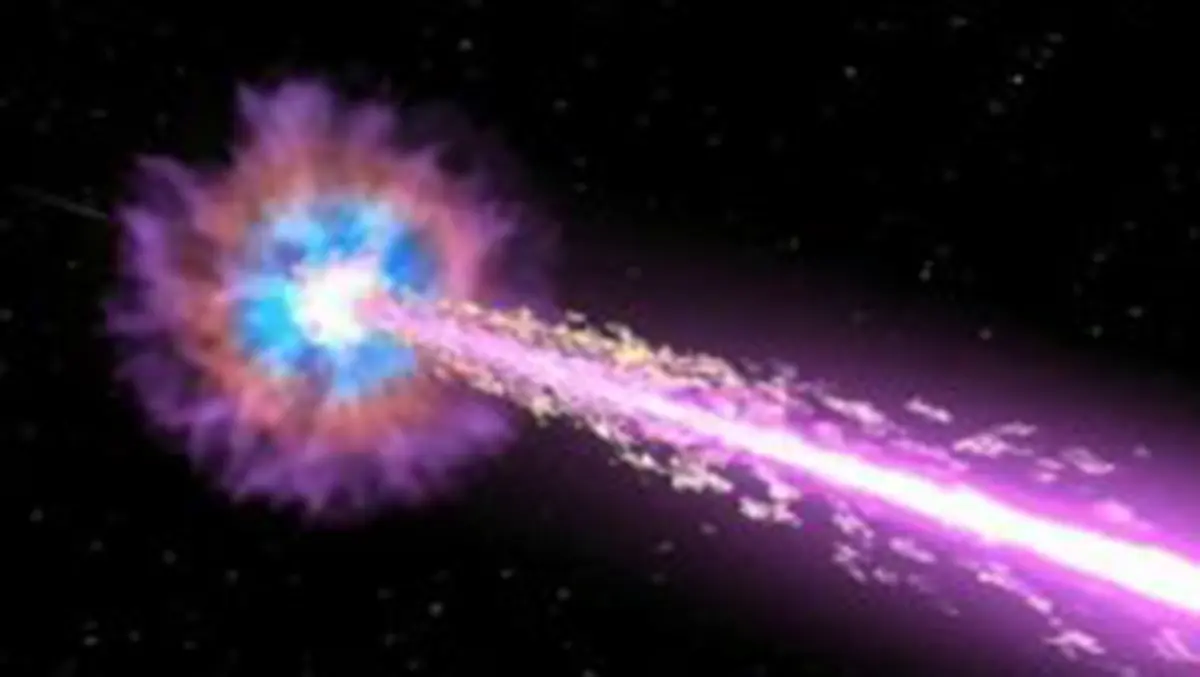
Astronomers from the Indian Institute of Astrophysics and their international partners reported new findings on a fast X‑ray transient detected on 7 November 2024 by the Einstein Probe satellite. Their multi‑wavelength study identified a radio and optical counterpart, suggesting the event was a low‑energy gamma‑ray burst.
Background
Fast X‑ray transients (FXTs) are brief, non‑repeating flashes of X‑rays that appear suddenly and last from minutes to hours. Their origins have been a mystery, with possible causes ranging from shock breakouts in supernovae to magnetar flares and tidal disruption events. The Einstein Probe is a space telescope designed to monitor the sky for such transients using wide‑field X‑ray detectors. Its early warning alerts allow telescopes around the world to conduct rapid follow‑up observations.
Study details and findings
- Detection: On 7 November 2024 the Einstein Probe detected an intense X‑ray flash designated EP241107a. The event lasted several minutes and released a large amount of energy.
- Multi‑wavelength follow‑up: Indian astronomers led rapid observations with the Very Large Array (for radio) and the GROWTH India Telescope and other facilities (for optical and near‑infrared). They discovered a fading radio counterpart and an optical afterglow.
- Interpretation: By comparing the light curves and spectra with known classes of explosive transients, researchers concluded that EP241107a was a low‑energy long‑duration gamma‑ray burst. It likely arose from the collapse of a massive star or the merger of compact objects such as neutron stars.
- Implications: The event may represent a population of “orphan” gamma‑ray burst afterglows where the gamma‑ray jet is not pointed toward Earth. FXTs could therefore trace star formation and black hole births across the distant Universe.
Significance
- The study provides the first compelling evidence that some fast X‑ray transients are associated with gamma‑ray bursts. It narrows down the list of possible progenitors.
- Rapid multi‑wavelength follow‑ups, including contributions from Indian facilities, showcase the value of global collaboration in time‑domain astronomy.
- Understanding FXTs helps scientists refine models of massive star deaths and explore the high‑energy sky beyond conventional gamma‑ray detectors.
Conclusion
Clues from EP241107a suggest that fast X‑ray transients can be low‑energy gamma‑ray bursts. Continued observations with the Einstein Probe and ground‑based telescopes will help uncover more such events and deepen our understanding of extreme cosmic explosions.