

Why in news?
On 24 June 2026 the European Space Agency released the largest and most detailed visible‑light image of our galaxy’s centre. The photograph was captured by the Euclid space telescope and shows more than 60 million stars in the Milky Way’s galactic bulge. Scientists will use the data to study exoplanets through gravitational microlensing.
Background
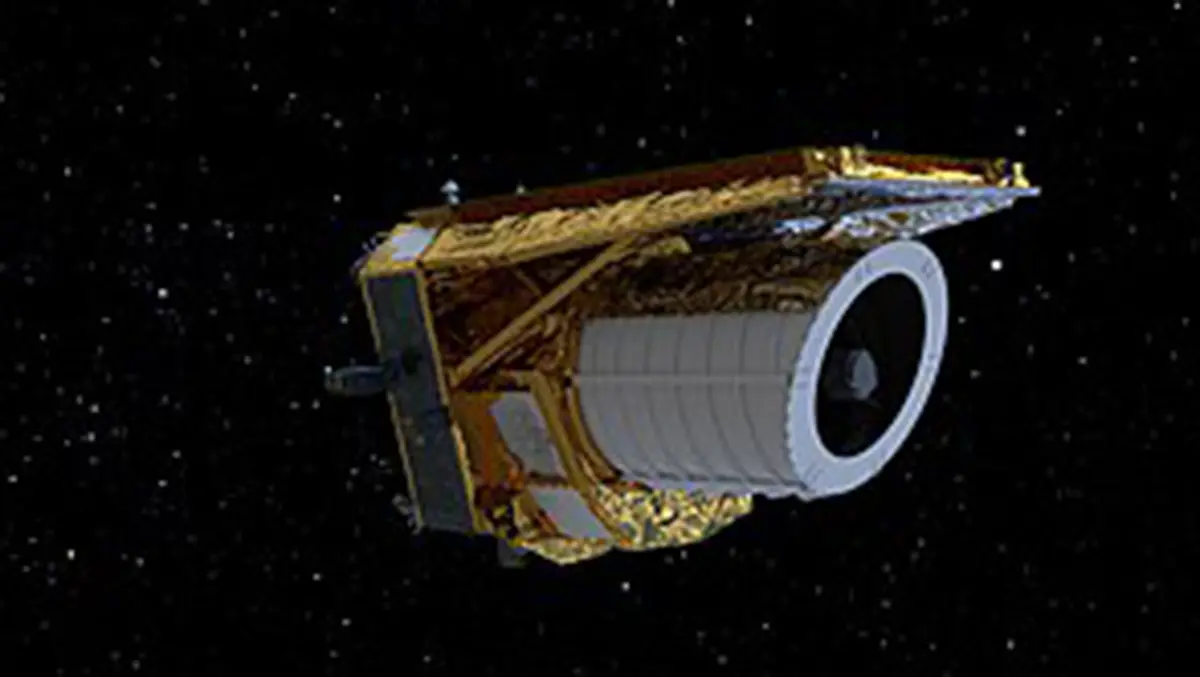
Euclid is a European Space Agency mission launched in July 2023. Its primary goal is to map the distribution of dark matter and dark energy by observing billions of galaxies up to 10 billion light‑years away. The spacecraft carries a 1.2‑metre telescope with two instruments: a visible‑light camera and a near‑infrared spectrophotometer. Though designed for deep‑space surveys, Euclid occasionally turns its gaze closer to home at the request of astronomers.
Highlights of the new image
- Mosaic survey: The galactic bulge photo is a mosaic of nine pointings taken on 23 March 2025. Each pointing covers an area larger than the full Moon.
- Resolution and field: Euclid’s sharpness in visible light rivals the Hubble Space Telescope, but its field of view is 270 times larger. The mosaic was captured in about 26 hours.
- Star count: The image contains more than 60 million stars, along with star clusters, nebulas and molecular clouds. This dense field is ideal for studying planets around distant stars.
- Microlensing opportunity: By comparing the Euclid image with future observations, scientists can measure tiny brightness changes caused by planets passing in front of background stars. This helps confirm known exoplanets and determine their masses.
- Complement to Roman telescope: NASA’s upcoming Nancy Grace Roman telescope will hunt for microlensing events in the same region. Euclid’s data provide a baseline so that planetary masses can be measured accurately.
Conclusion
Euclid’s glimpse of the Milky Way’s heart demonstrates the telescope’s ability to capture vast regions in crisp detail. Combining these images with future surveys will deepen our understanding of distant planets and the structure of our galaxy.