

Why in news?
A flock of fulvous whistling ducks was recorded at Cherumukku’s Ambalpadam wetlands in Malappuram, Kerala. The sighting drew attention because the species is infrequently reported in the State. A 1 September 2026 account described more than thirty birds. The record highlights the importance of careful identification and regular monitoring of local wetlands.
Recognising the species
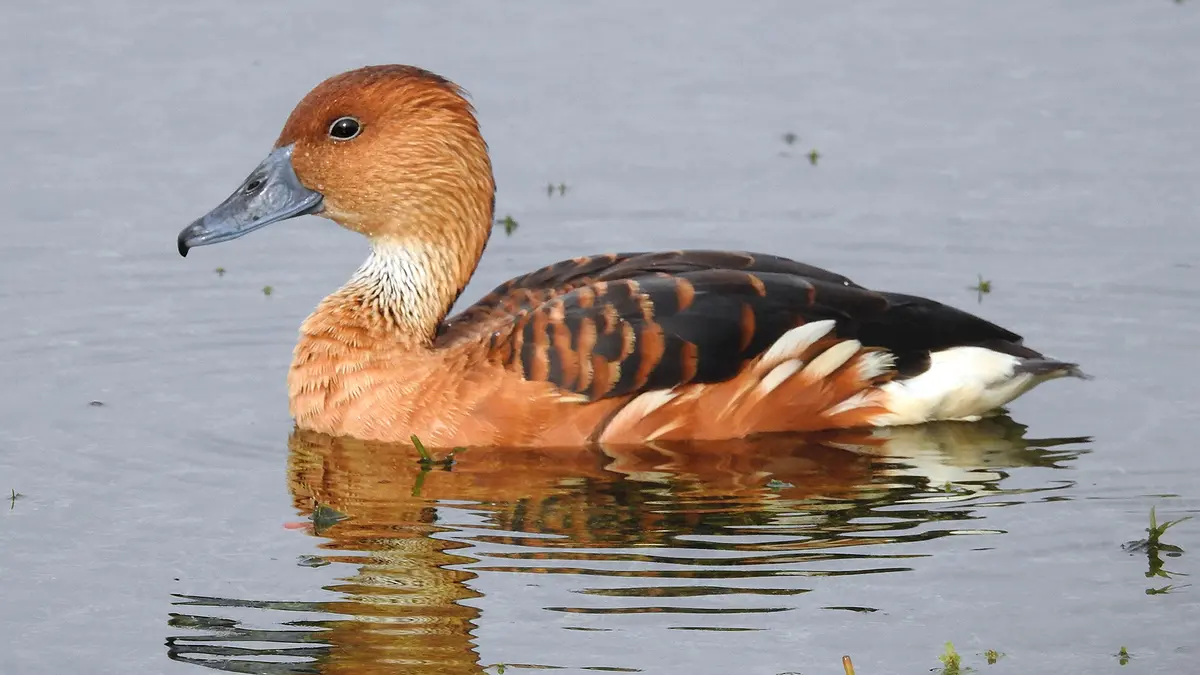
The fulvous whistling duck’s scientific name is Dendrocygna bicolor. It belongs to the duck family, Anatidae. Its long neck and legs give it a distinctive upright appearance. The word “fulvous” refers to its warm yellowish-brown or tawny colour.
Adults have a rich cinnamon-toned head and underparts, with a darker back. Pale streaks along the flanks provide another useful identification feature. The bill and legs are bluish-grey. In flight, the pale marking across the upper tail area also helps distinguish the species.
Identification should use several features together rather than relying on colour alone. Light, distance and viewing angle can change how plumage appears. Photographs and repeated observations can help check a record. This is particularly useful where other whistling ducks occupy the same wetland landscape.
Habitat, feeding and behaviour
The species uses freshwater marshes, shallow water and vegetated wetland edges. Flooded agricultural fields can also provide feeding habitat. These places offer aquatic seeds, plant material and small invertebrates. Water depth and vegetation influence how easily the birds can reach food.
Fulvous whistling ducks feed by wading, dabbling and reaching below the water surface. They may also strain material through the bill. Their diet connects them with both wetland plants and small animals. A wetland’s value therefore depends on its food supply as well as its visible water area.
Nests can occur among reeds, grasses or other dense vegetation. Both parents participate in caring for the young. However, a visiting flock does not establish that breeding has occurred locally. Evidence such as nests or dependent young would be needed to support that separate conclusion.
What the Malappuram record tells us
The reported site is Ambalpadam at Cherumukku in Malappuram district. This is a specific wetland record within Kerala, not a statewide population estimate. Observations at such sites help build a more accurate picture of bird occurrence. Their value increases when dates, numbers and identification evidence are retained.
The species has a broad international distribution across parts of the Americas, Africa and South Asia. Movement patterns vary between regions and populations. A sighting in Kerala alone cannot reveal the birds’ exact origin. Establishing a particular migration route requires evidence beyond the birds’ presence at one location.
The species is globally assessed as Least Concern. That status does not mean it is common at every Indian wetland. Local rarity and worldwide extinction risk answer different questions. A notable Kerala observation can therefore be important without making the bird globally threatened.
Protecting the habitat behind the sighting
Wetland conservation should examine water, vegetation and adjoining land use together. A patch of open water may look suitable while offering little feeding cover. Conversely, seasonal shallow areas can be highly valuable to waterbirds. Management should therefore consider the changing habitat through the year.
Drainage, pollution and repeated disturbance can reduce that habitat value. The significance of each pressure needs assessment at the actual site. Bird counts are useful when combined with notes on water levels and surrounding activity. This can help distinguish changing habitat conditions from variation in observer effort.
Local observers can contribute without disturbing the birds they document. Watching from a distance preserves feeding and resting opportunities. Records should avoid overstating uncertain counts or identification details. Consistent observations can turn an interesting sighting into useful evidence for long-term wetland management.
Conclusion
The Cherumukku sighting adds a valuable record of the fulvous whistling duck in Kerala. Its importance lies in both the birds and their habitat. Careful identification should be followed by repeated, low-disturbance monitoring. Global conservation status must remain distinct from local occurrence. Protecting the wetland’s ecological functions will benefit this species and the wider waterbird community.