

Why in news?
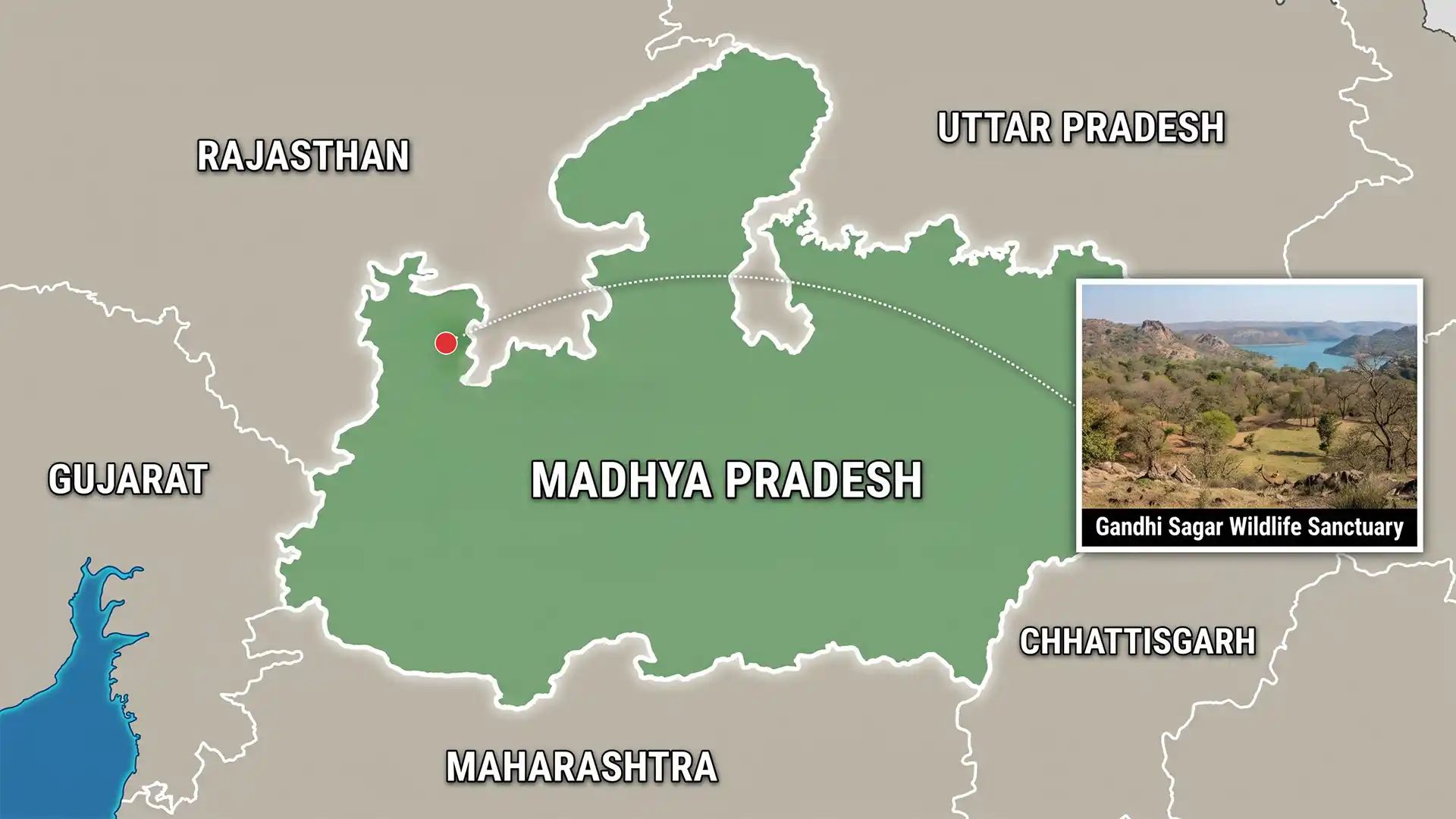
Gandhi Sagar Wildlife Sanctuary in Madhya Pradesh is preparing for a possible fourth African cheetah, according to a 17 September report. The New Indian Express reported that officials were considering a female for the sanctuary's existing group of three cheetahs. The development comes four years after the first cheetahs under India's reintroduction programme arrived at Kuno in September 2022. Gandhi Sagar provides another managed location for the programme, but the reported transfer had not yet occurred. Its significance extends beyond increasing an animal count. The sanctuary must support suitable habitat, enough prey, veterinary care and careful monitoring if introductions are to develop into a viable conservation population.
A sanctuary organised around the Chambal
Gandhi Sagar lies in the Mandsaur and Neemuch districts of western Madhya Pradesh, adjoining Rajasthan. It occupies part of the western Malwa plateau. The Chambal River divides the sanctuary into eastern and western portions, while the Gandhi Sagar reservoir borders parts of it. This combination of plateau, river valley and reservoir explains why its landscape is more varied than an uninterrupted stretch of open grassland.
The sanctuary was notified in 1974 and covers approximately 369 square kilometres. The cheetah introduction area is only part of this larger protected landscape. The National Tiger Conservation Authority's action plan describes a fenced section of approximately 64 square kilometres in the western range. This enclosure allows closer management during the initial stages. Beyond it, the sanctuary protects a much larger mosaic of habitats on both sides of the river.
Rocky surfaces and relatively shallow soils support a mixture of grassland, scrub and open woodland. Dry deciduous vegetation includes kardhai, khair and salai. River-facing slopes and valleys add further habitat variation. The sanctuary also supports animals such as leopards, striped hyenas, wolves, sloth bears, nilgai and chinkara. Cheetahs are therefore entering an existing ecological community, not an empty reserve awaiting a single flagship species.
What another introduction site contributes
Project Cheetah seeks to establish cheetahs in suitable Indian landscapes while supporting broader habitat conservation. Kuno and Gandhi Sagar are separate sites, with their own conditions and management needs. A second location can create options for managing breeding and genetic diversity. It can also reduce dependence on a single site. Those possibilities depend on the suitability and management of each population; simply distributing animals does not guarantee conservation success.
The September report concerned the possible movement of a female, rather than an announced release into unrestricted habitat. Sex, age, health and compatibility are relevant to such decisions. Moving an animal is followed by adjustment to unfamiliar surroundings and management routines. Quarantine and veterinary assessment address disease risks, while observation helps assess behaviour. A transfer announcement, arrival, enclosure release and establishment of a free-ranging population are distinct stages.
Prey and habitat determine carrying capacity
Carrying capacity means the population a habitat can support under particular ecological conditions. For a predator, food availability is central. A large fenced area can still support few cheetahs if suitable prey is scarce. Conversely, increasing prey without considering grazing pressure, vegetation and disease can create other problems. The action plan therefore connects cheetah management with habitat restoration and recovery of prey populations, rather than treating fencing as the complete preparation.
This also explains the importance of long-term monitoring. Managers need to know whether prey populations are reproducing, how predators use the landscape and where pressures are increasing. Chinkara and other prey species have different habitat requirements. Existing carnivores also use these resources. The relevant question is not merely whether cheetahs can survive immediately after arrival, but whether the wider ecological system can sustain them over time.
Protection extends beyond the enclosure
The sanctuary's notified eco-sensitive zone is another distinct management layer. A December 2016 notification regulates specified activities in the surrounding area. Such a zone is not an extension of a cheetah enclosure or a declaration that every human activity is prohibited. It creates an additional framework for managing pressures near a protected area, including activities that may damage habitats or undermine conservation objectives.
Nearby settlements and land uses remain part of the wider landscape. Grazing, agriculture, access to resources and tourism can interact with wildlife management. Consequently, a durable programme needs local cooperation alongside biological expertise. Tourism may create opportunities, but its scale and movement must remain compatible with animal welfare and habitat protection. Conservation outcomes should be assessed through survival, breeding and ecological conditions, not visitor interest alone.
Conclusion
The proposed fourth cheetah is a development within a longer restoration effort, not proof that the sanctuary has achieved a self-sustaining population. Gandhi Sagar's Chambal-side geography, open habitats and management infrastructure make it important to that effort. The next meaningful evidence will concern the transfer itself and the animals' subsequent health, adaptation and breeding. Over the longer term, prey recovery and protection of the surrounding landscape will determine how far the programme can progress.