

Why in news?
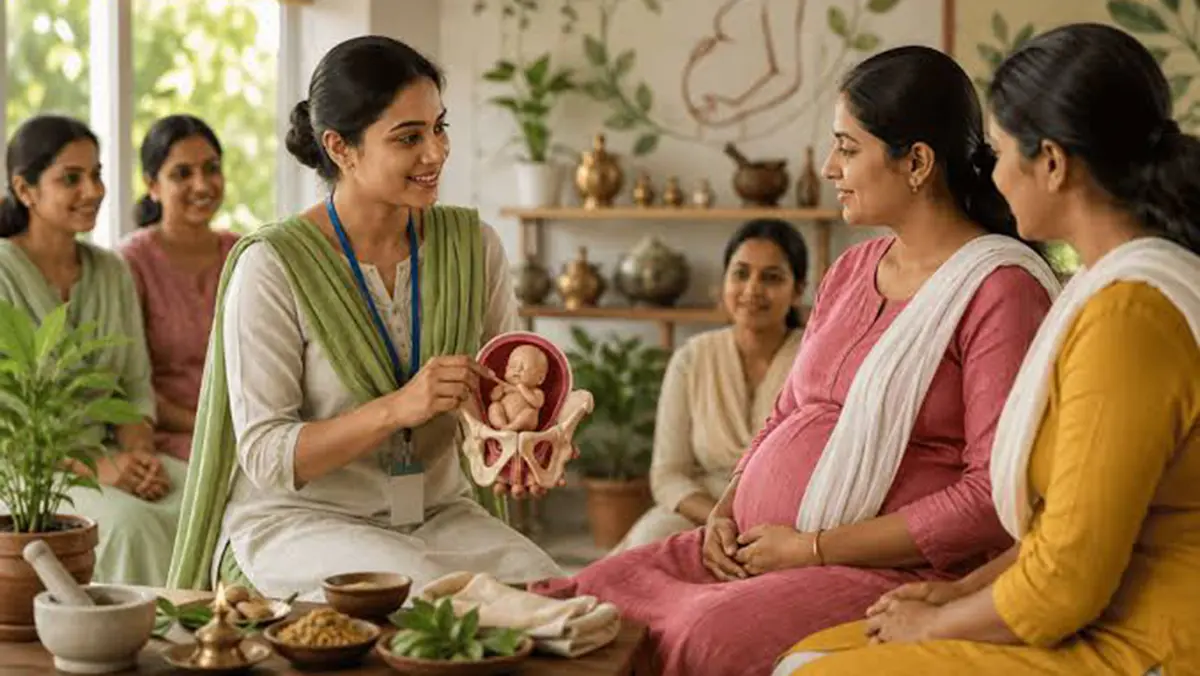
The All India Institute of Ayurveda introduced the Garbhini Mitra Course for its 2026–27 academic session. The six-month offline programme will run at its Sarita Vihar campus in New Delhi. It will train support workers for pregnancy and postnatal wellness. Applications for the first twenty-seat batch were invited until 31 August.
What the programme seeks to do
The All India Institute of Ayurveda is an autonomous institution under the Ministry of Ayush. Its new course is a healthcare skill-development programme. It aims to create trained people for health education and lifestyle guidance. Their work is intended for pregnancy and the period after childbirth.
The title means a companion or friend for a pregnant woman. The role focuses on practical and emotional support. It does not create an obstetrician, nurse or midwife through six months of training. That boundary is central to safe implementation.
Course design and eligibility
Classes will run from Monday to Friday between 3 p.m. and 5 p.m. The programme is entirely offline. Each batch can admit twenty learners. A small intake may allow closer supervision during practical training.
Applicants must be at least eighteen years old. They need a Senior Secondary examination from a recognised Indian board. Candidates awaiting Class 12 results may apply provisionally. The stated entry rules make the programme accessible without treating it as a medical degree.
Traditional concepts in the curriculum
The syllabus draws on three Ayurvedic concepts. Garbhadhana Vidhi concerns preparation before conception. Garbhini Paricharya covers care and routine during pregnancy. Sutika Paricharya concerns the mother’s care after childbirth.
Training includes trimester-specific diet and lifestyle guidance. Pregnancy-safe yoga and emotional support during labour also feature. The syllabus covers newborn massage and basic life support. These subjects require clear evidence, safe practice and limits on independent advice.
Modern safety components
The course includes infection control and sanitisation. Biomedical waste handling and workplace safety also form part of the programme. These skills matter wherever a worker supports mothers or newborns. Poor hygiene can undo the value of any wellness guidance.
Basic life support training can improve recognition and immediate response. It does not authorise treatment beyond a worker’s competence. Skills must be assessed through supervised practice. Refresher training is necessary because emergency steps can be forgotten.
Why continuity of support matters
Pregnancy and recovery involve changing physical and emotional needs. Families need accurate information, reassurance and respectful support. The World Health Organization recommends regular antenatal contact with qualified providers. It also treats the first six postnatal weeks as a critical care period.
Support workers can encourage attendance and explain routine advice. They may notice warning signs or social difficulties between clinic visits. Timely referral can then reduce dangerous delay. They should never interpret symptoms as harmless without qualified assessment.
The essential clinical boundary
The official announcement states that Garbhini Mitras complement clinical care. Routine check-ups, diagnostic tests and medical monitoring remain essential. Blood pressure and haemoglobin need proper measurement and interpretation. Complications require qualified doctors and equipped health facilities.
This safeguard should appear in teaching, certification and employment contracts. Families must know the worker’s exact role. Referral protocols need named facilities and emergency contacts. Supervision should record whether warning signs were recognised and escalated.
Employment and quality assurance
Graduates may work as maternal wellness or prenatal support assistants. Possible settings include Ayush centres, clinics and community projects. Employers must not advertise them as independent clinical practitioners. Job titles should match the actual qualification.
The programme’s value will depend on competency, not attendance alone. Assessment should test communication, hygiene and referral judgement. Feedback from mothers can reveal respectful-care problems. Outcome tracking should also record unsafe advice or delayed referral.
Support does not replace antenatal care
The course trains a complementary wellness worker. Doctors, nurses and midwives retain their clinical responsibilities. Pregnant women still need scheduled examinations, tests and emergency referral whenever required.
Conclusion
Garbhini Mitra can add structured support around pregnancy and early motherhood. Its mix of traditional concepts and safety skills needs careful teaching. The course is strongest when its limits remain explicit. Competent referral must take priority over unsupported treatment claims. Respectful supervision can turn a short course into a useful link with formal care.