

Why in news?
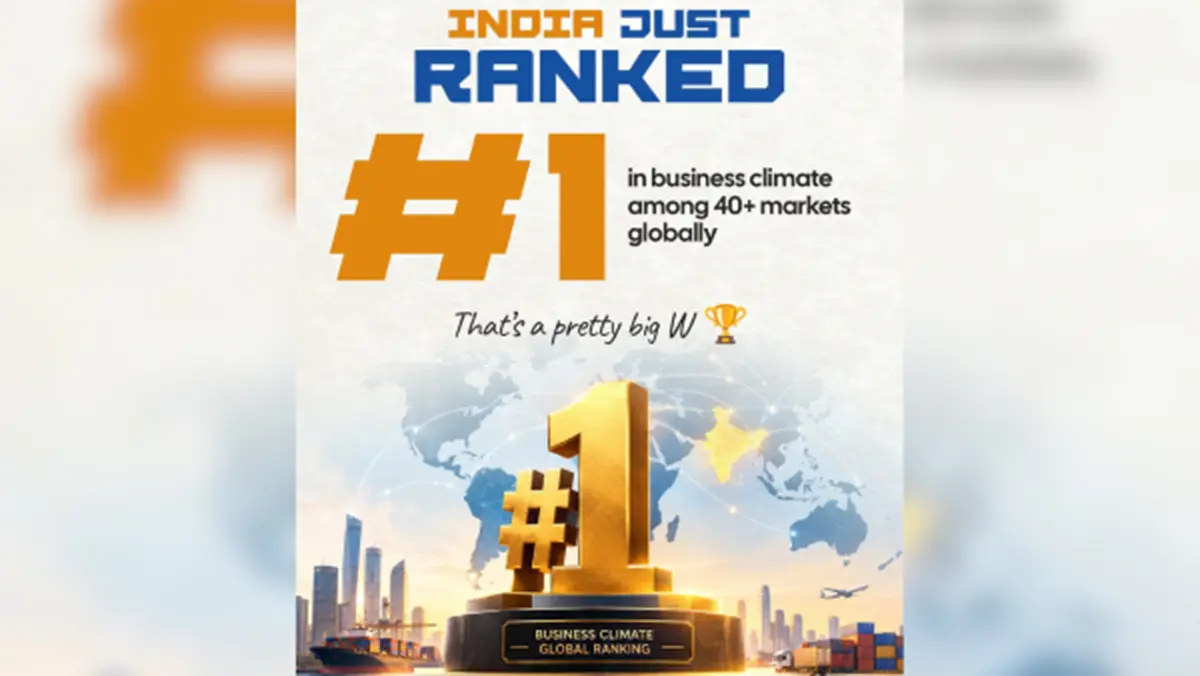
India's leading position in the Global Business Climate Survey 2026 drew renewed attention after Commerce Minister Piyush Goyal highlighted it. Akashvani reported his remarks on 19 September. The survey records how Swedish companies assess the markets where they operate, including opportunities, profitability and practical business conditions. Business Sweden's published comparison places India first, followed by Ireland and Vietnam. This is encouraging evidence about the experiences of a particular business community, not a universal ranking of every country's economy. The report was published in June, based on earlier responses. The September development is renewed attention to its findings, rather than a newly conducted survey.
Who was asked, and what the answers describe
Business Sweden, Swedish chambers of commerce, embassies and consulates jointly produce the global survey. The 2026 edition covers 41 markets and draws on more than 2,250 senior company representatives. Its standard questionnaire asks about operating conditions and business expectations. The participating companies have Swedish ownership, origin or identity. Consequently, the results describe their overseas experience, rather than the views of all domestic and foreign firms in each country.
The India report makes that scope more concrete. Team Sweden approached 263 companies and received 213 responses, an 81 per cent response rate. Responses were collected in February and March 2026. Industrial businesses formed the largest group, followed by professional services and consumer businesses. This composition matters because industrial firms may place particular emphasis on suppliers, production conditions and regulatory approvals. Small local retailers might give a different picture of business conditions.
Reading the positive findings correctly
In the India survey, 73 per cent of respondents viewed the business climate positively. Separately, 83 per cent expected their industry's turnover to increase, and 61 per cent planned higher investment over the following year. These figures answer different questions. A favourable view of current conditions is an assessment; expected turnover is a forecast; an investment plan is an intention. None should be presented as money already invested or growth already achieved.
That distinction does not make the results unimportant. Companies deciding whether to expand consider demand, suppliers, skills, regulations and their own commercial experience. Broadly positive responses can indicate confidence in continuing operations. But a firm can expect rising sales while still facing costly customs procedures. Similarly, an investment plan can later change because of financing, international demand or company strategy. Sentiment is useful evidence precisely when its limits are understood.
A ranking within a defined comparison
The global report measures business-climate views on a scale running from very poor to very good. India's leading placement therefore concerns respondents' overall assessment on that scale. It is not an official ranking of legal simplicity, household welfare or investment returns. A company may value a large customer base despite finding particular procedures difficult. The overall rating brings such experiences together; it does not replace the report's separate questions about individual operating conditions.
The global results also use regional weights because respondent numbers do not mirror the distribution of Swedish business activity. The technical note bases those weights on Swedish subsidiaries' turnover across regions. A weighted global average therefore differs from simply adding every reply and dividing by the number of respondents. This methodological detail helps explain why a strong result in one market need not dominate the overall global picture.
Confidence can coexist with operational friction
The India report identifies suppliers, service providers and distributors among the better-rated local conditions. Customs, licences and approvals, and physical infrastructure receive weaker assessments. These contrasts are more useful for practical policy than the headline rank alone. A market may offer substantial demand and capable partners while still requiring businesses to spend considerable time navigating procedures. Improving those procedures would address a specific difficulty without assuming that the entire business environment is either excellent or poor.
Consider the difference between identifying a customer and fulfilling an order. A company may see strong demand but still need imported components, product approvals or dependable transport. Delays at one stage can affect delivery at another. This is why a business-climate assessment combines commercial opportunity with the conditions needed to use it. The report's favourable headline and its account of constraints can both be true.
Why the survey's timing matters
The responses capture conditions earlier in 2026, not a live reading taken on 20 September. Later developments cannot automatically be treated as causes of answers already submitted. Nor does one survey prove that a particular policy produced the ranking. Establishing causation would require additional evidence, including comparisons over time and examination of other influences. The survey is strongest as a structured record of business perceptions, opportunities and difficulties.
Conclusion
India's position reflects substantial confidence among the Swedish companies surveyed, alongside identifiable problems in everyday operations. The useful next question is whether investment intentions become actual expansion and whether reported obstacles become easier to manage. Reading the sample, questions and dates alongside the ranking preserves its value. It turns an attractive headline into a more practical account of how one international business community experiences the Indian market.