

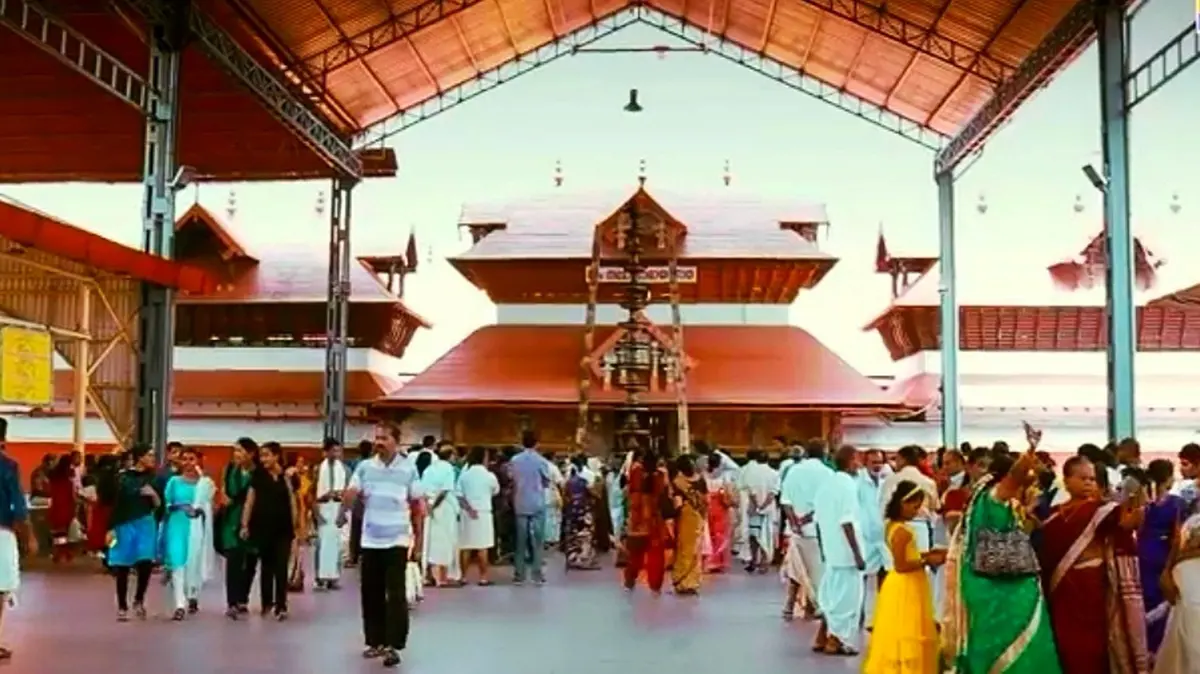
Why in news?
Guruvayur Sree Krishna Temple conducted 416 weddings on 23 August 2026, according to Devaswom officials. The ceremonies took place within just over seven hours on Chingam’s first Sunday. Six mandapams operated near the eastern entrance, with breaks for temple rituals. The total surpassed the previous record of 334 weddings set on 8 September 2024. The arrangements required extensive crowd, traffic and emergency planning.
Location and religious importance
Guruvayur is a temple town in Thrissur district, Kerala. It lies inland from the Arabian Sea and west of the state’s central uplands. The shrine is dedicated to Guruvayurappan, a form of Krishna. It is among Kerala’s most important Hindu pilgrimage centres.
The temple’s official tradition describes Guruvayur as Bhuloka Vaikuntham, or Vishnu’s earthly abode. Such descriptions express faith and should remain identified as tradition. Historical records and devotional memory cover different kinds of evidence. Both shape the site’s living cultural importance.
How the wedding record unfolded
Officials had scheduled 442 weddings, including spot bookings. Ceremonies began around 4.10 a.m. and ended at 12.45 p.m. They paused during Usha Pooja and Pantheeradi Pooja closures. Simultaneous use of six mandapams allowed short ceremonies to proceed in sequence.
The completed total was lower than the bookings because some couples did not attend. Early reports mentioning larger numbers referred to bookings or expectations. The confirmed record is 416 completed ceremonies. This distinction prevents an operational estimate from becoming a false historical total.
Why Chingam creates exceptional demand
Chingam is the first month of the Malayalam calendar. Many Kerala families view favourable dates within it as suitable for marriage. A Sunday also allows relatives to travel more easily. These factors concentrated hundreds of ceremonies into one morning.
Temple weddings are often brief at the mandapam. Families may hold longer gatherings elsewhere. This division makes high throughput possible. It also creates rapid movement between arrival, ceremony, photography and registration. Small delays can spread quickly across the entire system.
Crowd and emergency arrangements
More than 100 police personnel supported security and traffic control. Fire and Rescue Services remained nearby. Ambulances and medical teams were placed on standby. The Guruvayur Municipality operated registration support. Devaswom staff coordinated the six ceremonial platforms.
Mass gatherings need routes for couples, relatives and ordinary pilgrims. Entry limits can prevent dangerous crowding at a narrow gate. One-way movement reduces opposing flows. Emergency lanes must stay open even during peak arrivals. Clear announcements help families reach the correct platform without confusion.
Temple administration and public responsibility
The Guruvayur Devaswom Act, 1978 provides the statutory framework for temple administration. The Devaswom manages worship, property, facilities and related institutions. Its duties include protecting religious practice while serving large numbers of visitors. Major event days test both responsibilities at once.
The municipality handles civil functions such as marriage registration and town services. Police and fire agencies retain their own public-safety roles. Coordinated planning is therefore essential. No single institution can manage temple ritual, traffic, health and documentation alone.
Marriage ceremony and legal registration
A religious ceremony and civil registration serve different purposes. Registration creates an official public record under applicable law. Kerala’s digital local-government systems can simplify later applications. Couples still need correct identity, age and ceremony documents.
On a crowded day, document checking must remain accurate. Speed should not weaken safeguards around legal age or identity. Dedicated counters can separate administrative work from the ceremonial queue. Privacy also matters when many families submit personal records together.
Managing a living heritage site
Guruvayur is not merely an event venue. Daily worship, pilgrimage and heritage conservation continue during weddings. Heavy footfall adds pressure on sanitation, waste systems and surrounding roads. Temporary restrictions should therefore protect ordinary devotees and local residents.
Future planning can use timed slots and live queue information. Advance transport advice may reduce congestion. Incident reviews should examine medical calls, lost persons and bottlenecks. The goal is not simply a higher number. It is a safe and dignified experience for every participant.
Record refers to completed ceremonies
Officials confirmed 416 weddings, not all 442 bookings. The ceremonies occurred on six mandapams over roughly seven hours. Keeping bookings and completed events separate preserves the accuracy of the record.
Conclusion
The record reflects deep public trust in Guruvayur as a marriage centre. It also shows the complexity of managing faith, law and safety within one crowded morning. Future event days should retain strict capacity planning and emergency access. Digital scheduling can improve predictability without removing human support. Success should be measured through safety, fairness and ritual dignity, not numbers alone.