

Why in news?
A recent audit by the Comptroller and Auditor General highlighted severe ecological damage to Hokersar Lake, an important bird sanctuary near Srinagar. The report revealed that large sections of the wetland have been encroached upon and polluted, causing a decline in open water areas and threatening migratory bird habitats. The findings have renewed calls for urgent conservation measures.
Background
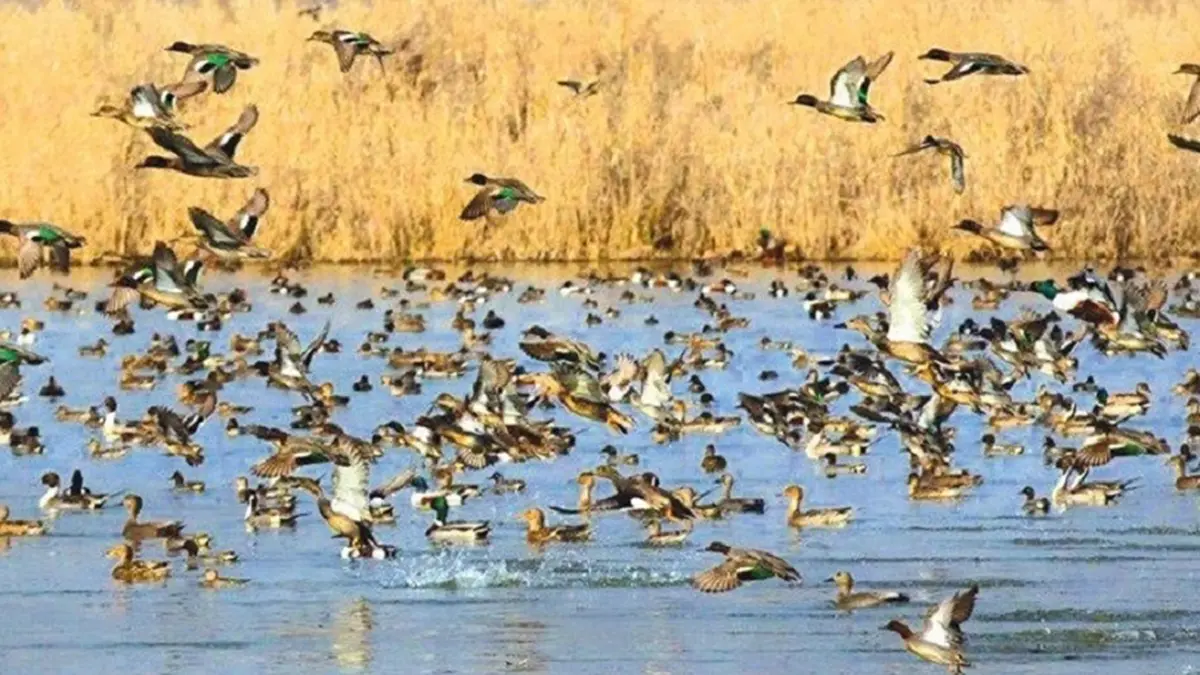
Hokersar Lake is a Ramsar‑designated wetland located about 10 km west of Srinagar in Jammu and Kashmir. Spread over roughly 1,375 hectares, it receives water from the Doodhganga and Sukhnag streams and serves as a stopover for thousands of migratory birds from Siberia and Central Asia. Once known for its clear water and rich marshes, the lake has suffered due to unregulated development, sedimentation and unchecked growth of aquatic weeds.
What the audit revealed
- Loss of open water: Satellite analysis showed that open water area shrank by about seven percent between 2014 and 2020 as silt and weeds choked the lake.
- Encroachments: Around 2,500 kanals (over 125 hectares) of the wetland have been occupied by illegal structures and agriculture, fragmenting bird habitats.
- Habitat change: The area under willow and scrub has increased while marshy and open water zones have declined, disrupting the ecological balance.
- Pollution: Untreated sewage and solid waste from nearby settlements enter the lake, promoting growth of invasive plants and reducing oxygen levels.
- Poor management: Boundaries of the protected area remain un‑demarcated, weed removal is sporadic and management plans are outdated, leading to haphazard conservation efforts.
Significance and the way forward
- Ecological importance: Hokersar supports millions of migratory birds and acts as a flood reservoir for Srinagar. Losing it would diminish biodiversity and increase flood risk.
- Need for restoration: The audit recommends demarcating boundaries, removing encroachments, dredging silt, controlling invasive weeds and installing sewage treatment plants.
- Community involvement: Conservation efforts must engage local communities by providing sustainable livelihood options such as ecotourism and promoting awareness about the wetland’s value.