

Why in news?
A new systematic review estimated that horizontal strabismus affects 1.81 per cent of the current global population. That proportion represents about 138.45 million people. Researchers combined population evidence from 1996 to 2025 and adjusted estimates for demographic patterns. The study concerns inward and outward eye misalignment, commonly called squint. It offers a modelled global estimate, not a direct count of every affected person.
What strabismus means
Strabismus occurs when both eyes do not point towards the same target. One eye may turn while the other remains aligned. The deviation can be constant or occasional. It may affect one eye repeatedly or alternate between them. The condition can begin in childhood or adulthood.
Esotropia describes an inward turn. Exotropia describes an outward turn. Hypertropia and hypotropia concern vertical misalignment. The new global calculation focused on horizontal forms. It therefore should not be presented as a complete estimate for every type of strabismus.
How normal binocular vision develops
Each eye sends a slightly different image to the brain. The brain normally combines them into one view with depth information. Eye muscles must move together under coordinated nerve control. Clear focus in both eyes also supports this process during childhood.
Misalignment can disrupt that coordination. A young child’s brain may suppress the image from one eye to avoid double vision. Persistent suppression can cause amblyopia, or reduced vision in that eye. Early detection matters because visual development is most flexible during childhood.
What the review found
The researchers reviewed hundreds of population-based and clinic-based studies. Their current-generation analysis covered evidence from 1996 through 2025. They estimated horizontal strabismus at 1.81 per cent. The comparable estimate for 1965 through 1995 was 1.64 per cent.
The analysis estimated exotropia more frequently than esotropia in the current period. It placed exotropia near 1.141 per cent and esotropia near 0.665 per cent. These values are pooled estimates with uncertainty. Regional age, ancestry and study-method differences affect direct comparisons.
Why global estimation is difficult
Many countries lack representative eye examinations across all age groups. Clinic records miss people who never reach care. Screening methods and diagnostic thresholds also differ. Some studies exclude children with disabilities, who may have greater risk. These gaps can push estimates downward or distort regional patterns.
The authors used demographic weighting to improve comparability. Statistical adjustment cannot replace missing primary surveys. A global percentage should guide planning, not label every country equally. Local programmes still need age-specific and district-level evidence. Transparent methods make future updates more reliable.
Causes and warning signs
Strabismus can arise from several pathways. Refractive errors may force excessive focusing and trigger an inward turn. Muscle or nerve disorders can disturb eye movement. Childhood development, injury and neurological illness may also contribute. Sometimes no single cause is identified.
Parents may notice one eye turning, head tilting or closing an eye in bright light. Children may not report double vision because suppression develops. New adult strabismus often causes diplopia. A sudden adult onset requires prompt medical assessment because an underlying condition may be responsible.
Assessment and treatment
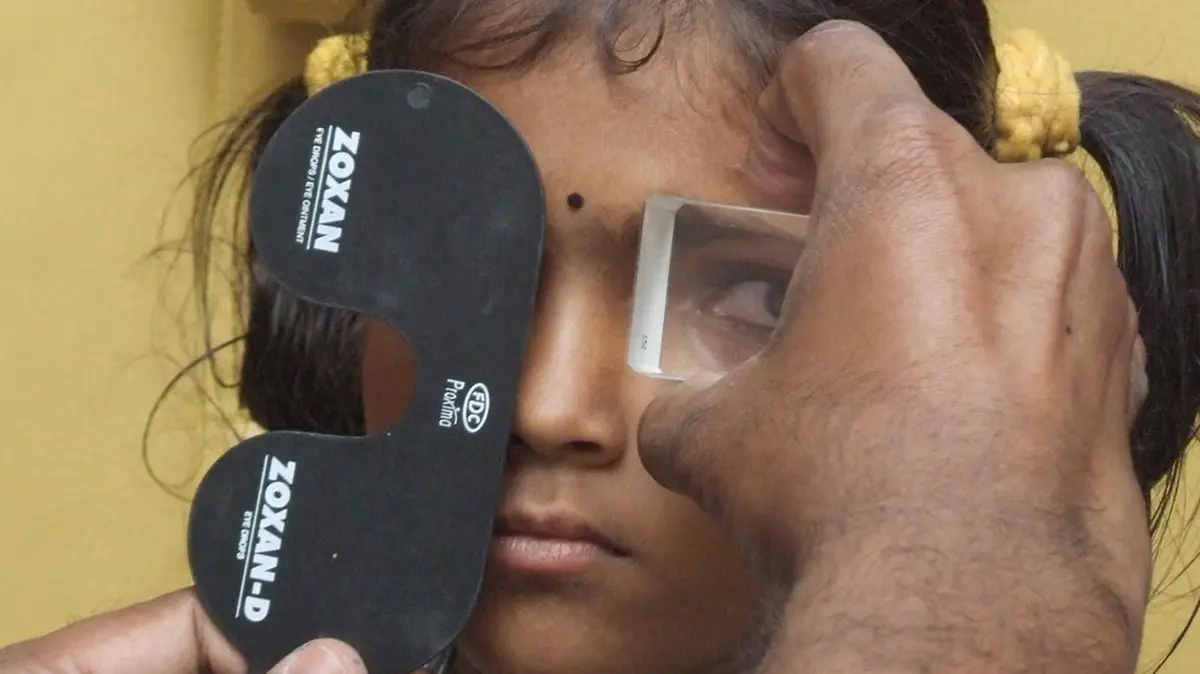
An eye professional measures alignment at distance and near. The examination checks vision, focusing, eye movement and internal eye health. Treatment depends on the cause and age. Corrective glasses may improve alignment when refractive error contributes. Prisms can reduce double vision in selected cases.
Patching or atropine may treat associated amblyopia. These methods improve use of the weaker eye but do not correct every misalignment. Some patients benefit from targeted exercises. Eye-muscle surgery changes muscle position or tension. Long-term follow-up remains important because alignment can change.
Public-health implications
Visible misalignment can affect education, work and social confidence. Untreated amblyopia may cause lasting vision loss in one eye. Basic screening should therefore include alignment and visual acuity. Referral systems must reach children early and support families through treatment.
Workforce planning also matters. Screening without enough optometrists, ophthalmologists or surgical services creates waiting lists. Affordable spectacles and follow-up improve actual outcomes. Public messages should avoid stigma. Squint is a medical condition with several effective management options.
Modelled prevalence, not a headcount
The figure of 138.45 million comes from pooled research and population weighting. It is not a registry count. The review also focused on horizontal strabismus. Data gaps and varied study methods remain important limitations.
Conclusion
The review shows that squint affects a large population and deserves routine eye-health attention. Its estimate is most useful for planning surveys, screening and specialist services. Children benefit from early diagnosis before visual suppression becomes lasting. Adults need prompt assessment when misalignment appears suddenly. Better representative data should accompany wider access to respectful and effective care.