

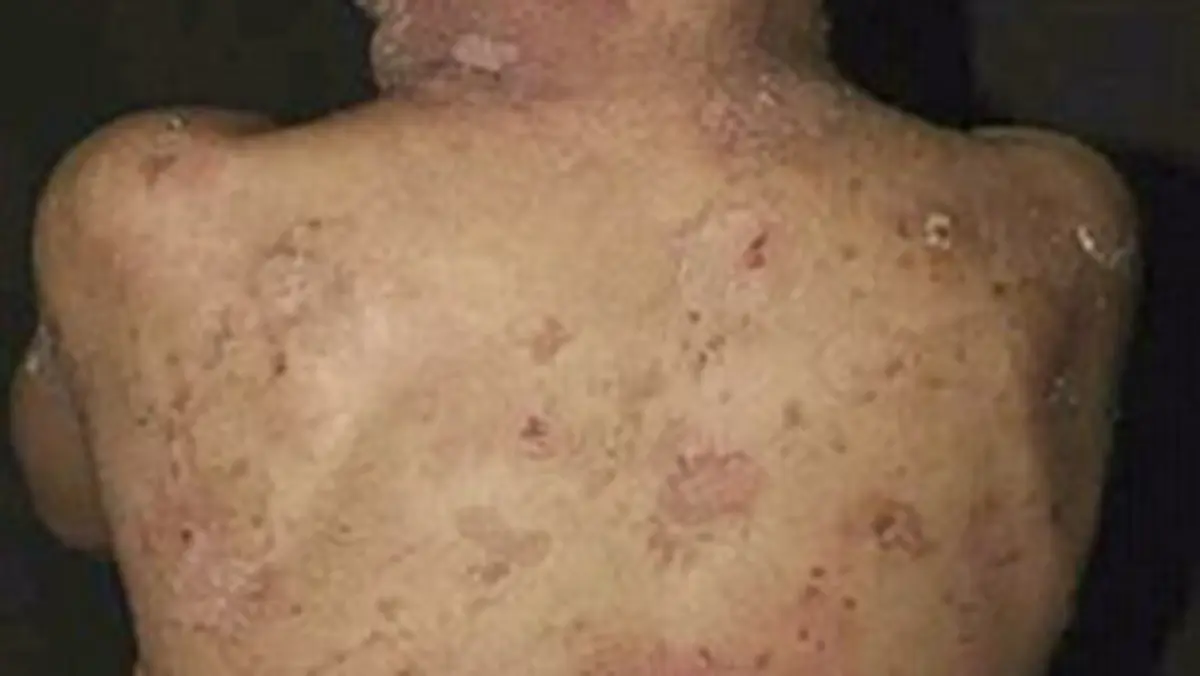
Why in news?
Several monkeys near Jaipur’s Galtaji temples developed hair loss, cracked skin and bleeding wounds. Veterinarians linked many cases with unsuitable food supplied by visitors. Officials displayed warning boards and moved affected animals for treatment. Hyperkeratosis describes a skin change, not one single contagious disease.
Background
Skin protects the body from injury, microbes and water loss through its outer part, which is called the epidermis.
The outermost epidermal layer is called the stratum corneum, and it mainly contains flattened cells filled with the protein keratin.
Hyperkeratosis means abnormal thickening of this keratin-rich outer layer. The word combines “hyper”, meaning excessive, with “keratosis”, meaning keratin formation.
Is hyperkeratosis a disease?
Hyperkeratosis is a physical change seen in many different conditions. Therefore, it is not one disease with one cause.
The body may produce extra keratin after repeated irritation, and old surface cells may also fail to shed normally.
A correct diagnosis must identify the underlying cause. Treatment suitable for pressure-related thickening may fail against infection or nutritional deficiency.
Important correction: Hyperkeratosis itself cannot spread between animals. However, an infection causing that change may sometimes spread.
What can cause it?
- Pressure and friction: Repeated rubbing can produce calluses and thick skin.
- Inflammation: Long-lasting skin inflammation can increase surface-cell production.
- Infection: Some viruses, fungi, bacteria or parasites can trigger thickening.
- Nutrition: Certain deficiencies can disturb normal skin growth and repair.
- Inherited disorders: Genetic changes may alter keratin formation or shedding.
- Sunlight and chemicals: Repeated exposure can produce local skin changes.
- Body-wide illness: Disorders elsewhere in the body may affect skin indirectly.
What signs may appear?
The skin may become dry, rough, scaly or unusually thick, and deep cracks can cause pain, bleeding and difficulty walking.
Broken skin also allows bacteria and fungi to enter, and a secondary infection can then worsen swelling, discharge and discomfort.
Hair loss may occur beside inflamed or damaged areas. However, hair loss alone does not prove hyperkeratosis.
What happened at Galtaji?
Galtaji is an eighteenth-century temple complex in Jaipur’s eastern hills. Its water springs, shrines and tanks attract pilgrims and tourists.
Macaques and langurs, two monkey groups, live around the complex. Visitors feed them roasted gram, sweets, fox nuts or makhana, and processed foods.
A local veterinarian reported treating affected monkeys since 2020, and recent cases showed severe cracking, bleeding and reduced movement.
Forest officials shifted some affected animals to Jaipur zoo for care. Warning boards asked visitors to stop offering unsuitable food.
How can human feeding harm wild monkeys?
- Processed food can replace varied leaves, fruits, seeds and insects.
- Repeated feeding can create nutritional imbalance and obesity.
- Crowding around feeders increases fights and disease transmission.
- Plastic wrappers may be swallowed with the food.
- Dependence on visitors can change natural movement and feeding behaviour.
- Close contact increases injury risks for people and monkeys.
Field observations suggest a dietary link, but they do not prove that sweets directly caused every reported case.
Several causes produce similar skin signs, so veterinarians may need examinations, skin scrapings, small tissue samples and laboratory tests.
How is the condition managed?
Management starts by removing the suspected trigger, and animals also need balanced food, clean surroundings and protection from repeated irritation.
Veterinarians may soften thick skin and treat pain, and they may use medicines against a confirmed infection or inflammatory disease.
Cracks and wounds require cleaning because secondary infection is common, and severe cases need supervised treatment, not public handling.
Remember: “Hyperkeratosis” tells us what the skin looks like, and it does not automatically tell us why that change occurred.
Conclusion
The Galtaji cases show why wildlife needs natural diets, controlled human contact and an accurate veterinary diagnosis.