

Why in news?
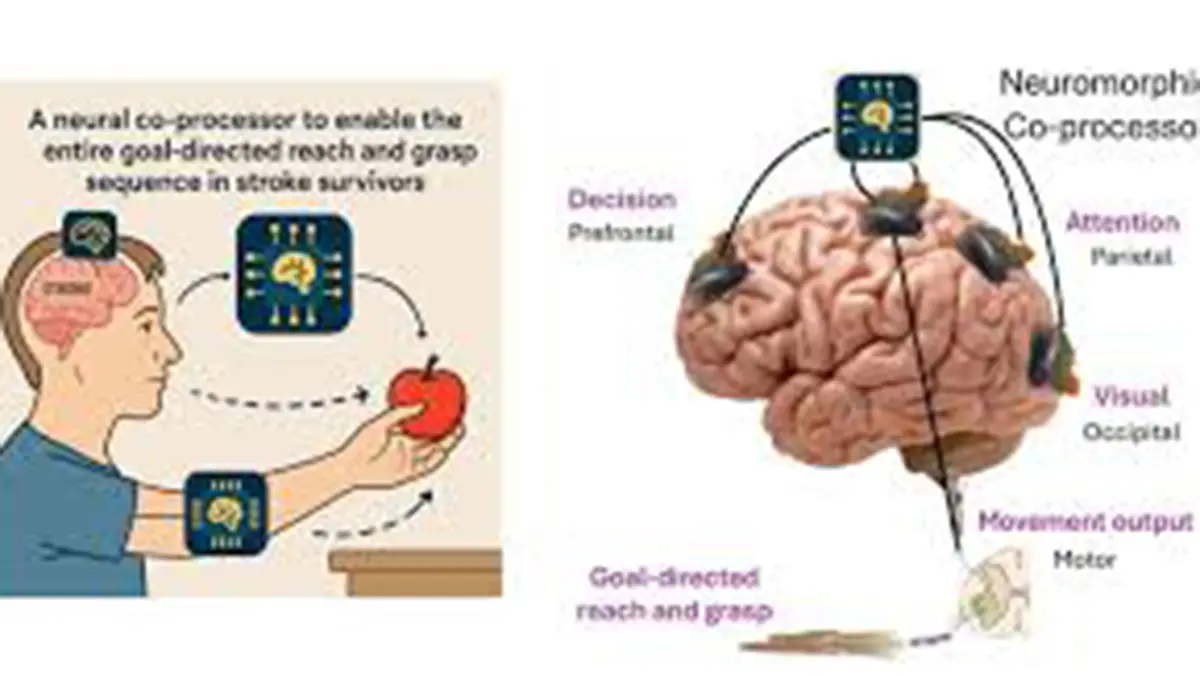
The Indian Institute of Science (IISc), Bengaluru, has announced a moonshot project to develop implantable and non‑invasive brain co‑processors. These devices aim to decode neural signals, process them using artificial intelligence, and send corrective signals back to the brain, potentially helping stroke survivors regain lost motor skills. The initiative is part of the Brain, Computation and Data Science programme and is funded by the Pratiksha Trust.
Background
A brain co‑processor is an advanced system that interfaces with the nervous system. It combines neuromorphic hardware, which mimics the architecture of neural networks, with sophisticated AI algorithms capable of interpreting and modulating brain activity. Such devices operate in a closed loop: they record neural signals, use algorithms to decode the intent or state, and then provide electrical or other feedback to stimulate the brain and restore function.
The IISc project evolved from a pilot study under the Brain, Computation and Data Science initiative. Scientists and engineers from multiple departments—including neuroscience, electrical engineering, computer science and rehabilitation medicine—will collaborate to design sensors, develop algorithms and test prototypes. The first phase focuses on building implantable and non‑invasive devices that can decode brain activity related to movement and deliver feedback to help stroke patients regain controlled movement. Subsequent phases will refine the technology, conduct clinical trials and prepare for regulatory approval.
Key objectives
- Develop AI‑powered devices: Create brain co‑processors capable of decoding neural activity and providing real‑time feedback using neuromorphic hardware and machine‑learning algorithms.
- Restore motor function: Target rehabilitation for stroke survivors by enabling smoother, coordinated movements of the arms and hands.
- Phased development: Phase I will build and test prototypes in laboratory settings; Phase II will involve human trials to evaluate safety and efficacy.
- Indigenisation: Most components, including sensors and computing hardware, will be developed in India to reduce dependency on imports.
- Long‑term vision: Lay the foundation for a first‑of‑its‑kind brain co‑processor platform that could eventually aid people with other neurological disorders.
Researchers emphasise that the project is ambitious and will take several years to mature. However, the potential benefits—especially for millions of stroke survivors who currently have limited rehabilitation options—make the endeavour worthwhile.
Sources: The Hindu