

Why in news?
India and Namibia held their fourth Joint Trade Committee meeting in New Delhi. The two sides signed the agreed minutes on 11 August.
Trade and services
Merchandise trade reached $592.94 million in 2025–26, according to Indian official data. India exported $349.09 million and imported $243.85 million.
Services trade was reported at $380 million during calendar year 2024. These two totals cover different periods and should not be combined directly.
The meeting discussed health, engineering goods, digital payments and critical minerals. It also proposed working groups for services and health.
Geographic and strategic setting
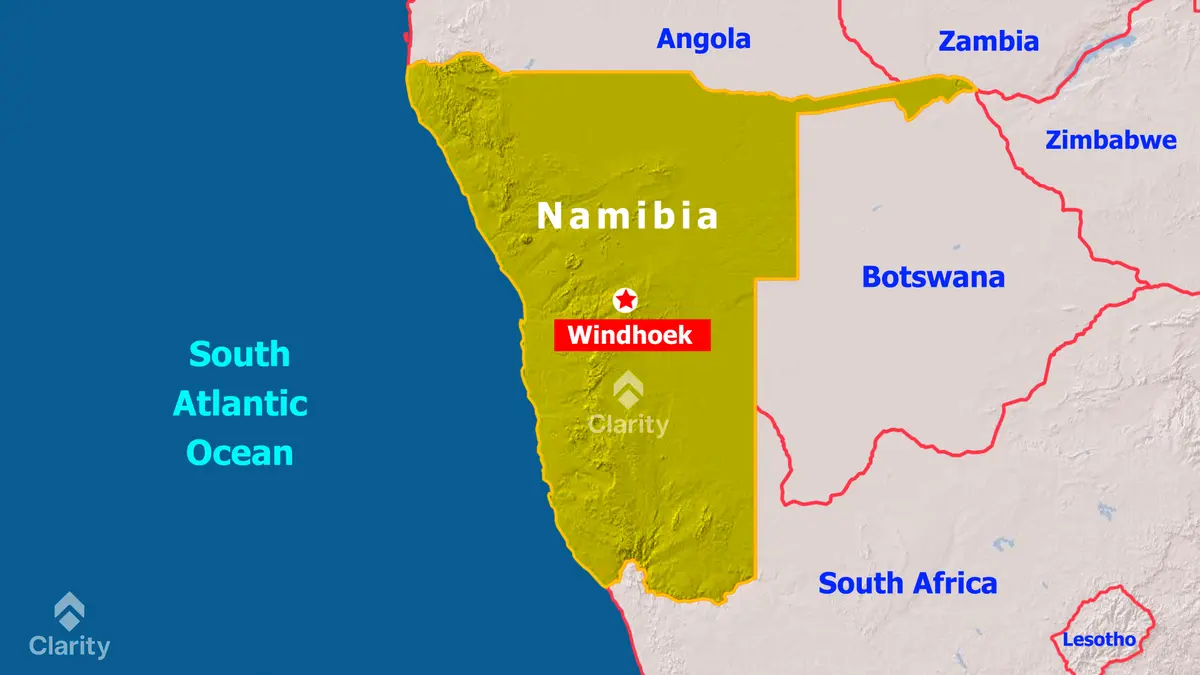
Namibia lies in south-western Africa with the Atlantic Ocean to its west. Angola and Zambia adjoin it northwards, while Botswana lies eastwards.
South Africa borders Namibia to the south and south-east. The Namib Desert lines much of the coast, while the Kalahari extends across the east.
Walvis Bay provides an important deep-water gateway for Namibia and inland southern Africa. Transport links can therefore shape trade beyond the national market.
From dialogue to delivery
The partners planned focal points for investment facilitation. They also discussed a preferential trade agreement between India and the Southern African Customs Union.
Namibia unveiled WayaMe, a payment system developed with India’s Unified Payments Interface technology, in June 2026. Adoption will depend on access and trust.
Critical-mineral cooperation requires environmental and community safeguards. Secure supplies should not weaken local value addition or public accountability.
Practical constraints
Long shipping distances can make small consignments expensive. Consolidated logistics and predictable standards may help firms serve the market reliably.
Health trade needs regulatory cooperation, not only promotion. Product quality, registration timelines and supply continuity directly affect patient confidence.
Digital-payment cooperation should protect privacy and operational resilience. Interoperability matters only when users can resolve errors and fraud quickly.
Joint working groups need dated deliverables and public follow-up. Repeated dialogue without implementation would not deepen the commercial relationship.
Business engagement should include smaller firms from both countries. Their constraints often differ from those of large exporters.
Public progress reports can distinguish negotiations from completed transactions. This prevents aspirational cooperation from being mistaken for delivered trade or investment. Regular reporting would also help businesses plan.
Small trade base, broad agenda
Growth percentages can look large from a modest base. Durable progress requires contracts, standards, logistics and measurable follow-through.
Conclusion
The committee created a practical roadmap across goods, services and technology. Implementation will determine whether the relationship gains economic depth.