

Why in news?
India and Argentina held their fourth Joint Trade Committee meeting in Buenos Aires. The talks reviewed trade, investment and market access across several sectors. Both sides focused particularly on minerals, medicines, agriculture and digital technology. The meeting carried forward the economic roadmap agreed during the Indian Prime Minister’s 2025 visit.
The latest meeting
The committee met on 24 August at Palacio San Martín. India’s delegation was led by Commerce Secretary Rajesh Agrawal. Argentina’s delegation was led by Fernando Brun, Secretary for International Economic Relations. Officials reviewed cooperation under their wider strategic partnership.
Government figures placed bilateral trade above 6.5 billion United States dollars during 2025. The Indian statement reported annual growth exceeding 17 per cent. It also described India as Argentina’s fifth-largest trading partner. These figures reflect official reporting for that period.
A business forum followed on 25 August. More than 25 Indian business leaders participated with Argentine firms. Discussions covered energy, minerals, pharmaceuticals, agriculture and technology. Commercial interest now needs projects, contracts and stable regulatory processes.
Geography and economic strengths
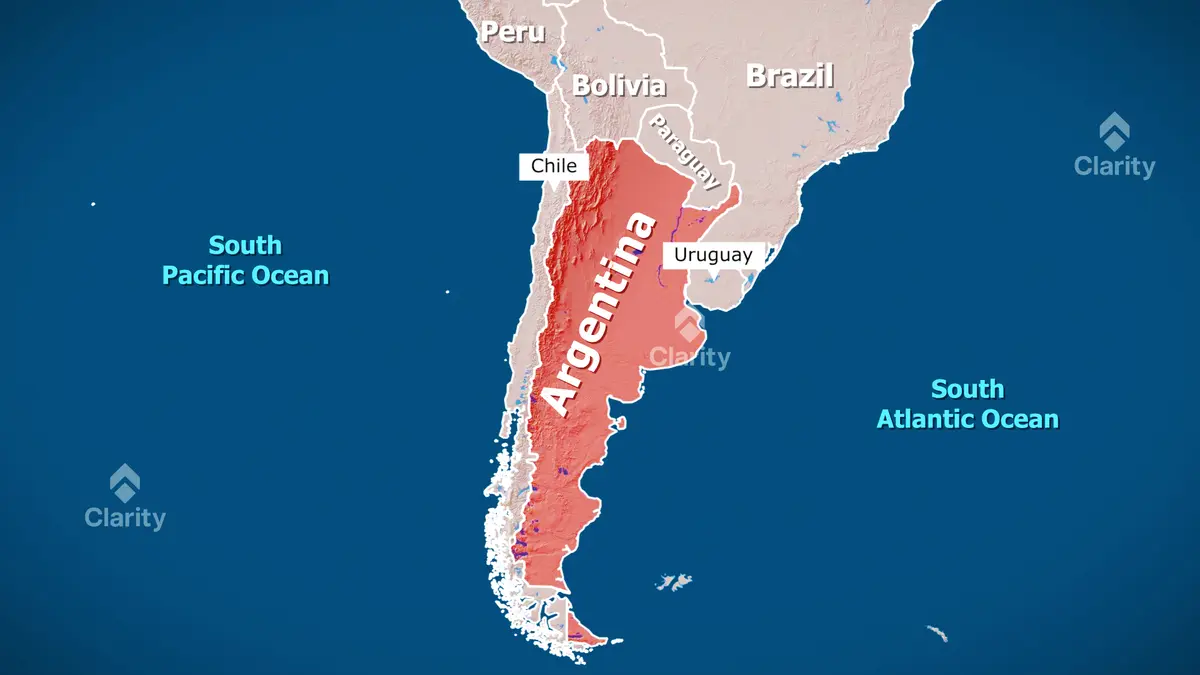
Argentina occupies the southern part of South America. Chile borders it across the Andes to the west. Bolivia and Paraguay lie to the north. Brazil, Uruguay and the South Atlantic form its eastern setting.
The country extends from subtropical northern regions to cold Patagonia. The fertile Pampas support major grain and livestock production. The Andes contain mineral and water resources along the western edge. Long distances make transport and port infrastructure economically important.
Catamarca, Salta and Jujuy lie in Argentina’s north-western Andes and high Puna. They form part of a lithium-rich zone shared with Chile and Bolivia. Dry salt flats contain brines used for lithium extraction. Water, ecosystems and local communities require careful protection during development.
Lithium and critical-mineral cooperation
Khanij Bidesh India Limited is commonly called KABIL. It has secured exploration rights in Catamarca Province through an Argentine state company. The Indian side reported completion of second-phase drilling. It is also examining opportunities in Salta and Jujuy.
Lithium is important for many rechargeable batteries. India wants secure supplies for electric mobility and energy storage. Overseas participation can diversify sources and provide geological knowledge. It cannot replace domestic recycling and material efficiency.
Mineral cooperation should include transparent environmental and social safeguards. Brine extraction can affect water balances in arid landscapes. Local and Indigenous communities may depend on the same water. Reliable baseline data should precede any commercial production.
Agriculture and market access
Officials reviewed sanitary and phytosanitary access for several farm products. The list included onions, milk, grapes, potatoes, bananas and pulses. Such rules protect plant, animal and human health. They can also delay trade when scientific requirements remain unresolved.
Argentina can supply edible oils, grains and pulses at scale. India offers a large market and diverse processed goods. Trade can improve food availability when domestic harvests fluctuate. Sudden policy changes on either side can still disrupt contracts.
Digital certificates of origin can reduce paperwork and verification delays. They confirm where goods were produced under trade rules. Interoperable systems must protect authenticity and business data. Small exporters also need practical access to the technology.
Medicines and regulatory cooperation
Argentina agreed to work towards changing India’s treatment under its medicine approval framework. The discussion concerned movement from Annex II towards Annex I. Such a change could simplify reliance on Indian regulatory information. It was a commitment to work, not a completed legal change.
The Argentine medicines regulator and India’s Central Drugs Standard Control Organisation signed a cooperation memorandum in 2019. Better regulatory dialogue can reduce repeated procedures. Patient safety still requires quality evidence and post-market monitoring. Faster approval should not mean weaker review.
Affordable Indian medicines could support Argentina’s health system. Argentine firms can also offer biotechnology and clinical capabilities. Predictable rules would encourage longer commercial partnerships. Intellectual property and pricing must remain consistent with public-health needs.
Wider strategic opportunities
The agenda included aviation, space, telecommunications and artificial intelligence. These fields require standards, skilled workers and trusted data arrangements. Cooperation should begin with clearly defined use cases. Announcements without financing or institutions may not produce lasting results.
India also seeks deeper trade preferences with the Southern Common Market, widely called MERCOSUR. The bloc links major South American markets through common arrangements. Expanding preferences can lower duties on agreed products. Negotiators must still examine sensitive sectors and rules of origin.
India and Argentina established a strategic partnership in 2019. Their geographic distance raises shipping time and costs. Complementary resources nevertheless create a strong economic basis. Regular official mechanisms help businesses manage that distance.
Negotiation is not implementation
The committee recorded priorities and ongoing work. Market access, regulatory changes and mineral projects will each require further technical and legal steps.
Conclusion
The Buenos Aires meeting gave practical direction to the India–Argentina partnership. Lithium, food and medicines offer clear areas of complementarity. Every opportunity also carries environmental, regulatory or market risks. Transparent rules and steady technical work must follow political commitments. A durable partnership should deliver secure trade while respecting health, communities and ecosystems.