

Why in news?
India and Canada held their first ministerial Economic and Financial Dialogue in Toronto on 27 August. Finance Minister Nirmala Sitharaman met Canadian Finance Minister François-Philippe Champagne. They discussed investment, payments, trade and critical minerals. The joint outcome supported a 2030 bilateral-trade target, while leaving treaty negotiations unfinished.
What the dialogue produced
The ministers reviewed global economic conditions and their domestic policy priorities. They agreed to institutionalise discussions on finance and investment. The next ministerial dialogue is expected in 2027. Working-level engagement should continue before that meeting.
Both sides supported a bilateral-trade target of 70 billion Canadian dollars by 2030. The Canadian statement gave an approximate value of ₹4.65 lakh crore. A target signals political intent, not guaranteed trade. Actual flows will depend on regulation, demand and commercial returns.
India indicated readiness to begin negotiations for a Bilateral Investment Treaty. Such a treaty would establish protections and dispute rules for investors. Its exact obligations will depend on future negotiations. No treaty was signed at the Toronto dialogue.
Trade negotiations and financial links
The two governments share a commitment to conclude Comprehensive Economic Partnership Agreement talks by the end of 2026. Such an agreement can reach beyond tariffs into services and investment. However, the final text and coverage remain unsettled. The Toronto outcome should not be described as a completed trade agreement.
The ministers discussed modern payment systems and cross-border financial links. They welcomed work on using India’s Unified Payments Interface in Canada. Possible uses include merchant payments and remittances. Any launch will require technical, regulatory and commercial arrangements in both countries.
Remittance links matter because Canada has a large Indian-origin population and many Indian students. Lower transaction costs can help families and small businesses. Consumer protection and fraud controls must accompany faster payments. Exchange-rate transparency is equally important.
Investment and critical minerals
Canadian pension funds already invest in Indian infrastructure, real estate and financial assets. India offers a large market and long-term infrastructure demand. Canada offers deep institutional capital. Stable rules and predictable dispute handling can support both directions of investment.
The dialogue also covered critical minerals and clean-energy supply chains. Canada has significant mineral resources and an established mining industry. India needs reliable inputs for batteries, electronics and clean technologies. Cooperation can include exploration, processing, finance and research.
A supply partnership still requires environmental care and consultation with affected communities. Mining projects can create local costs alongside national benefits. Processing capacity also matters because raw deposits alone do not ensure supply security. Diversified contracts can reduce dependence on a single external source.
Canada’s geography and economic position
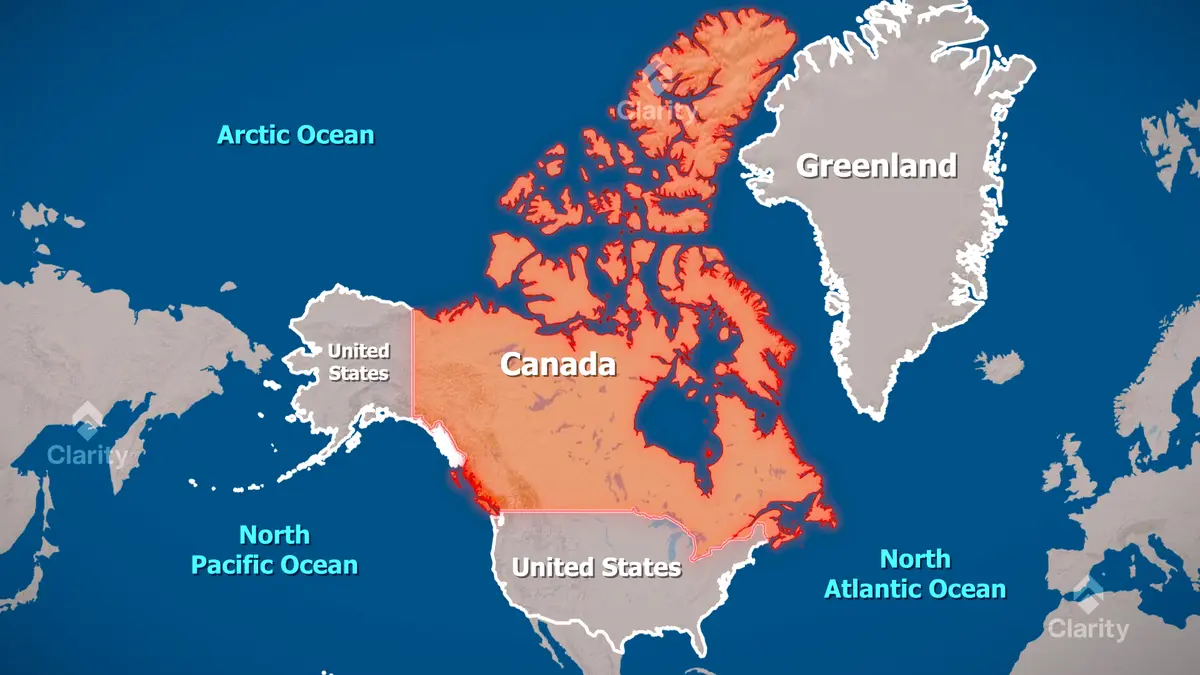
Canada occupies the northern part of North America. It borders the United States to the south and northwest. The Pacific, Atlantic and Arctic oceans shape its trade and security. Its large land area contains extensive forests, freshwater and mineral regions.
Toronto lies in southern Ontario near Lake Ontario and the United States border. It is Canada’s largest financial centre. The location made it suitable for talks with banks, pension funds and investors. Ontario also forms part of a dense cross-border manufacturing region.
Canada’s Pacific ports provide another connection with the Indo-Pacific economy. Arctic change is creating new environmental and strategic questions. Atlantic routes connect it with Europe. These different coastlines influence how Canada views resilient supply chains.
Managing a sensitive relationship
India–Canada relations have recently faced serious political and security disagreements. Economic dialogue cannot erase those disputes. It can create a structured channel where practical cooperation remains possible. Durable progress will still require trust and respect for legal concerns.
Specific milestones can make the new process credible. These include starting treaty talks, publishing work plans and solving investor problems. Governments should report progress towards the 2030 trade target through comparable data. Clear measurement will prevent a headline target from becoming symbolic.
Business links, education and migration connect the two societies beyond government meetings. They also produce regulatory and consular responsibilities. Policies should protect students, workers and legitimate businesses. Strong institutions are especially important when political relations become difficult.
Targets and negotiations are not completed agreements
The dialogue announced a 2030 bilateral-trade target and intended future negotiations. It did not conclude a trade agreement or investment treaty. Progress should be assessed through signed texts and measurable flows.
Conclusion
The Toronto dialogue reopened a practical economic channel between India and Canada. Investment, payments and minerals offer real areas of cooperation. The announced targets now need transparent follow-through. Political differences will still require careful management. Measured implementation can turn renewed contact into durable economic value.