

Why in news?
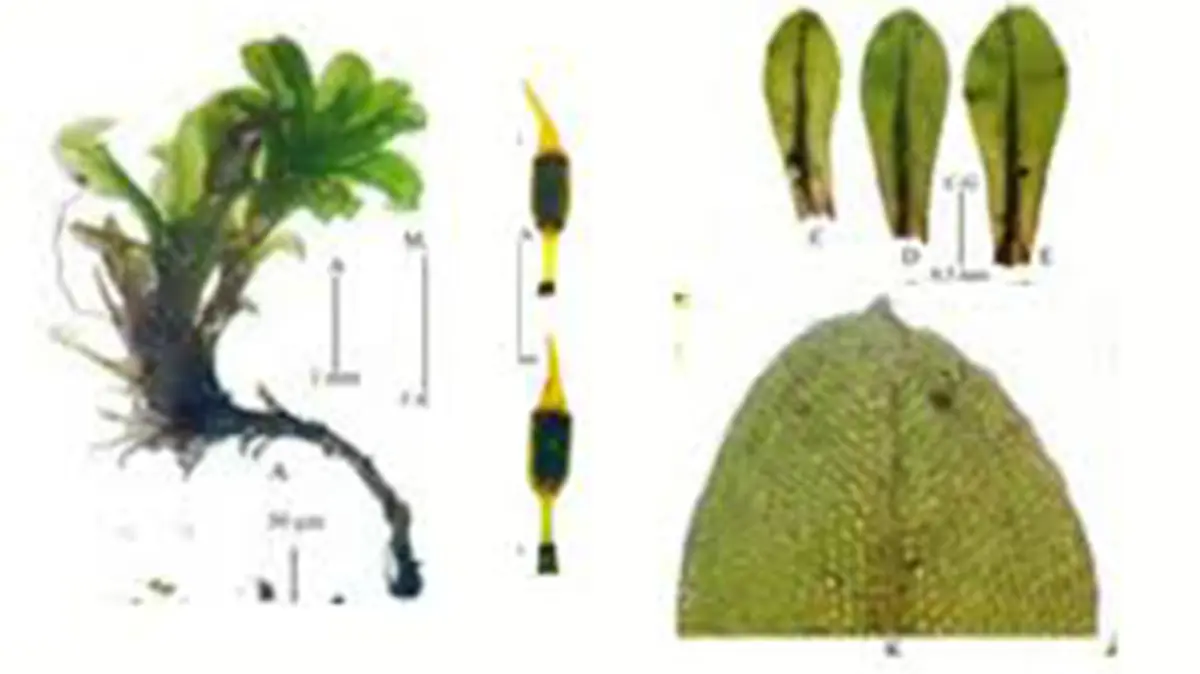
Botanists from the Botanical Survey of India announced the discovery of Indopottia himalayensis, a tiny moss found on soil‑covered rocks in Uttarakhand’s Western Himalaya. The discovery, published in 2026, marks only the third known species in the genus Indopottia and highlights the region’s ecological richness.
Background
Mosses are small, non‑vascular plants that play key roles in retaining moisture and stabilising soil in forests. The genus Indopottia was previously known from only two species, Indopottia zanderi from the Western Ghats of India and Indopottia irieandoana from the mountains of northern Thailand. During fieldwork in the high‑altitude forests of Uttarakhand’s Western Himalaya, researchers spotted a moss with distinct traits. Microscopic examination revealed it belonged to a new species, now named himalayensis to reflect its mountain home.
Distinctive features
- Unique sporophyte: The plant produces a single upright capsule (sporophyte) with a lid that bends sideways. This differs from related species where the capsule is inclined or has a straight lid.
- Leaf anatomy: Its leaves lack hyaline (transparent) cells at the edges, and the leaf cells are longer than in comparable species. Under a hand lens the leaves appear dark green and slightly glossy.
- Habitat: The moss grows on moist soil over boulders in shaded ravines. Such micro‑habitats are often overlooked, which is why new species continue to be found.
- Biogeographic insight: The presence of Indopottia in the Himalaya supports the idea of an ancient “Himalayan corridor” connecting the flora of India with that of Southeast Asia. Discoveries like this help reconstruct plant dispersal routes.
Conclusion
Indopottia himalayensis is a reminder that the Himalaya still holds botanical secrets. Protecting its forests and promoting field research are vital for documenting and conserving India’s lesser‑known plant diversity.