

Why in news?
The Indian Army signed a Letter of Offer and Acceptance for the Javelin missile system. The purchase will proceed through the United States Foreign Military Sales process. The United States publicly welcomed the decision on 28 August. Final public details of the signed package were not released with that announcement.
From approval to a signed acceptance
The United States approved a possible sale to India in November 2025. That notification covered up to 100 Javelin rounds and one additional fly-to-buy missile. It also listed 25 lightweight or Block 1 command launch units. The estimated ceiling was 45.7 million United States dollars.
The notification was not itself a completed purchase contract. It gave Congress the required notice for a possible sale. The signed Letter of Offer and Acceptance is a later formal step. Actual quantities and value can differ from the earlier ceiling.
Foreign Military Sales is a government-to-government process. The United States government manages the offer and contracts with suppliers. Training, spares and technical support can form part of the package. Delivery follows implementation and production schedules.
What the Javelin is
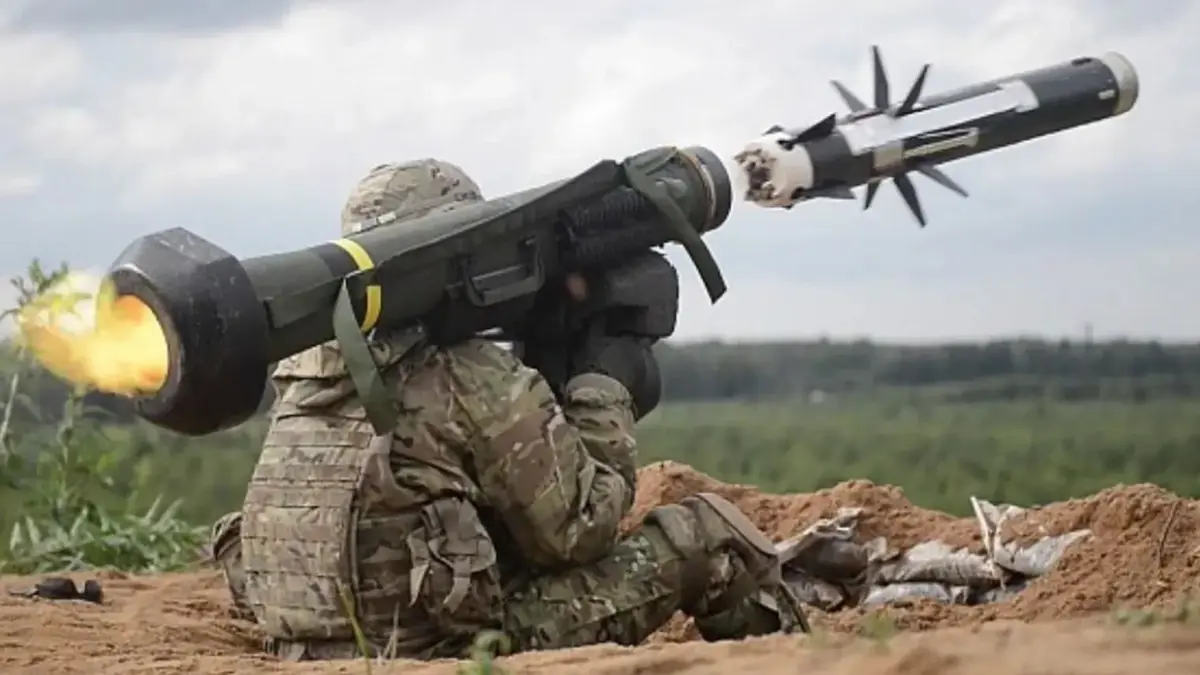
The FGM-148 Javelin is a portable anti-tank guided missile system. One soldier can carry and launch it under suitable conditions. It can also be mounted on vehicles or remote weapon stations. Its main elements are the missile round and command launch unit.
The command launch unit provides observation and target acquisition. It uses day and thermal imaging. The missile carries its own imaging infrared seeker. After launch, that seeker guides the missile towards the locked target.
This design gives Javelin its “fire-and-forget” description. The operator does not guide the missile throughout flight. The team can move after launch or prepare another engagement. This reduces exposure compared with continuously guided systems.
Attack modes and warhead
Javelin offers top-attack and direct-attack trajectories. Top attack approaches an armoured vehicle from above. Direct attack supports engagements against some fortifications and other targets. The operator chooses the mode before launch.
The missile uses a tandem shaped-charge warhead for armoured targets. The first charge addresses reactive armour. The main charge then attacks the underlying armour. Actual effects depend on target, angle and battlefield conditions.
A soft-launch motor pushes the missile from the tube before the main motor starts. This reduces the initial launch signature and permits use from more protected positions. Safety distances and operating rules still apply. Public descriptions should not replace formal training.
Range and variants
Older descriptions often give a 2.5-kilometre effective range. Current manufacturer material describes engagements from 65 metres to four kilometres in most operating conditions. Capability varies with round, sight and environment. One figure should not be applied to every configuration.
The lightweight command launch unit improves observation and reduces weight. Block 1 units remain in use with some customers. A procurement package may include either type. The 2025 notification allowed both descriptions.
Why India is acquiring it
Infantry needs portable weapons against armoured vehicles and hardened positions. A fire-and-forget system allows faster movement after launch. Thermal sighting supports night and poor-visibility observation. Training and logistics determine whether these advantages are realised.
India already operates several anti-tank weapon families. A new system therefore adds capability but also creates support requirements. Ammunition storage, batteries, simulators and maintenance must be planned. Mixed inventories can complicate training and spare parts.
Manufacture and possible cooperation
Javelin is produced by a joint venture between RTX’s Raytheon business and Lockheed Martin. The United States statement mentioned future defence-industry cooperation. Officials also referred to possible co-production discussions. No public co-production contract accompanied the acceptance letter.
Licensed production can involve different levels of local work. Assembly is not the same as full technology transfer. India should assess source access, component control and long-term repair rights. A clear plan can prevent dependence after the first purchase.
Cost assessment should include the complete life cycle. Initial missile price is only one part. Training rounds, sights, batteries, spares and upgrades also matter. Public accountability can coexist with necessary operational secrecy.
Strategic meaning and limits
The purchase adds another practical element to India–United States defence ties. It follows growing exercises, logistics arrangements and equipment sales. A single transaction does not determine India’s broader strategic autonomy. Procurement should remain linked to tested military need.
The weapon’s reputation was strengthened by recent conflicts, especially in Ukraine. Battlefield publicity should not replace Indian evaluation. Terrain, tactics and countermeasures differ between theatres. Doctrine and trained crews matter as much as the missile.
Earlier approval figures are ceilings
The 2025 United States notification listed maximum quantities and estimated value. The 2026 announcement did not publish the signed package in full. This edition does not assume that every earlier ceiling became a final order.
Conclusion
The acceptance letter moves India’s Javelin acquisition into formal implementation. The system offers portable fire-and-forget anti-armour capability. Training, support and inventory integration will determine its operational value. Co-production remains a possibility rather than a concluded agreement. Final assessment should examine delivery, life-cycle cost and genuine local capability.