

Why in news?
Frontline staff at Kamlang Tiger Reserve received new field and patrol equipment. Wildlife Trust of India and Serenity Trust supported the state forest department. The assistance covers guards and the Special Tiger Protection Force. It aims to improve patrol safety and anti-poaching operations in difficult terrain.
Why field equipment matters
Forest staff spend long periods away from roads and settlements. Rain, steep slopes and river crossings complicate every patrol. Basic protective gear reduces avoidable injury. Communication and navigation tools also help teams respond together.
A patrol records animal signs, illegal activity and habitat change. Reliable equipment improves the quality of those records. It can also shorten the response to snares or gunfire. Equipment remains effective only with training, maintenance and replacement.
The support should not be read as proof of a new poaching surge. It is a preparedness and capacity measure. Threat levels require separate evidence from patrols and investigations. Transparent records can show whether protection improves.
Location and legal status
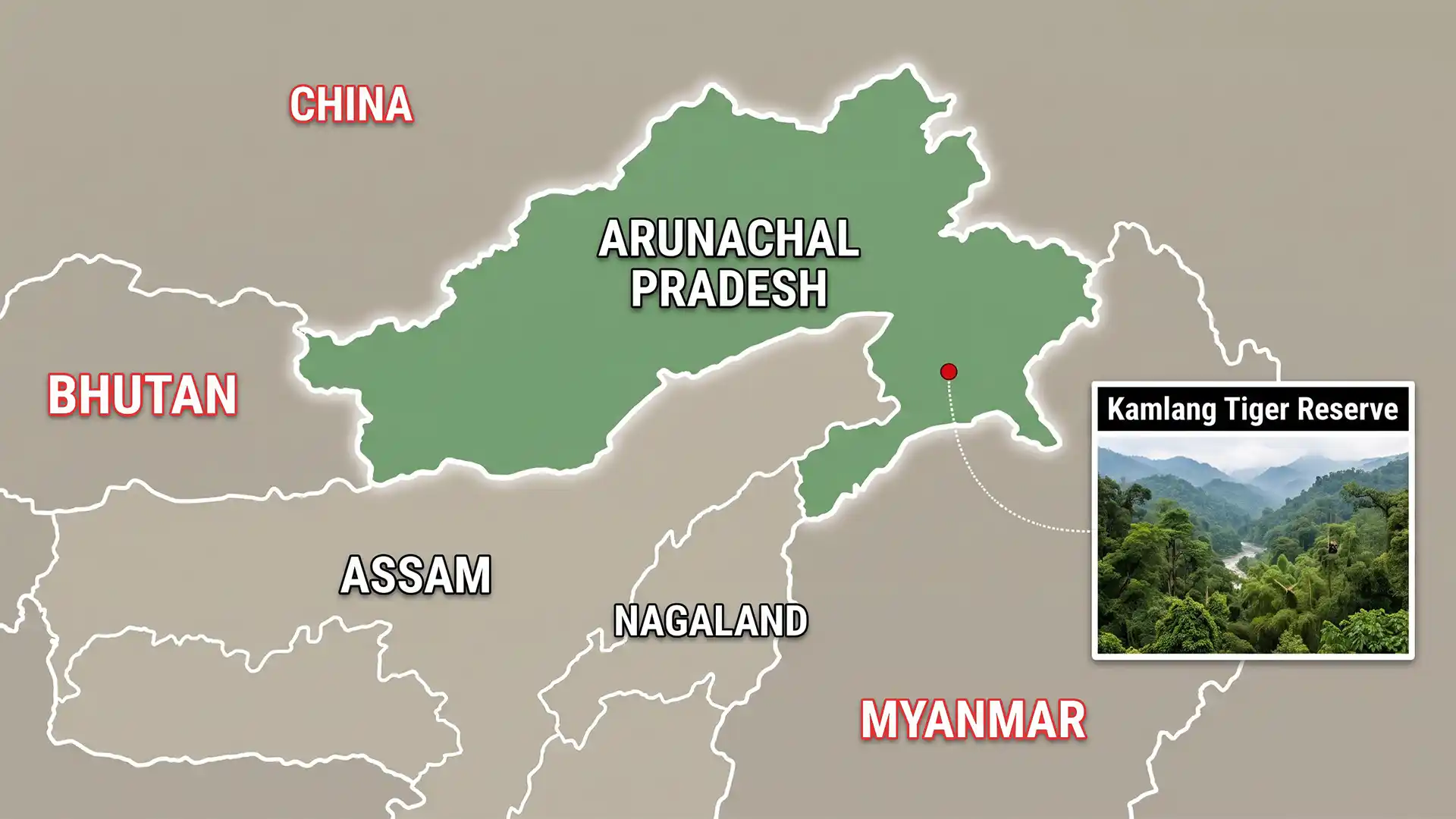
Kamlang lies in south-eastern Lohit district of Arunachal Pradesh. Its headquarters is at Wakro. The reserve covers 783 square kilometres. The National Tiger Conservation Authority lists it as India’s fiftieth tiger reserve.
The wildlife sanctuary dates from 1989. Tiger-reserve status followed in 2017. Current official figures show 671 square kilometres as core habitat. Another 112 square kilometres form the buffer.
The reserve takes its name from the Kamlang River. Kamlang, Lang and Lati streams drain towards the Lohit River. The Lohit later joins the Brahmaputra system. River catchments connect forest conservation with downstream water conditions.
A connected Eastern Himalayan landscape
Namdapha Tiger Reserve adjoins Kamlang towards the south. Reserve forests extend the wider habitat. Myanmar lies farther east across Arunachal Pradesh’s international boundary. This position connects Indian and Indo-Chinese biological regions.
Official assessments describe a wider Kamlang–Namdapha–Hukawng landscape. Large mammals need space beyond one protected boundary. Forest continuity allows dispersal and genetic exchange. Roads or intensive land conversion can break that movement.
Kamlang rises through a strong altitudinal range. Tropical evergreen forest occurs in lower areas. Subtropical and temperate vegetation appears higher. This transition supports many species within a compact geographic area.
Wildlife and habitat
Tigers share the landscape with leopards and clouded leopards. Asian elephants, dholes and several deer species also occur. Primates include hoolock gibbons and capped langurs. Official lists record many smaller mammals and birds.
Glaw Lake is a notable high-elevation water body within the reserve. Streams, wetlands and forest layers create varied habitats. These features also make patrol routes demanding. Seasonal rain can isolate parts of the reserve.
A species list does not show population health. Camera traps, signs and genetic samples provide stronger evidence. The national 2022 assessment did not photograph tigers inside Kamlang during its survey cycle. That result requires continued monitoring, not an assumption of absence.
What tiger-reserve protection involves
Core areas receive the highest protection for wildlife conservation. Buffer areas support compatible use and community engagement. Management plans must connect both zones. Activities outside the reserve can still affect rivers and animal movement.
Patrolling seeks to prevent hunting, timber theft and other illegal activity. Staff also manage fire, tourism and human-wildlife conflict. They may assist research and rescue operations. Their work therefore extends beyond guarding tigers.
The Special Tiger Protection Force provides focused protection capacity. Its effectiveness depends on lawful procedures and local intelligence. Relations with nearby communities can improve early information. Conservation enforcement must respect rights and due process.
Community and landscape priorities
People around Kamlang depend on forests and rivers in varied ways. Conservation plans should recognise customary knowledge and legitimate livelihoods. Compensation systems must respond quickly to verified wildlife damage. Trust reduces conflict and supports reporting.
Corridor protection needs coordination across districts and protected areas. Infrastructure should preserve animal crossings and drainage. Environmental assessments must examine cumulative effects. A single project review may miss landscape-wide fragmentation.
Staff welfare is equally important. Remote postings need housing, medical access and regular rest. Training should cover first aid, wildlife law and conflict management. Gear is valuable when it forms part of this wider support system.
Gear supports a larger protection system
Equipment can make patrols safer and more effective. It cannot replace staffing, training, community cooperation or landscape-level planning.
Conclusion
The equipment support addresses a practical need in Kamlang’s rugged landscape. The reserve protects forests, rivers and connected wildlife habitats. Its value extends south towards Namdapha and east towards Myanmar. Strong conservation needs both capable staff and trusted local partnerships. Long-term success must be measured through habitat and wildlife evidence.