

Why in news?
The Union Minister of State for Rural Development has announced plans for a comprehensive development of Kondaveedu Fort in Andhra Pradesh. The scheme aims to preserve the fort’s heritage, improve accessibility and promote tourism through public‑private partnerships.
Background
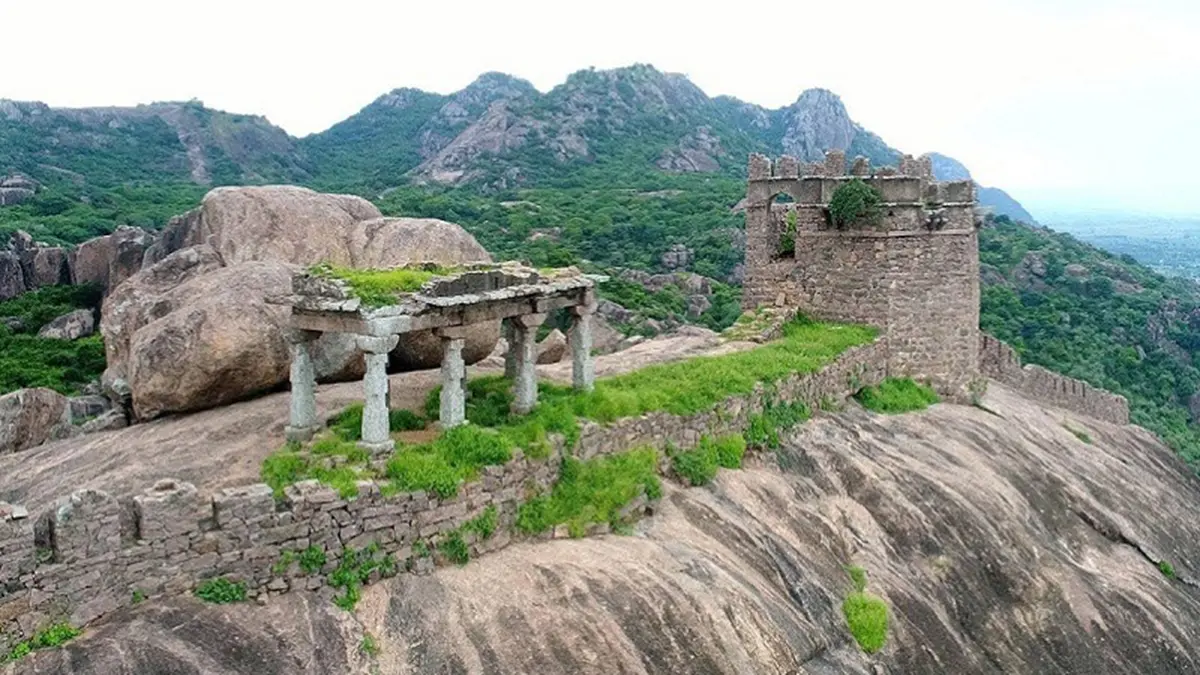
Kondaveedu Fort is a complex of hilltop fortifications located near Guntur in Andhra Pradesh. Archaeological evidence suggests that the earliest structures were built by the Telugu Chodas in the 12th century. The fortress was later expanded by the Kakatiyas and served as the capital of the Reddi kingdom in the 14th century. It comprises a series of forts spread over three hills, connected by ghat roads and protected by stone walls and watchtowers. The strategic location allowed rulers to control the Krishna River valley and resist invasions.
Key aspects of the development plan
- Heritage conservation: Restoration of ramparts, gateways and water‑harvesting structures will be undertaken using traditional materials. The work aims to stabilise crumbling masonry and showcase architectural features from different dynasties.
- Access improvements: Existing ghat roads will be widened and provided with safety railings, parking areas and signage. Trekking paths will be marked for adventure enthusiasts.
- Interpretation facilities: A visitor centre with exhibits on the fort’s history, the Reddi kingdom, and medieval Telugu literature will be established. Audio‑visual guides will help visitors understand the site.
- Eco‑tourism: Landscaping and tree planting will enhance the scenic value of the hills. Rural homestays and craft outlets in surrounding villages will provide livelihood opportunities.
- Public–private collaboration: Detailed project reports will be prepared to attract funding from the central government, the state and private investors under heritage conservation schemes.
Significance
- Cultural heritage: Kondaveedu Fort embodies the military architecture and artistic achievements of medieval Andhra. Revitalising it will instil pride among locals and preserve valuable inscriptions and sculptures.
- Tourism potential: The fort’s panoramic views, trekking routes and ancient engineering—such as rain‑water tanks and granaries—make it an attractive destination. Development could draw domestic and foreign tourists, boosting the regional economy.
- Educational value: For students and researchers, the site offers insights into fort construction, hydraulic systems and the interplay of politics and culture in the Deccan.
Conclusion
The proposed development of Kondaveedu Fort reflects growing recognition of India’s lesser‑known heritage sites. Carefully planned restoration and community involvement can convert the historic fortress into a living classroom and a sustainable tourism hub.
Source: Deccan Chronicle