

Why in news?
A Kutch-based conservation group began planting two native Guggal species across five Gujarat villages. The programme covers community grazing land in Bhuj, Nakhatrana and Mandvi talukas. Its organisers reported 3,750 Guggal saplings planted under the initiative. The work seeks to restore common land while conserving Kutch’s medicinal-plant heritage.
The two species
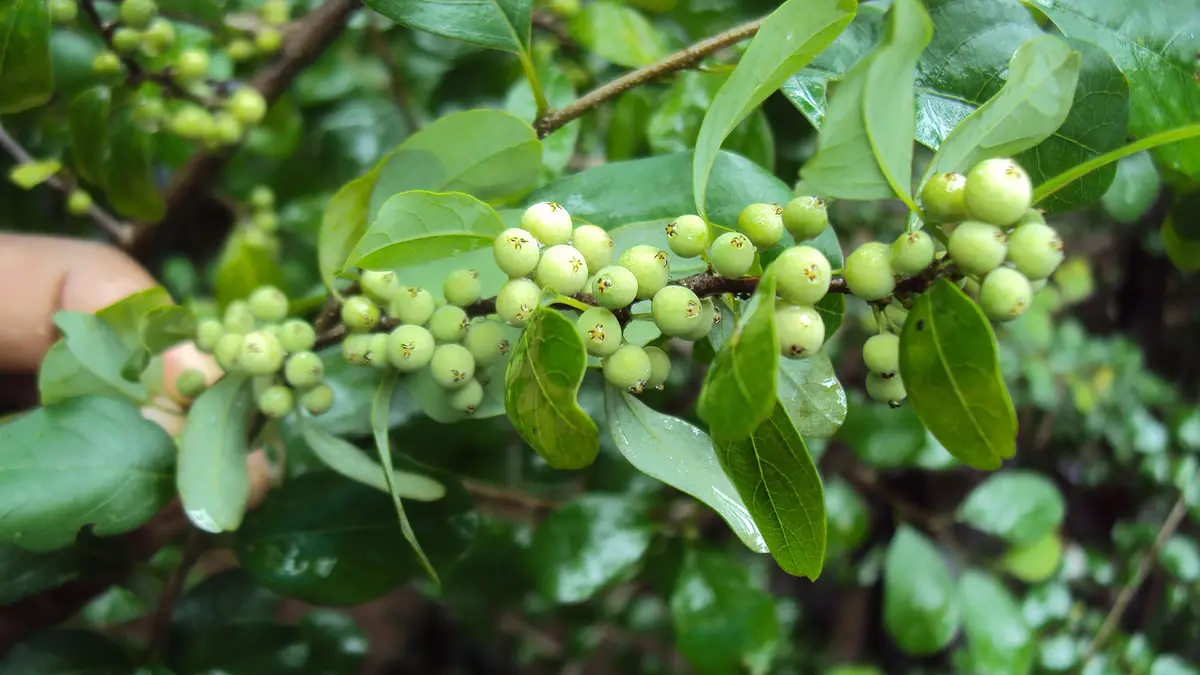
Khara Guggal is Commiphora wightii. Mitha Guggal is Commiphora stocksiana. Both belong to the Burseraceae family. They are shrubs or small trees adapted to dry conditions.
Commiphora wightii produces an aromatic oleo-gum resin. Traditional medicine and incense have created long demand for this material. Cutting the bark carelessly can weaken or kill a plant. Slow growth makes recovery difficult after repeated tapping.
Commiphora stocksiana has a much narrower Indian distribution. Research records it from limited localities in Kutch. It also occurs in arid and semi-arid areas of Pakistan. Its restricted range makes habitat protection especially important.
What the village programme did
Nature Foundation led the reported field work with the Suzlon Foundation’s SuCharagah project. The Reladi Medicinal Plants Board nursery supplied saplings. The five villages are Anandsar, Laxmipar, Bhadali, Ukheda and Virani Nani. Village institutions and residents are involved in the work.
Each village received 250 Mitha Guggal and 500 Khara Guggal saplings. The combined total is 1,250 Mitha and 2,500 Khara plants. The programme also planted Satavari. Native grasses, trees and shrubs form the wider restoration mix.
These figures come from the project’s statement reported by Down To Earth. They describe planting, not survival. Field monitoring must verify establishment over several dry seasons. Replacement planting may be needed where young plants fail.
Kutch’s material geography
Kutch occupies north-western Gujarat along India’s border with Pakistan. The Arabian Sea lies to the west and south-west. The Gulf of Kutch lies to the south. The Great and Little Rann create wide salt-marsh landscapes towards the north and east.
The district contains rocky uplands, dry riverbeds, grasslands and saline flats. Rainfall is low and highly variable. Drought and salinity shape vegetation. Native shrubs and grasses are therefore better suited than water-intensive ornamental species.
Bhuj, Nakhatrana and Mandvi span different inland and coastal settings. Local soil and grazing pressure will affect every site. Restoration design must reflect these differences. A standard planting density cannot guarantee the same result everywhere.
What gauchar land means
Gauchar is village common land traditionally reserved for grazing. It supports cattle, sheep, goats and pastoral livelihoods. Grasses also protect soil and provide habitat for insects and wildlife. Common land can recharge water and buffer drought.
Degradation can follow overgrazing, invasive plants, extraction or encroachment. Restoration should not simply close land to every user. Villagers need agreed grazing plans and seasonal protection. Local rules determine whether new plants survive after project support ends.
Restoring an ecosystem, not a plantation
A diverse mix can rebuild several ecological functions. Grasses cover soil and supply forage. Shrubs create shelter and support pollinators. Medicinal species conserve local genetic resources and knowledge.
Monoculture planting would create a different and often weaker system. The programme’s mixed approach is therefore ecologically sound in principle. Success still depends on suitable seed sources and planting methods. Natural regeneration should be protected wherever it already occurs.
Conservation and sustainable use
National Medicinal Plants Board projects have supported Guggal conservation in Gujarat. Measures include nurseries, seed areas and medicinal-plant conservation sites. Training can teach harvesters to avoid destructive tapping. Cultivation may also reduce pressure on wild plants.
Commercial demand can create an incentive for care, but it can also renew overharvesting. Harvest rules should begin only after plants mature. Benefits need fair sharing among common-land users. Traceability can help buyers distinguish cultivated resin from illegal collection.
Community stewardship
Women’s groups, young people and schools are part of the reported programme. Their participation can strengthen local knowledge and monitoring. Simple records of survival, grazing and rainfall are useful. Village maps can show where protection works best.
Ownership matters after the initial planting season. Panchayats need clear maintenance duties and grazing agreements. Restoration should not transfer a common resource into private control. Transparent decisions can prevent conflict between conservation and livestock needs.
Planted numbers are not restoration results
The reported total records saplings placed in the ground. Ecological success needs survival, natural recruitment, soil recovery and continued community use. Those outcomes require multi-year monitoring.
Conclusion
The Kutch initiative combines plant conservation with repair of a shared pastoral resource. Its two Guggal species represent different levels of scarcity and use. A mixed native design is stronger than a narrow plantation target. Survival data and village grazing rules will decide the outcome. The project can become a useful model only if ecology and common rights remain together.