

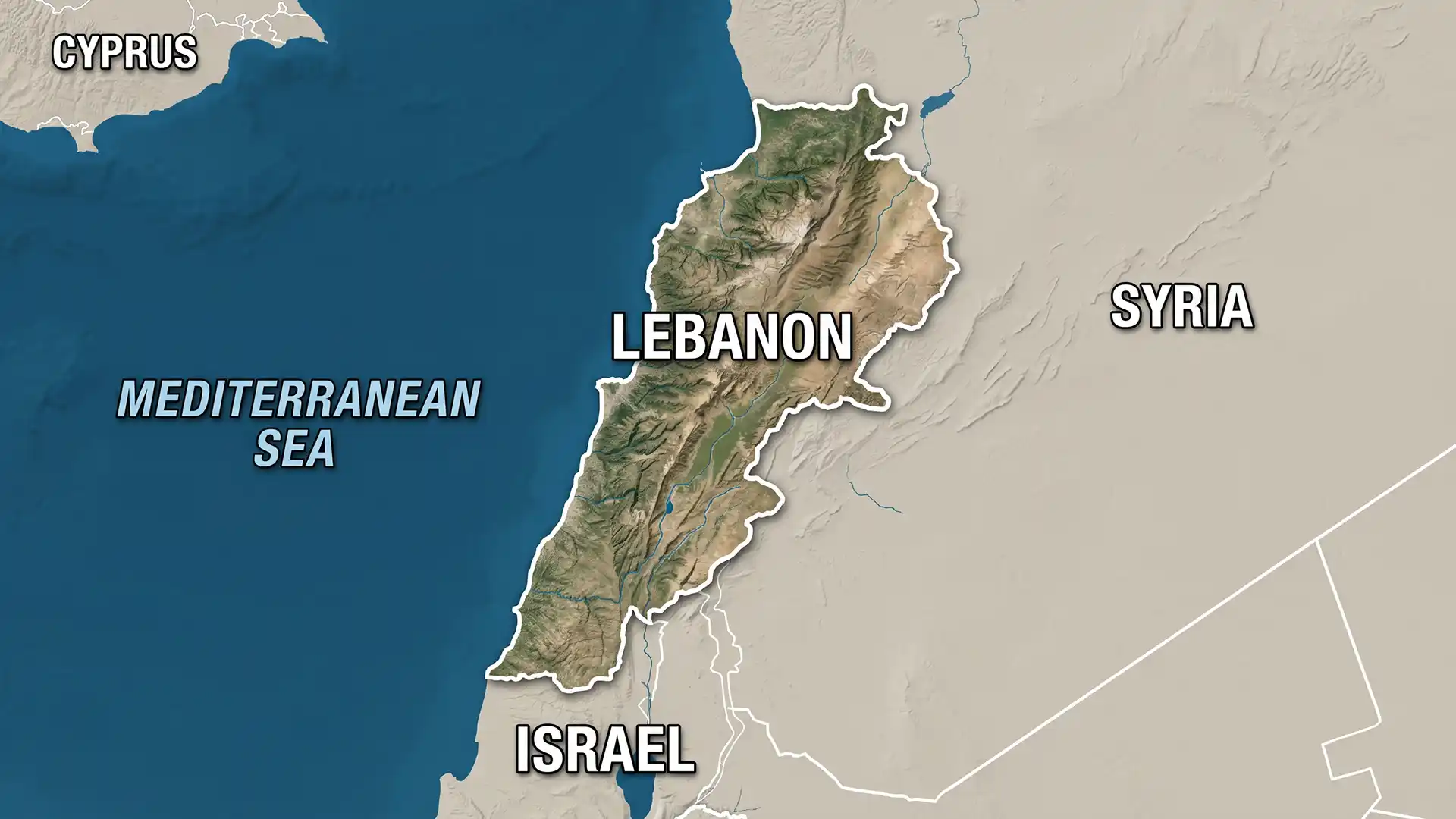
Why in news?
In mid‑June 2026 Israeli airstrikes killed dozens of people in southern Lebanon despite a ceasefire, as clashes with the Hezbollah movement continued. Thousands have died since the latest round of fighting began, and the United States is mediating talks between Israel and Iran to prevent a wider war.
Background
Lebanon lies on the eastern Mediterranean and covers about 10,400 km². It gained independence from France in 1943. A 15‑year civil war (1975–1990) devastated the country and ended with the Taif Agreement, which established a power‑sharing arrangement between Christians and Muslims. Syria occupied Lebanon from 1976 until 2005, and Israel withdrew from southern Lebanon in 2000. The Shebaa Farms along the Lebanon–Golan Heights border remain contested; the area is internationally recognised as part of Syria but claimed by Lebanon, and it has been a flashpoint since Israel’s withdrawal. Lebanon’s political system allocates top offices by religion and groups like Hezbollah wield significant military power. An economic crisis since 2019 has led to currency collapse, fuel shortages and widespread poverty.
Geography and society
The country has a population of about 5.5 million and hosts a large number of refugees. Its highest peak is Qornet es Saouda at 3,088 m. The capital, Beirut, was once called the “Paris of the Middle East.” Lebanon has diverse communities, including Maronite Christians, Sunni and Shia Muslims, Druze and Armenians. The political system divides posts among these groups, which often leads to deadlock.
Current situation and significance
- Escalating conflict: Since March 2026 exchanges of fire between Hezbollah and Israel have killed more than 4,000 people. The latest Israeli strikes targeted villages in south Lebanon, causing civilian casualties despite a ceasefire agreement.
- International mediation: The United States plans to broker talks between Israel and Iran in Switzerland to restore the ceasefire and prevent the fighting from spilling across the region.
- Humanitarian impact: Residents of border areas have fled to safer regions. Lebanon’s economy, already strained by debt and inflation, faces further pressure as infrastructure is damaged and tourism declines.
- Shebaa Farms dispute: The unresolved territorial claim over the Shebaa Farms and the lack of a permanent border demarcation (known as the Blue Line) continue to fuel tensions.
Conclusion
Lebanon’s fragile stability is threatened by the latest round of violence. A lasting peace will require addressing contested territories, implementing UN resolutions and supporting the country’s struggling economy. Protecting civilians and respecting the Taif Agreement remain essential.