

Why in news?
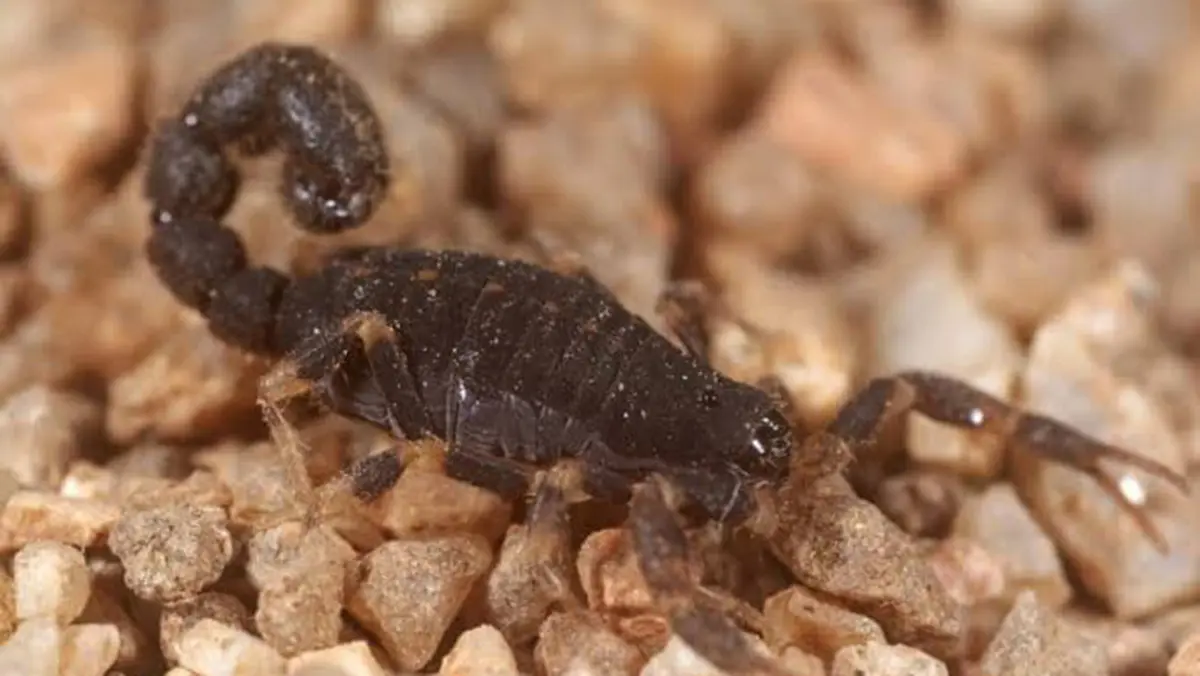
Researchers formally described a new scorpion species named Liocheles gracilipalpus. The specimens came from Judda in Jammu and Kashmir’s Reasi district. Morphological study and mitochondrial DNA supported its separation from known Indian relatives. The discovery adds a verified species record to the Western Himalayan arachnid fauna.
What the researchers established
The description appeared in issue 441 of the journal Euscorpius. Virender Bhardwaj, Sunil Katal, H. T. Lalremsanga and Zeeshan Mirza authored the paper. The study compared the population with other members of Liocheles. It then assigned a formal scientific name and diagnosis.
The specimens were found beneath rocks near Judda at about 1,655 metres. This locality lies within the Western Himalayan landscape of Reasi. Rocky shelters can maintain moisture and stable temperatures. Such microhabitats are easily missed during broad wildlife surveys.
The new species belongs to the family Hormuridae. Scorpions belong to the order Scorpiones within class Arachnida. They are therefore arachnids, not insects. Adults have eight walking legs, two pedipalps and a segmented tail.
Why the name matters
The name gracilipalpus refers to the species’ notably slender pedipalps. Pedipalps are the paired appendages ending in pincers. Their proportions and surface features help taxonomists compare scorpions. A descriptive name can preserve one useful identifying character.
The species resembles Liocheles longimanus, which was described from farther east. However, resemblance alone does not establish identity. The researchers found differences in sensory-hair arrangement on the pedipalp. They also examined a male reproductive structure called the hemispermatophore.
These structures often contain stable species-level characters. Their value increases when several specimens show the same pattern. Researchers must also compare the full published literature. A diagnosis explains how another specialist can distinguish the species.
How DNA strengthened the description
The team analysed mitochondrial cytochrome oxidase I, commonly shortened to COI. This gene is widely used for animal DNA comparisons. The sequence data placed the population apart from sampled relatives. It supported the differences already seen in anatomy.
One gene cannot answer every evolutionary question. Sampling may also omit close relatives from poorly surveyed areas. The paper therefore presents a preliminary family-level phylogeny. Future nuclear DNA and wider sampling may refine those relationships.
Modern taxonomy works best when morphology and molecules agree. Anatomy keeps the diagnosis visible and testable in preserved specimens. DNA provides another line of evidence. Geography and habitat can add useful context without replacing either method.
Why Himalayan taxonomy is important
The Himalaya contains steep climatic and elevation gradients. Valleys and ridges can isolate small animal populations. Isolation may allow distinct lineages to develop. It also makes comprehensive field sampling difficult.
Many invertebrates receive far less attention than birds or mammals. Their distributions may remain unknown before roads or land use change. Formal names allow records to enter conservation databases. They also support later studies of ecology and range.
Reasi lies south of the higher Kashmir ranges and near the Chenab basin. Its forests, cliffs and dry rocky patches form varied habitats. Survey design must cover different seasons and elevations. One collection site should not be treated as the complete range.
What the discovery does not show
The paper establishes taxonomic distinctness, not medical importance. All scorpions possess venom for prey capture, but effects vary greatly. No evidence here shows exceptional danger to people. Sensational claims would go beyond the study.
A new species is not necessarily newly evolved or newly arrived. It may have occupied the region for a long time. Scientific discovery reflects improved sampling and analysis. Population size and conservation status still require separate research.
Researchers should document additional localities and habitat conditions. Museum specimens will remain important for comparison. Community observations may guide future surveys. Collection must follow legal and ethical requirements.
New to science does not mean newly created
The scorpion likely existed before its formal description. The publication gives science a testable name, diagnosis and reference specimens.
Conclusion
Liocheles gracilipalpus is supported by both anatomical and genetic evidence. Its discovery highlights overlooked diversity in the Western Himalaya. The formal description creates a foundation for future ecological work. Its distribution, abundance and conservation needs remain unknown. Careful follow-up should replace speculation about danger or rarity.